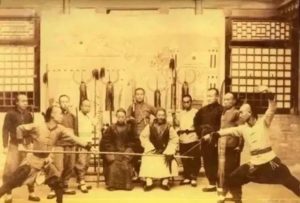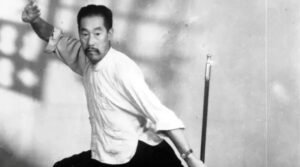
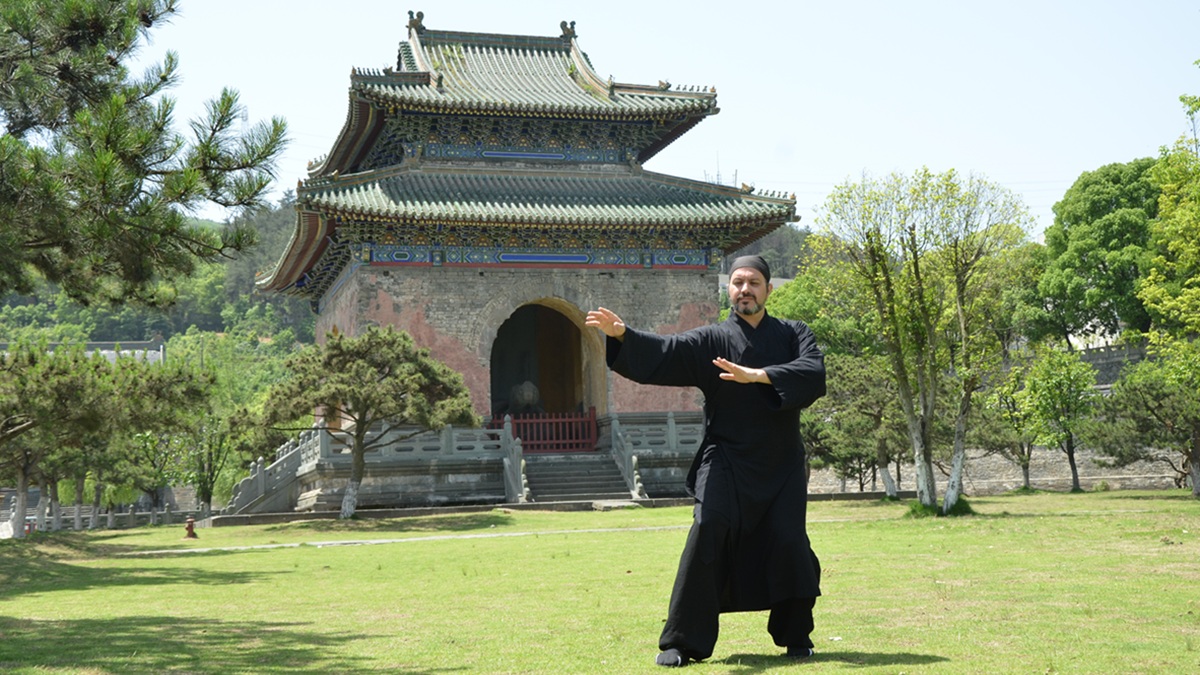
Wudang Taijiquan is a primary pillar of the Wudang martial arts system, originating from the sacred Wudang Mountain (also known as Taihe Mountain) in Hubei Province. Its foundation is deeply rooted in Taoist philosophy, specifically the interplay of Yin and Yang and the pursuit of longevity. The system was preserved and refined by successive masters, including the late Qing Dynasty figures Huang Baijia and Wang Zongyue (author of the Taijiquan Treatise), and later by Wudang Taoist leader Xu Benshan, who passed down the authentic 108-form routine still practiced today.
Theoretical Foundations
The theory of Wudang Taijiquan is an application of Taiji, Yin-Yang, and Eight Trigram principles to physical movement.
- Internal Alchemy (The Three Refinements): The system is built upon the Taoist process of transformation: Refining Essence into Qi (炼精化气), Refining Qi into Spirit (炼气化神), and Refining Spirit into Emptiness (炼神还虚). Practitioners focus on the Dantian as the primary source of energy.
- The Eight Methods and Five Steps: The technical core consists of “Eight Methods” (Ward off, Rollback, Press, Push, Pull, Split, Elbow, and Bump) which correspond to the Eight Trigrams (Eight Gates). These are combined with “Five Steps” that correspond to the Five Elements (Metal, Wood, Water, Fire, and Earth).
- Mind-Lead Principle: A central tenet is “using the mind to lead the body, using intention to lead Qi, and using Qi to move the body” (以身领手、以意领气、以气运身). Movement should be led by the mind rather than brute force.
- Physical Requirements: The sources outline several essential physical states for correct practice:
- Sinking Qi to the Dantian (气沉丹田)
- Containing the chest and plucking up the back (含胸拔背)
- Sinking the shoulders and dropping the elbows (沉肩坠肘)
- Maintaining a “hollow” spirit and upright posture (虚灵顶劲)
- Hardness and Softness: The practice emphasizes “combining hardness and softness” (刚柔相济). Movements are described as continuous and circular—resembling flowing water—and utilize “Silk Reeling” energy (缠丝弧形劲) to circulate blood and Qi throughout the meridians.
The core of this system was the “Thirteen Styles” (十三势), which consisted of the “Eight Gates and Five Hands” (八门五手).
- The Eight Methods: These correspond to the Eight Trigrams (Ward off, Rollback, Press, Push, Pull, Split, Elbow, and Bump).
- The Five Steps: These correspond to the Five Elements (Metal, Wood, Water, Fire, and Earth), representing the directions of movement.
Centuries of Development and Synthesis
Over “hundreds of years of evolution,” these simple thirteen core principles were expanded and refined by successive generations of masters. Zhang Sanfeng’s primary innovation was the integration of Taoist internal alchemy:the “Three Refinements” of Essence into Qi, Qi into Spirit, and Spirit into Emptiness, with folk martial arts. This shift moved the focus from purely external combat to a system that prioritised meridian circulation and internal energy cultivation.
Codification into the 108 Forms
The transition into the structured 108-form routine was finalized through the lineage of various renowned masters. The sources highlight that the authentic Wudang Taijiquan practiced today is organized into eight routes totaling 108 specific forms (共八路一百零八式).
- Structure: Most of these 108 forms are performed in a repetitive straight-line pattern, moving back and forth between the North and South.
- Technical Integration: The 108-form routine incorporates “Silk Reeling” energy (缠丝弧形劲) and requires the mind to lead the Qi throughout the entire sequence to ensure both internal health and external strength.
Key Figures in Preservation
The expansion and preservation of the 108 forms are specifically linked to masters such as Huang Baijia and the Wudang Taoist leader Xu Benshan. Master Xu Benshan is noted for maintaining the traditional postures, names, and “songs” (oral instructions) of the routine, ensuring that the original thirteen principles remain the theoretical heart of the expanded 108-form system. Thus, while the number of movements increased to provide a more comprehensive physical and energetic workout, the fundamental “Thirteen Styles” remain the core essence of every movement within the 108-form routine。
Master Xu Benshan (徐本善) was a pivotal figure in Wudang’s history, serving as the Taoist Head of Wudang Mountain (武当山道总) during the early 20th century. His contributions span both the preservation of martial arts and significant involvement in Chinese revolutionary history.
Preservation and Transmission of Martial Arts
Master Xu was a highly skilled martial artist who played a vital role in maintaining the “orthodox” lineages of Wudang.
- Skill Mastery: He was renowned for his expertise in the Nine Palace Eight Trigrams Palm (九宫八卦掌) and was a key transmitter of several core Wudang styles, including the Taihe Sword (太和剑), Dragon Gate Thirteen Spears (龙门十三枪), and the Xuanwu Staff (玄武棍).
- Taijiquan Lineage: He is specifically credited with passing down the Wudang Taijiquan routine. The modern 108-form routine is considered “orthodox” because it maintains the traditional postures, names, and oral formulas (歌诀) that were preserved by Master Xu and other historical masters.
Historical Role and Support for the Red Army
Xu Benshan is historically significant for his support of the Third Red Army during the Second Revolutionary Civil War.
- Providing Sanctuary: In May 1931, when General He Long led the Red Army to Wudang Mountain, Xu Benshan personally led over 50 Taoists to welcome them. He arranged for the Zixiao Palace (紫霄宫) to serve as a rear hospital and command headquarters for the troops.
- Medical and Logistics Support: He assigned his disciples to protect the leadership and assist in nursing the wounded. Recognizing the Red Army’s lack of supplies, he organized Taoists to gather medicinal herbs and led disciples on overnight trips to transport food, ammunition, and medicine to the troops.
- Legacy of Friendship: Xu Benshan and He Long developed a deep friendship. In gratitude for his life-saving support, He Long presented Xu with gold and a commemorative banner.
Master Xu’s role was therefore dual-natured: he was the custodian of Wudang’s spiritual and martial heritage and a critical ally to the revolutionary forces, ensuring the survival of both the martial arts lineage and the soldiers under his care.
武当太极拳 拳谱
Primordial One Qi (混元一气), Yin and Yang Two Polarities (阴阳两仪), Rotating the Universe (旋转乾坤), Primal Chaos Opens (混沌初开), Leaning on the Horse to Ask the Way (倚马问路), Left and Right Poking Strike (左右挑打), Ward off, Rollback, Press, Push (掤捋挤按), Fire Cannon Piercing the Sky (火炮冲天), Golden Turtle Exposing its Back (金鼋露背), Two Immortals Transmitting the Way (二仙传道), Ape Throwing the Rope (猿猴扔绳), Single Peak Piercing the Ear (单峰贯耳), Piercing the Sleeve Against the Wind (迎风穿袖), Fire Cannon Piercing the Sky (火炮冲天), Lion Opening its Mouth (狮子张口), Green Dragon Stretching its Claws (青龙探爪), Turning Body and Returning to Origin (转身还原), Dark Dragon Wagging its Tail (苍龙摆尾), Wild Horse Entering the Manger (野马闯槽), White Snake Parting the Grass (白蛇拨草), Flipping Yin and Yang (翻转阴阳), Parting the Clouds to See the Sun (拨云见日), Cloud Dragon Showing its Elbow (云龙现肘), Overlord Binding the Elbow (霸王捆肘), Single Peak Piercing the Ear (单峰贯耳), Black Tiger Ripping the Heart (黑虎扒心), Pushing the Fan Against the Wind (迎风推扇), Embracing the Tiger and Pushing the Mountain (抱虎推山), Turning Body and Returning to Origin (转身还原), Black Dragon Fetching Water (乌龙取水), Wild Horse Entering the Manger (野马闯槽), Liu Quan Presenting the Melon (刘全进瓜), Overlord Removing the Helmet (霸王脱盔), Flipping Yin and Yang (翻转阴阳), Leaning Against the Mountain to Search for the Cave (靠山探穴), Ape Washing its Face (猿猴洗脸), Crow Flapping its Wings (乌鸦扑翅), Ding and Jia Splitting the Mountain (丁甲开山), Piercing the Sleeve Against the Wind (迎风穿袖), Tortoise and Snake Fighting (龟蛇交战), Golden Thread Brushing the Eyebrows (金丝抹眉), Jade Lady Working Shuttles (玉女穿梭), Golden Rooster Spreading its Wings (金鸡撒膀), Turning Body and Returning to Origin (转身还原), Rolling Wrist Single Strike (滚腕单撞), Cross-shaped Selecting Fist (十字选拳), Erlang Carrying the Mountain (二郎担山), Dull Sickle Cutting the Grass (钝镰割草), Fierce Tiger Pouncing on its Prey (恶虎扑食), Dull Sickle Cutting the Grass (钝镰割草), Riding a Horse and Taking Captives Alive (走马活携), Black Dragon Wagging its Tail (乌龙摆尾), Cloud Roc Circling the Flower (云鹏盘花), Turning Body and Returning to Origin (转身还原), Retreating and Changing Shadows (抽身换影), Solitary Wild Goose Leaving the Flock (孤雁出群), Swallow Skimming the Water (燕子抄水), Overturning the River and Sea (翻江倒海), Piercing the Sleeve Against the Wind (迎风穿袖), Black Dragon Wagging its Tail (乌龙摆尾), Red Phoenix Facing the Sun (丹凤朝阳), Spurring the Horse and Flying Hooves (策马飞蹄), Wild Horse Entering the Manger (野马闯槽), Dragging the Wind Boat Backwards (倒拽风舟), Rowing the Boat with an Oar (行船摇橹), Black Bear Opening its Mouth (黑熊张口), Yellow Oriole Pinching its Crop (黄莺捏嗉), Black Bear Stretching its Paw (黑熊探掌), Sword Beheading the Turtle’s Head (剑斩鼋头), Turning Body and Returning to Origin (转身还原), Black Dragon Wagging its Tail (乌龙摆尾), Crowded Peaks Facing the Summit (群峰朝顶), Crouching Tiger Lowering Stance (伏虎下势), White Snake Spitting its Tongue (白蛇吐信), Thousand-Jin Weight Falling to Earth (千斤坠地), Reining in the Horse and Supporting the Spear (勒马托枪), Seven Stars Falling to Earth (七星落地), Black Bear Shaking its Shoulders (黑熊摇膀), Black Bear Circling its Paws (黑熊盘掌), Black Bear Cloud Paws (黑熊云掌), Golden Rooster Shaking its Feathers (金鸡抖翎), Embracing the Circle and Guarding the One (抱圆守一), Single Peak Piercing the Ear (单峰贯耳), Lion Turning its Body (狮子翻身), Pine Tree Hanging High in the Sky (松悬高空), Turning Body and Returning to Origin (转身还原), Wild Horse Entering the Manger (野马闯槽), Purple Clouds Crossing the Sky (紫霄横云), Reverse Back Hammering Strike (反背擂捶), Sparrow Hawk Piercing the Forest (鹞子穿林), Grafting a Flower onto a Tree (移花接木), Golden Rooster Shaking its Feathers (金鸡抖翎), Lion Rolling the Ball (狮子滚球), Black Dragon Wrapping around the Body (乌龙缠身), Golden Snake Coiling around the Willow (金蛇盘柳), Turning Body and Returning to Origin (转身还原), Looking Left and Right (左顾右盼), Lion Pouncing on the Ball (狮子扑球), Three Piercing Palm Techniques (三穿掌法), Swallow Spreading its Wings (燕子展翅), Yellow Dragon Emerging from the Cave (黄龙出洞), Slicing and Rotating Palm Technique (片旋掌法), Crow Crossing the Ridge (乌鸦越岭), South Rock Startling Thunder (南岩惊雷), Heavenly Pillar Welcoming the Sun (天柱迎日), Wind-Wheel Chopping Palm (风轮劈掌), Pulling the Robe with the Wind (顺风领衣), Wudang Return to the Origin (武当归原),,,,,,,.