The earliest records of the use of Neijia Quan (Internal arts) where in the 1600’s, these were an inscription on the tombstone of Wang Zhengnan (1669), a text Neijia Quan by Huang Baijia (1676) and a biography of Zhang Songxi in the government records of Ningbo (1683). Further in some of the boxing manuscripts of Jiangxi Zimen Quan, it refers to the integration of the earlier boxing (Ying Men/Yue Jia Quan) with the boxing of Songxi Neijiaquan. The early inheritor of Neijia boxing in Wenzhou a place especially noted for hard, rigid methods, was Chen Zhoutong, it then had been practised by notables such as Huang Baijia and Zhang Songxi.
Essentially the modern version of combining the arts of Taiji, Xingyi and Baguazhang as Neijia is a much later construct, and many cases the borrowed some historical references to the Neijiaquan of old but had no real connection to it other than conceptually. Over time Songxi Neijiaquan found new roots in Sichuan where it has remained with its unique principles relatively in tact for generations yet also absorbing some of the local Emei boxing methods.
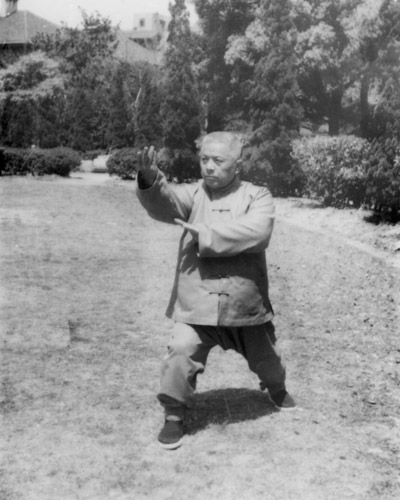
Songxi Neijia Quan combines softness with hardness, slow and fast movements, use softness to neutralize and hardness to strike. Its footwork is often not confrontational often evading and entering from the sides, the use of absorption, grappling, striking and throws. Zhang Wuting was a Logistics Security officer who worked for the Xingshun Security Bureau and later taught Chen Xiaodong in Sichuan. Chen had originally practised under Zhou Xiangting so had good foundation. It was then Chen Xiaodong and his students/descendants that solidified the practice of Songxi Neijiaquan across Sichuan.
The methods of Neijia quan are characterized by a highly conscious execution of movements and a diverse array of training disciplines known as Gong fa and Neigun. Unlike external styles that might rely on “hard” power, Neijia practitioners focus on the transformation of a strike into a toppling force, prioritizing the use of an opponent’s own inertia. A core principle of the school is to “use thought, not brute force,” ensuring that actions remain continuous, soft, and driven by internal intent rather than mere muscular tension. This approach favors rational application, speed, and elasticity over aesthetic or exaggerated imitation of animals.
Combat in Neijia quan is defined by the foundational concept of various toppling and displacement techniques. The strategic goal is to enter the opponent’s space to “shackle” or lock their lead leg while simultaneously redirecting their attacking force to break their balance. By applying the principle of “conquering movement with stillness,” a practitioner can compensate for their own physical weight by leveraging the opponent’s energy against them. In this system, combat is viewed as a unified interaction where every capture, strike, or defense is fundamentally an opportunity for a toppling maneuver.
A unique tactical aspect of the Sunxi branch is the profound influence of weapon fencing on its empty-hand techniques. Many manual maneuvers, such as “wrapping” or “slashing”, are direct adaptations of movements used with swords or sabres. This results in a combat approach that is described as “simple and not flowery,” focusing on practical efficiency that is equally applicable in both armed and unarmed encounters. Historically, students were often taught weapon skills first, ensuring that their empty-hand movements retained the precision and lethality of armed combat.
The system encompasses several primary technical complexes, or forms, that serve as the backbone of its training. The Liu Bu Quan (Six Steps Fist) focuses on essential stances and transitions, while the Guan Ming Quan (Bright Shine Fist) incorporates traditional principles and symbolic movements. Another central complex is the Si Xiang Quan (Fist of the Four Symbols), also referred to as the “Dark Warrior” fist, which is deeply rooted in the Wudang internal tradition. These forms are often supplemented by the “Eighteen Topples” a specific set of techniques designed to neutralize and ground an opponent through “sticking” and displacement.
Advanced practice within the school includes specialized forms such as the Wudang Songxi 36 Yin Yang Palms, which emphasizes the sophisticated interplay of yielding and redirecting forces. The Long Hua Quan (Dragon Change Fist) further refines the practitioner’s ability to adapt and change fluidly during combat. To support these physical skills, the Tong Zi Gong (Youth Work) offers a “secret tradition” of internal cultivation, focusing on strengthening the body’s internal systems and regulating the circulation of energy. Together, these forms and internal exercises constitute a comprehensive martial system that balances combat effectiveness with internal mastery.