During his time at the Xulanzhou Mansion in Tianjin, Huo Diange was immersed in a vibrant martial arts environment. The Xu family, led by Xu Lanzhou, was a renowned martial lineage in Tianjin, known for preserving and transmitting Shaolin martial arts. Xu Lanzhou himself was a bold and charismatic figure who attracted many of the era’s most distinguished martial artists to his estate. Among the luminaries who gathered there were Li Shuwen, Chen Fugui, Wang Zongquan, Huo Diange himself, and later, Gao Xianyun.
These masters trained together not only at the Xulanzhou Mansion but also at various martial venues across Tianjin, including the Hebei Martial Arts Center founded by Xu Lanzhou. Their frequent exchanges and sparring sessions, especially with the legendary Bajiquan master Li Shuwen, famed for his ruthless efficiency in combat, yielded invaluable practical techniques. These vivid, intense training experiences left a deep impression on Huo Diange and profoundly shaped his martial understanding.
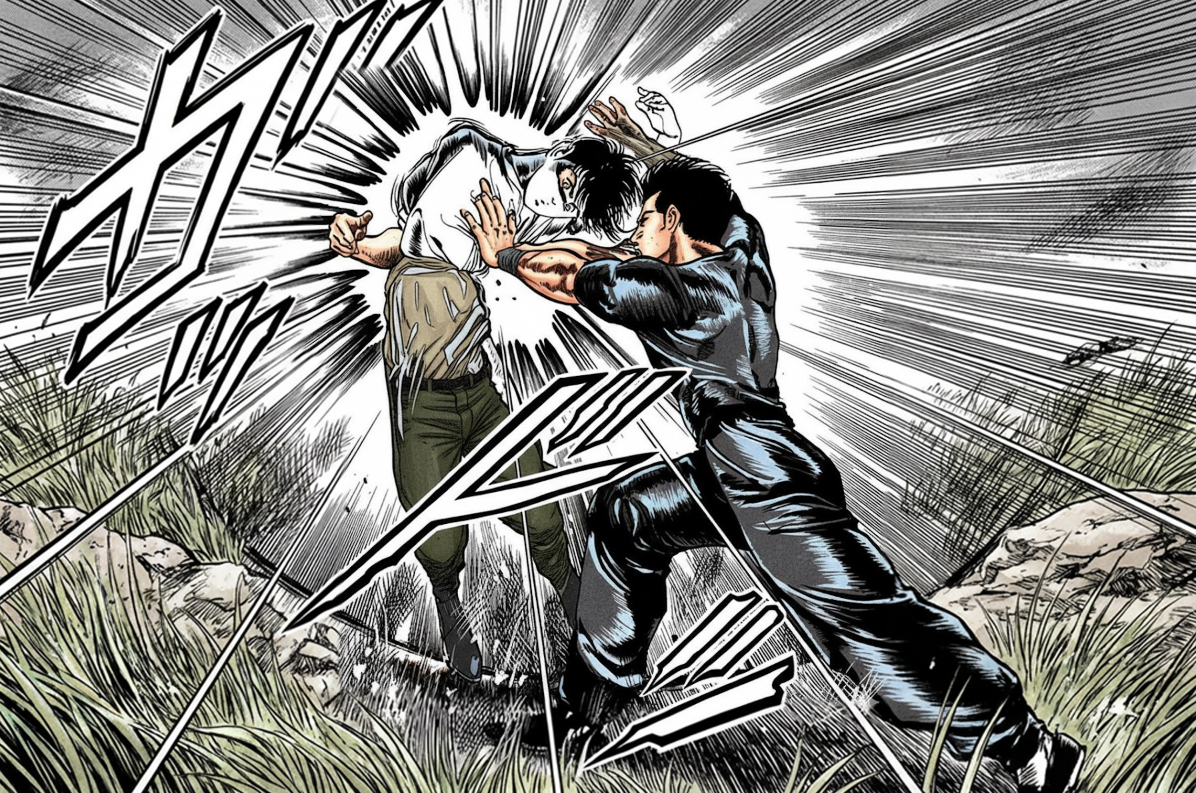
Between 1925 and 1926, drawing upon Li Shuwen’s combat methods and his own extensive fighting experience, Huo Diange synthesized Eight Ying Shou Quan (Responsive Hand Boxing). Each form begins and ends with distinct opening and closing postures and is built around eight core movements. These eight techniques can be combined and varied to produce 64 applications, or even more, adapting fluidly to real-time combat conditions. The system emphasizes responsiveness, simplicity, and devastating practicality, making it highly effective in actual fighting scenarios. Xu Yusheng studied with Huo Diange during this time, given his deep foundation of Bajiquan (of the Qiang Ruiqing/Fan Qingyun line), he excelled quickly under the guidance of Li Shuwen and Huo Diange, becoming a disciple under Huo. Xu emphasized the principles and ferocity of the Ying Shou Quan techniques.
Ying Shou Quan quickly gained popularity among martial artists of the time. Notable practitioners included Li Jinglin, Liu Qirui, and Li Shutang, all of whom frequently employed its techniques to overcome challengers. When Huo Diange later served as a martial arts instructor to Puyi, the last emperor of China, Ying Shou Quan became a required component of training for his Bajiquan disciples. Its straightforward, adaptable, and battle-tested nature made it especially valued for military applications, where it was taught to palace guards and elite troops alike.
However, Huo Diange always emphasized that Ying Shou Quan must be grounded in a solid foundation of Bajiquan. Without mastery of Bajiquan’s core principles: structure, power generation, and body mechanics, the techniques of Ying Shou Quan cannot be executed with their intended speed, continuity, or combat effectiveness. True application requires movements to be delivered in one seamless, explosive sequence: no matter how the opponent reacts, the practitioner launches an unbroken chain of attacks, leaving no opening for defense. This embodies the quintessential Bajiquan principle of “no defense, only overwhelming offense.” Unfortunately today, few practitioners have mastered the foundations adequately to execute Ying Shou Quan in its combative format.
Song of Ying Shou Quan
I.
Open the fight with Responsive Strikes, Eagle’s Claw shifts to Scouting Horse Palm.
Add Pressing Punches to Left-Right Splitting Punches, Cleaving, Smashing, Scooping, and Lifting follow closely.
II.
Double Pulling Hands leads to Double Thrusting, Step in with Tucking Palm and Waist Punch.
The Snap Strike becomes the Charging Punch, Kick, strike, advance with the Charging Punch.
III.
Circle and Embrace, press forward, then turn over, Three consecutive punches, left and right splitting.
Double Flicking Hands with Swinging Step Punch, Turn the body, flip the back for a fierce palm strike.
Black Dragon Embraces the Pillar with Half-Step Punch, Step forward with a true palm strike.
IV.
Left and Right Subduing the Dragon advance forward, Step in and strike with the Left Yin Punch.
Black Dragon Coils and Carries, step in and smash, Snap hand, pull and drag, strike the lower Yin.
V.
Holding Elbow attacks, left and right splitting, Advancing Palm becomes Left Eagle’s Claw.
Step in with a palm strike and a low groin lift, Advancing strike punch followed by consecutive palm strikes.
VI.
Lift elbow, lift strike, press inward, Left and right consecutive punches target the chest.
Separate both palms, knee thrusts to the groin, Turn over, Horse Stance, strike the rear.
Threading Palm attacks the face, Subduing the Dragon rises straight to injure him.
VII.
Both hands pull and hang close to the body, Flicking Hand advances with Rising Sun Palm.
Chest bump, hip strike, palm embraces the body, Split Silk, Lift Willow, lift the groin palm.
When the opponent rushes in, use interlocking steps, Left and right snap strikes must be executed earnestly.
VIII.
Folding and advancing, fierce and urgent, Takedowns, strikes, pulls, and hangs are truly extraordinary.
Turn over fiercely for throws and strikes, Left and right splitting palms, Tiger Step walk.
Double Entwining Pulling Hands subdues the tiger, Withdraw step, pull back the body, secure the footing.
————————————
General outline of Huo Diange’s legacy
Huo Diange was born in Xiaoji Village, Cangxian County, Hebei Province, into a region steeped in martial tradition. From a young age, he showed a deep passion for martial arts. At 14, he accompanied the children of the local Zhang family, relatives of the prominent Qing officials Zhang Zhiwan and Zhang Zhidong, as they trained under Li Wuye, a skilled practitioner of Piao Saquan (Floating Boxing) nicknamed “Copy White Tiger.” Under Li Wuye’s guidance, Huo Diange learned Erlangquan, Thirty-Six Quan, ShilangKuanquan, and basic qinggong (light-body skills). After two years, Li Wuye recommended his own teacher, the legendary “Magic Gun” Li Shuwen, to instruct the Zhang family. When Li Shuwen arrived in Xiaoji in 1903, the 16-year-old Huo Diange began studying Bajiquan and Liuhe Daqiang under him. Recognized for his talent, diligence, and pure character, Huo quickly earned Li Shuwen’s favor and was formally accepted as a disciple. For the next twelve years, Huo trained relentlessly—often forgetting to eat or sleep, and earned such deep trust that Li Shuwen frequently stayed at the Huo household upon returning from military service, giving rise to famous anecdotes like “Li eats chicken but doesn’t spit out the bones.”
By his late twenties, Huo Diange’s skill had matured. Li Shuwen began taking him on journeys through the martial “rivers and lakes,” where Huo gained invaluable real-combat experience. The two initially taught together in Tianjin, holding classes at Jianguo Road and Zhongxin Park. Around this time, Huo also brought his nephew Huo Qingyun, whom he raised as a son after losing his own children, to train alongside him. In the early 1920s, Xu Lanzhou, commander of the First Division of the Heilongjiang Garrison, invited Li Shuwen to serve as martial arts instructor at a military academy in Harbin. Huo Diange accompanied him and soon formed a close bond with Liu Wobai, the academy’s Director of Academic Affairs, who gifted him a banner inscribed: “Dapeng soars among heroes; the world is chaotic, when will it end? A true man never rests.” This marked the beginning of Huo’s military teaching career across Northeast China, including Harbin, Shenyang, and Changchun.
In 1924, following Feng Yuxiang’s entry into Beijing and Puyi’s expulsion from the Forbidden City, Huo returned to Tianjin with Xu Lanzhou. There, he introduced his nephew Huo Qingyun to influential figures like Li Jinglin, the military governor of Zhili, who took a liking to the young man and accepted him as a formal disciple, nicknaming him “Huo Hei” (Black Huo). By 1926, reunited with Li Shuwen at the Xulanzhou Mansion in Tianjin, Huo synthesized decades of combat experience, drawing especially from Li Shuwen’s ruthless yet refined fighting methods, and created Ying Shou Quan (“Responsive Hand Boxing”). This compact, highly practical system, built on eight core movements that could generate 64 or more variations, became a cornerstone of the Huo family’s Bajiquan curriculum.
In 1927, while Puyi resided in the Japanese concession of Tianjin, he sought to emulate his ancestors by becoming a “Kung Fu Emperor.” After tensions arose with his Japanese bodyguards, Puyi, urged by Xu Lanzhou and the late-Qing scholar Shang Yanying, organized a martial arts trial to hire a Chinese instructor. Huo Diange and Huo Qingyun were summoned. In the contest, Huo Diange effortlessly defeated the Japanese samurai Kudo using only two-finger techniques, while Huo Qingyun overpowered Iwata with a tiger-drill strike. Impressed, Puyi declared, “Chinese martial arts are still great!” and appointed Huo Diange as his personal martial arts teacher, with Huo Qingyun serving as an imperial guard.
When Puyi moved to Changchun in 1932 to become the puppet emperor of Manchukuo, Huo Diange followed as a major general and military attaché. He established a “Guard Army” composed primarily of Huo family disciples to protect the emperor and taught Bajiquan not only to Puyi and his family but also to palace guards and civilians alike. Due to Huo Diange’s official duties, Huo Qingyun assumed primary responsibility for training disciples, a common practice in martial lineages. In 1934, Zhou Xinwu, a senior Choujiao master and Huo Diange’s sworn brother known as “Iron Arm,” arrived in Changchun and opened a school on Sanmalu Street. Huo Diange dispatched Huo Qingyun to assist him, turning Sanmalu into a second hub for Huo-style Bajiquan.
Tensions with the Japanese escalated in 1937. That June, a group of Huo’s guard disciples clashed with Japanese soldiers at Datong Park (now Children’s Park) in Changchun after enduring repeated insults. The ensuing fight left a Kwantung Army colonel and dozens of military police injured, and a Japanese attack dog dead. The “Datong Park Incident” made headlines nationwide and infuriated the Japanese authorities, who viewed Huo’s disciples as a persistent threat. In retaliation, they arrested and executed several disciples, disbanded the guard unit, and forced Huo Qingyun to flee to Shenyang under charges of anti-Japanese activity. Huo Diange was politically marginalized and removed from the palace. He died in early autumn 1942 at age 57, reportedly from illness and despair.
After Huo Diange’s death, Huo Qingyun (1905–1987) became the chief inheritor of Huo-style Bajiquan. Already renowned for defeating famous boxers by age 18 and Japanese martial artists during his time in the palace, he continued teaching across Northeast China. In 1942, disciple Yang Bin founded a practice hall in Changchun’s East Railway Station Charity Hall, inviting Huo Qingyun to lead instruction. After the 1949 Liberation, Huo helped establish the Gongzhuling Guoshu Museum in 1946 and later co-founded the Changchun Wushu Research Association in 1950, serving as its chairman. He traveled extensively, teaching in Changchun, Shenyang, Harbin, and Dalian, and trained hundreds of students, solidifying the Huo lineage as the dominant Bajiquan branch in the Northeast. Today, this tradition is widely known as Huo Shi Bajiquan.
Huo Diange’s innovations also left a lasting technical legacy. He expanded Bajiquan’s foundational Liu Da Kai (Six Great Openings) by adding two techniques: Chao Yang Shou (“Sun-Facing Hands”) and Ba Wang Zhe Jiang (“Overlord Cuts the Reins”), creating the Ba Da Kai (Eight Great Openings), now standard in many Huo-lineage curricula.
In 1994, to honor their contributions, 194 descendants and disciples jointly erected a memorial stele in Xiaoji Village, Huo Diange’s hometown. The unveiling ceremony drew over 1,000 attendees, including local officials, martial arts organizations, and international representatives from Japan, Canada, and across China. Media outlets like Cangzhou Daily covered the event extensively. The monument stands not only as a tribute to Huo Diange and Huo Qingyun but also as a call to preserve their martial spirit, marked by courage, integrity, and unwavering resistance to oppression.
Their legacy endures not only in dojos worldwide but also in popular culture: the 1980s novel Legend of the Emperor’s Martial Master and the 30-episode TV series Legend of Kant’s First Bodyguard brought Huo Diange’s heroic life to a broad audience, ensuring that the story of the “Bodyguard Style” and its noble masters remains alive for generations to come.