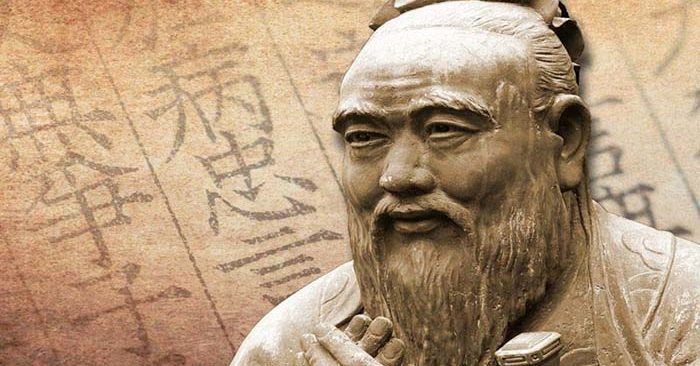
Moral Attitudes in Martial arts Training :
一、持之以庄:练国术须要庄重,即敦厚诚朴,不可轻窕,亦不可骄傲.
(1) Maintain Seriousness
To practise martial arts, you must be serious, meaning sincere and humble rather than proud and arrogant.
二、临之以敬:与人交接要有恭敬心,态度要谦恭诚恳,切忌阿谀贱态,尤忌傲慢自大。
(2) Be respectful
When in the company of others, you should be respectful. Your manner should be polite, modest, and friendly, though not to the point of false flattery, and you should never look down on others with a sense of self-importance.
三、接之以和:练国术人要心平气和,切忌凶暴,逞强凌人,野蛮行为最可耻,待人接物,以和为主。
(3) Receive others peacefully
A martial artist should be even-tempered and harmonious. Avoid being violent, competitive, or insulting, for there can be nothing more disgraceful than to conduct yourself with cruelty.
四、秉之以公:练国术处事不可有私心,不要有偏见,做事要大公无私,光明垒落,应有慷慨正气,不屈不挠之精神。
(4) Maintain a sense of Justice & integrity.
To practise martial arts, you should in all matters be unselfish and unbiased, fair and impartial, open-minded and upright. Be generous, righteous, and incorruptible.
五、练之以勤:练国术要勤劳不辍,不可怠惰。
(5) Train/Practice with Diligence
To practise martial arts, you have to work at it industriously and unceasingly. You must not be lazy. Mastery lies in hard work, whereas fooling around will amount to nothing, and success lies in focus, whereas just doing whatever you feel like will make it all fall apart.
六、行之以义:练国术要有忠勇义侠精神,
(6) Conduct yourself with honour.
To practise martial arts, you should have a mentality of loyalty and chivalry.
七、存之以仁:「仁者无敌」练国术以仁爱为本,融容大度,存心善良,应有博爱精神。
(7) Cherish Compassion
It is said, “The compassionate have no enemies.” To practise martial arts, base yourself in compassion and humaneness. Be mild, magnanimous, and kindhearted. You should have a mentality of universal love.
八、归之以忠:练国术人切戒私鬪,逞强私鬪最为可耻,应以技术身心献于国家民族。
(8) Be Loyal
A martial artist resolutely avoids getting into fights to prove himself. If you fight with others simply to flaunt your own superiority, you should be utterly ashamed of yourself, for you should instead be contributing your skill, body, and mind to your righteous causes of nations and people.
Essentials requirements in the study of martial arts
一、要循规渐进,练拳不可心急,须渐渐进展,凡未经练习国术之人,或已练过而辍弃太久者,其周身脉络筋骨,均不灵活,倘遽而用力过猛,或一次练习时间太多,则筋骨脉络有张弛之痛苦,故宜听从老师指导,循规渐进为宜。
1. You should train properly and progress gradually. In practising boxing, you must not be impatient but must instead let progress gradually unfold. It is generally the case for one who has never practised, or for one who has not practised in a long time, that his whole body, its channels and vessels, sinews and bones, will not be nimble. If he is hasty and exerts himself too aggressively or practises too much in one session, then his sinews and bones, channels and vessels, will be strained to the point of pain. Therefore, it is best to listen to your teacher’s guidance and train properly, progressing gradually.
二、要有恒心,语云:「有恒为成功之本」,不可中途停辍,无论做何事,皆须有恒,而练国术更为重要,古语云:「字要习,马要骑,胡琴要勤拉,拳脚要踢打,」又云:「拳不离手,曲不离口」,天天练习,时久自成,可获毕生之益。
2. You should be persevering. There is a saying: “Perseverance is the basis of success.” You must not go only halfway and then quit. No matter what your project is, in all cases you must have perseverance, and in martial arts it is even more important. There is an old saying: “Characters should be written, horses should be ridden, fiddles should be played, and fists and feet should punch and kick.” There is another saying: “Boxing will never go away from [a boxer’s] hands. Singing will never go away from [a singer’s] mouth.” With daily practice over a long period, you will naturally succeed, and you will be able to obtain its benefits for your whole life.
三、要心平气和,学国术要静气凝神,涵养谨厚,不可狂妄作态,以免受社会人士轻视,而影响国术之普及。
3. Your mind should be calm, and your emotions should be in harmony. When learning martial arts, you should quiet your emotions and concentrate your spirit, as well as restrain yourself and be cautious toward others. You must avoid displaying an arrogant attitude. You will thereby avoid being despised by others in society, and you will help influence the spread of martial arts.
四、要尊师重道,敬业乐群,所谓技也近乎道,要尊敬师长,同道合作,养成义侠正气,救弱扶倾之精神,与捍卫国家之大志。
4. You should respect the teacher and take his method seriously, and also respect the work and take delight in your fellows. It is therefore said that “skill approaches the Way”. The teacher should be respected, because it is by way of like -mindedness that we work together. To cultivate a spirit of justice and righteousness, of rescuing the weak and bolstering the weary, and to defend the people, are the major aims.
Martial Morality 武德
Martial morality has always been a required discipline in Chinese martial arts society. Teachers have long considered martial morality to be the most important criterion for assessing students, and they have made it the most important part of the training in the traditional Chinese martial arts. It includes two aspects: the morality of deed and the morality of mind.
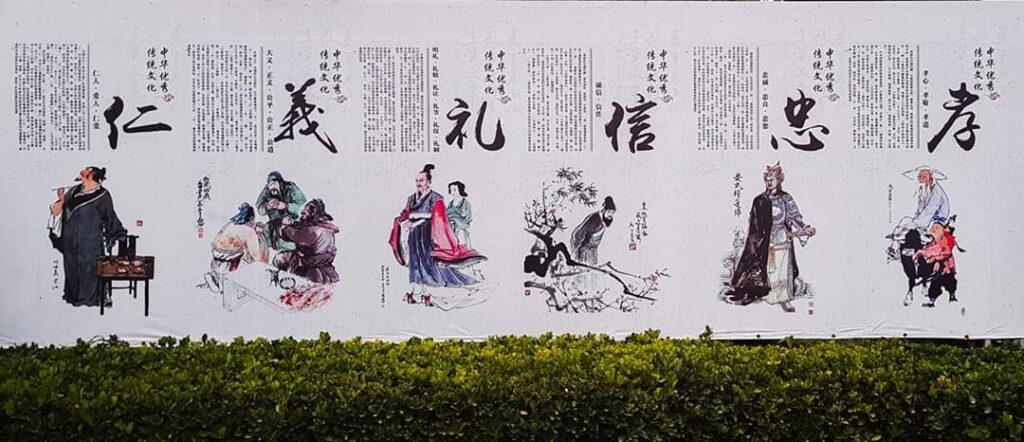
Morality of deed includes: Humility, Respect, Righteousness, Trust, and Loyalty.
Morality of mind consists of: Will, Endurance, Perseverance, Patience, and Courage.
Traditionally, only those students who had cultivated these standards of morality were considered to be worthy of teaching. Of the two aspects of morality, the morality of deed is more important, because it concerns the student’s relationship with master and classmates, other martial artists, and the general public. Students who are not moral in their actions are not worthy of being taught, since they cannot be trusted or even respected. Furthermore, without morality of deed, they may abuse the art and use their fighting ability to harm innocent people. Therefore, masters will normally watch their students carefully for a long time until they are sure that the students have matched their standards of morality of deed before letting them start serious training.
Morality of mind is for the self-cultivation which is required to reach the final goal. The Chinese consider that we have two minds, an “emotional mind” (Xin 心) and a “Wisdom mind” (Yi 意). Usually, when a person fails in something, it is because the emotional mind has dominated their thinking. The five elements in the morality of mind are the keys to training, and they lead the student to the stage where the wisdom mind can dominate. This self-cultivation and discipline should be the goal of any martial arts training philosophy.
Morality of Deed
Humility comes from controlling your feelings of pride. In China it is said, “Satisfaction (pride) loses, humility earns benefits.” When you are satisfied with yourself, you will not think deeply, and you will not be willing to learn. However, if you remain humble, you will always be looking for ways to better yourself, and you will keep on learning. Remember, there is no limit to knowledge. It does not matter how deep you have reached, there is always a deeper level. Confucius said, “If three people walk by, there must be one of them who can be my teacher.” There is always someone who is more talented or more knowledgeable than you in some field. The Chinese say, “There is always a man beyond the man, there is a sky above the sky.” Since this is so, how can you be proud of yourself?
Respect 敬 is the foundation of your relationship with your parents, teachers, fellow students, other martial artists, and all other people in society. Respect makes a harmonious relationship possible. However, the most important type of respect is self-respect. If you can’t respect yourself, how can you respect others or expect them to respect you? Respect must be earned; you cannot request or demand it.
In China, it is said: “Those who respect themselves and others will also be respected.” For example, if you despise yourself and become a villain in this society, then you have lost your self-respect. Since you have abused your personality and humility as a human, why should other people respect you? Only when you have demonstrated that you are deserving of respect will respect come to you automatically and naturally.
Righteousness 義 is a way of life. Righteousness means that if there is something you should do, you don’t hesitate to take care of it, and if there is something that you should not do, you don’t get involved with it. Your wisdom mind should be the leader, not your emotional mind. If you can do this, then you will feel clear spiritually, and avoid being plagued by feelings of guilt. If you can demonstrate this kind of personality you will be able to avoid evil influences, and you will earn the trust of others.
Trust 信 includes being trustworthy, and also trusting yourself. You must develop a personality which other people can trust. For example, you should not make promises lightly, but if you have made a promise, you should fulfill it. Trust is the key to friendship, and the best way of earning respect. The trust of a friend is hard to gain, but easy to lose. Self-trust is the root of confidence. You must learn to build up your confidence and demonstrate it externally. Only then can you earn the trust and respect of others.
Loyalty 忠 is the root of trust. You should be loyal to your teacher and to your friends, and they should also be loyal to you. Loyalty lets mutual trust grow. In the Chinese martial arts, it is especially crucial that there be loyalty between you and your master. This loyalty is built upon a foundation of obedience to your master. Obedience is the prerequisite for learning. If you sincerely desire to learn, you should rid yourself of false dignity. You must bow to your teacher both mentally and spiritually. Only this will open the gates of trust. A teacher will not teach someone who is always concerned about his own dignity. Remember, in front of your teacher, you do not have dignity.
Morality of Mind
Will (意智 Yi Zhi)
It usually takes a while to demonstrate a strong will. This is because of the struggle between the emotional mind and the wisdom mind. If your wise mind governs your entire being, you will be able to suppress the disturbances that come from the emotional mind, and your will can last. A strong will depends upon the sincerity with which you commit yourself to your goal. This has to come from deep within you and can’t be just a casual, vague desire. Oftentimes, the students who show the greatest eagerness to learn in the beginning quit the soonest, while those who hide their eagerness deep inside their hearts stay the longest.
Endurance, Perseverance, and Patience (忍耐 Ren Nai, 毅力 Yi Li, 恆心 Heng Xin)
Endurance, perseverance, and patience are the manifestations of a strong will. People who are successful are not always the smartest ones, but they are always the ones who are patient and who persevere. People who are really wise do not use wisdom only to guide their thinking; they also use it to govern their personalities. Through cultivating these three elements, you will gradually build up a profound mind, which is the key to the deepest essence of learning. If you know how to use your mind to ponder as you train, it can lead you to a deeper stage of understanding. If you can manifest this understanding in your actions you will be able to surpass others.
Courage (勇敢 Yong Gan)
Courage is often confused with bravery. Courage originates with the understanding that comes from the wise mind. Bravery is the external manifestation of courage and can be considered to be the child of the wise and the emotional minds. For example, if you have the courage to accept a challenge, that means your mind has understood the situation and made a decision. Next, you must be brave enough to face the challenge. Without courage, the bravery cannot last long. Without the profound comprehension of courage, bravery can be blind and stupid.
Daring to face a challenge that you think needs to be faced is courage. But successfully manifesting courage requires more than just a decision from your wisdom mind. You also need a certain amount of psychological preparation so that you can be emotionally balanced; this will give your bravery a firm root so that it can endure. Frequently you do not have enough time to think and make a decision. A wise person always prepares, considering the possible situations that might arise, so that when something happens he will be ready and can demonstrate bravery.
Students must understand, demonstrate, and promote these concepts and work to re-establish martial morality as an integral aspect of all martial arts training.