As global life expectancy rises, tendon aging has become an increasingly important health concern. Chronic tendon disorders, including tendinopathy, are common in older adults and contribute to pain, impaired mobility, and reduced quality of life. In high-risk populations, the lifetime prevalence of tendinopathy can reach up to 25 percent. Age-related changes in tendon structure and cellular function limit the ability of these tissues to respond to injury and stress, making effective management particularly challenging. This has highlighted the need for innovative strategies, such as cell-based rejuvenation, to restore tendon health.
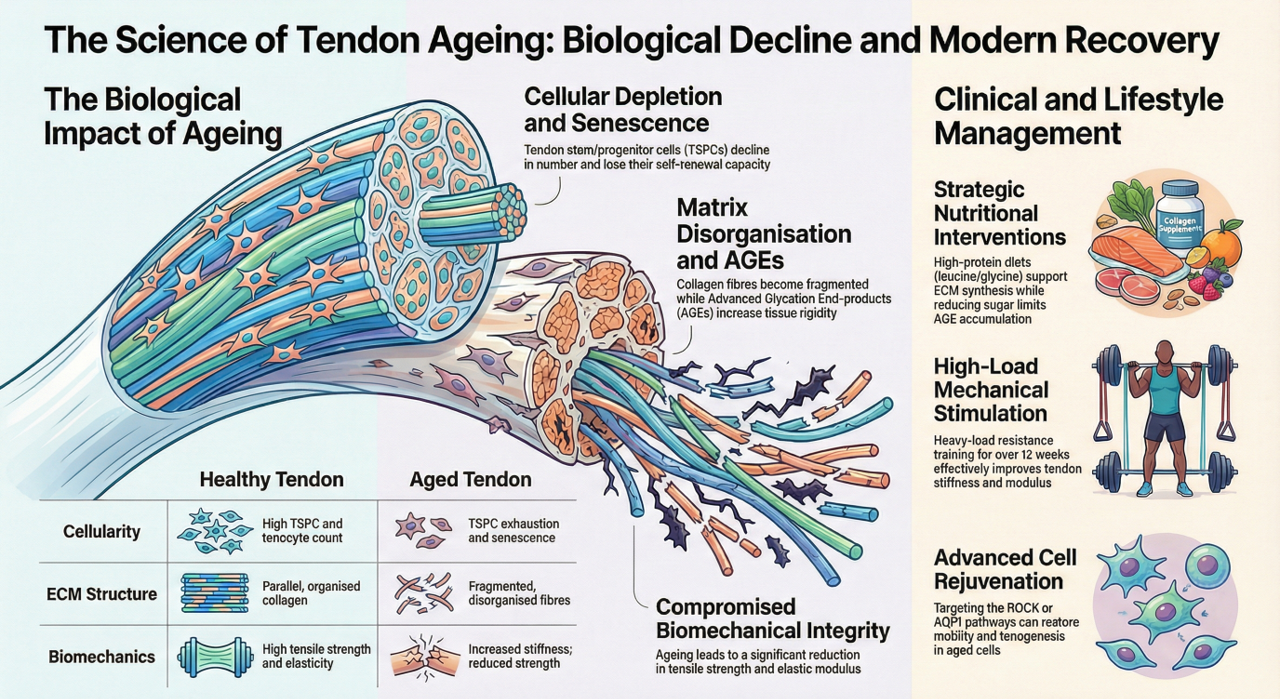
At the cellular level, tendon aging is associated with declines in tendon stem/progenitor cells and tenocytes. These cells, which are essential for tissue maintenance and repair, decrease in number and show reduced proliferation, migration, and differentiation capacity. Remaining cells often adopt a more rounded morphology with disorganized actin cytoskeleton and impaired mechanotransduction. Metabolic activity diminishes, limiting the tissue’s ability to synthesize extracellular matrix and respond to microdamage. Cellular exhaustion is compounded by premature senescence, driven by dysregulated signaling pathways and epigenetic modifications.
The extracellular matrix, which provides structural integrity and transmits mechanical force, also deteriorates with age. Collagen type I, the primary determinant of tensile strength, becomes fragmented and disorganized. Nonenzymatic accumulation of advanced glycation end products forms excessive crosslinks between fibers, increasing tissue rigidity while impairing cellular adhesion and migration. The tightly regulated balance of matrix metalloproteinases and their inhibitors is disrupted, contributing to accelerated matrix turnover and reduced homeostatic maintenance. Together, these changes compromise both the physical scaffold of the tendon and its ability to remodel effectively after injury.
Mechanical properties of aged tendons are markedly altered. Tensile strength declines, strain tolerance decreases, and overall tissue elasticity is impaired, making tendons more vulnerable to microdamage and rupture. Healing responses are further hampered by low-grade chronic inflammation, sometimes referred to as inflammaging. Immune cell recruitment is reduced, antioxidant defenses are lower, and collagen type III production predominates during repair, resulting in immature scar-like tissue that is prone to re-injury.
Addressing tendon aging requires a combination of lifestyle interventions and advanced therapeutic strategies. Exercise, particularly high-load resistance training, has been shown to stimulate collagen synthesis, improve tendon stiffness, and enhance overall mechanical function. Dietary modifications that reduce the intake of advanced glycation end products and high-sugar foods may also mitigate age-related matrix stiffening. Surgical intervention remains an option but is often reserved for severe cases due to the risks associated with advanced age.
The most promising frontier lies in cellular rejuvenation therapies. Approaches include modulation of intrinsic signaling pathways, such as JAK-STAT and ROCK, to reverse aspects of cellular senescence. Preclinical studies have shown that culturing aged tendon cells with young extracellular matrix or within three-dimensional biomaterial scaffolds can partially restore proliferation, migration, and differentiation potential. These strategies aim to rejuvenate tendon-resident cells and improve repair quality, potentially reducing the risk of chronic injury and improving functional outcomes in aging populations.
Tendon aging is a multifactorial process that compromises both the biological and mechanical properties of this essential connective tissue. While conventional management strategies provide some relief, addressing the root causes of cellular and extracellular matrix decline will be critical for restoring tendon health. Emerging regenerative therapies, combined with targeted exercise and dietary interventions, offer a pathway toward improved outcomes for older adults and represent a compelling area for future research and clinical translation.