This frontier warfare also explains why the gaucho’s martial reputation involved considerably more than personal duelling. He had to endure long rides, poor food, exposure, fatigue and uncertainty. He needed to know how to move through country where roads were rudimentary or nonexistent. He needed to recognize water, grazing and routes of travel. He needed to handle a horse after hours of riding and still be capable of fighting. In an irregular war, the ability to remain mobile and self-sufficient could be as important as the ability to strike an opponent.
There is an old saying in the martial arts world: “One who practices martial arts is half a doctor” (武林有句俗话“一个武半个医”). Those who train in martial arts often suffer injuries, so skilled practitioners also tend to learn bone-setting and massage techniques. In the ancient city of Cangzhou (沧州), there is a renowned martial arts master named Ma Zhendong (马振东), who, while training in martial arts, also mastered the advanced skills of bone-setting and massage. He teaches people martial arts for fitness while also providing free medical treatment.
Wu Qin Xi was created by Hua Tuo at the end of the Eastern Han Dynasty. Hua Tuo’s contributions to physical fitness and health preservation were outstanding. Based on the theory of the “Inner Classic” (Nei Jing) of traditional Chinese medicine, the theory of Yin-Yang and the Five Elements, and the movement patterns of the body’s organs, meridians, Qi, and blood, Hua Tuo observed the habits and postures of various birds and beasts. He selected the characteristics of the tiger (fierce), deer (agile), ape (intelligent), bear (steady), and bird (harmonious) to form the Wu Qin Xi routine. This is a health-preserving Qigong that combines internal and external cultivation, perfecting the ancient (导引) and Tu Na (吐纳) breathing exercises
The sabre is valued for its length, the body for its weight;
For every finger‑length of extra sabre, a portion of gold.
Where the blade meets the guard, distinguish hard and soft;
When steel is dipped for the edge, discern shallow and deep.
Hook Sickle Spear (钩镰枪, Goulian Qiang) is a type of cold weapon from ancient China.It was used in infantry combat and was one of the weapons in ancient chariot warfare tactics. Its form consists of a long spear with a barbed hook on the sharp blade of the spearhead, specifically designed to counter enemy cavalry.
The Jian Jing manual is not a collection of techniques, rather it is a method of controlling distance, line, rhythm, and force so that the staff becomes an extension of the whole body, and the body becomes a formation. One of the main problems with those that have not studied the staff, is that often wiggle around the staff without attention of the body, and in chinese martial arts, and in the Jian Jing, significant focus is on distance, stepping, as well as the lines of forces.
Many practitioners of Xingyi Quan (形意拳) encounter a very real predicament: during daily practice, the Five Elemental Fists (五行拳) are performed with formidable power, the routines are memorized to perfection, and movements flow like water. Yet once they put on boxing gloves and engage in sparring, their minds instantly go blank. They frantically search their memory
Wang Ensheng was master of the brush and the sword. He created the most works for Tianjin publishers. Before the Cultural Revolution, Wang Ensheng painted approximately thirty comic books for various publishing houses in total. He also created some short comic book pieces for various comic book periodicals and art journals. It can be said that he was one of the representative outstanding comic book artists of the first generation in Tianjin. As well as being an inheritor of the Wudang Sword.
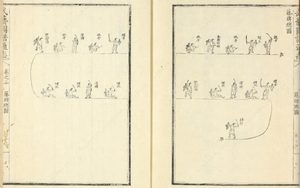 【御定武艺图谱通志20】藤牌谱、藤牌总谱、藤牌总图 其中提到的技术招势有:1起手势、2跃步势、3低平势、4金鸡畔头势、5低平势、6跃步势、7低平势、8滚牌势、9低平势、10仙人指路势、11埋伏势、12埋伏势、13滚牌势、14埋伏势、15仙人指路势、16埋伏势、17滚牌势、18埋伏势、19跃步势、20斜行势。戚继光《纪效新书》藤牌八势图诀藤牌八势谱:1.懒扎衣势、2.斜行势、3.仙人指路势、4.滚牌势、5.跃步势、6.低平势、7.金鸡畔头势、8.埋伏势其中的懒扎衣势,也就是朝鲜谱中所说的起手势。朝鲜谱中的藤牌20势,去除重复的技术招势,与戚继光书中的8势一致。
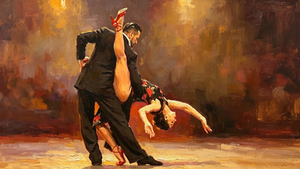 This frontier warfare also explains why the gaucho’s martial reputation involved considerably more than personal duelling. He had to endure long rides, poor food, exposure, fatigue and uncertainty. He needed to know how to move through country where roads were rudimentary or nonexistent. He needed to recognize water, grazing and routes of travel. He needed to handle a horse after hours of riding and still be capable of fighting. In an irregular war, the ability to remain mobile and self-sufficient could be as important as the ability to strike an opponent.
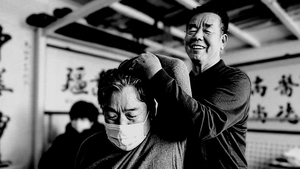 There is an old saying in the martial arts world: “One who practices martial arts is half a doctor” (武林有句俗话“一个武半个医”). Those who train in martial arts often suffer injuries, so skilled practitioners also tend to learn bone-setting and massage techniques. In the ancient city of Cangzhou (沧州), there is a renowned martial arts master named Ma Zhendong (马振东), who, while training in martial arts, also mastered the advanced skills of bone-setting and massage. He teaches people martial arts for fitness while also providing free medical treatment.
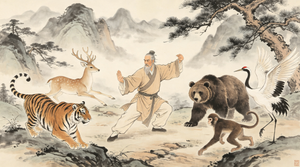 Wu Qin Xi was created by Hua Tuo at the end of the Eastern Han Dynasty. Hua Tuo’s contributions to physical fitness and health preservation were outstanding. Based on the theory of the “Inner Classic” (Nei Jing) of traditional Chinese medicine, the theory of Yin-Yang and the Five Elements, and the movement patterns of the body’s organs, meridians, Qi, and blood, Hua Tuo observed the habits and postures of various birds and beasts. He selected the characteristics of the tiger (fierce), deer (agile), ape (intelligent), bear (steady), and bird (harmonious) to form the Wu Qin Xi routine. This is a health-preserving Qigong that combines internal and external cultivation, perfecting the ancient (导引) and Tu Na (吐纳) breathing exercises
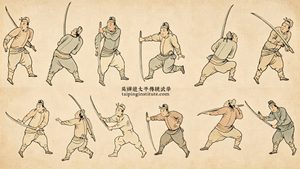 The sabre is valued for its length, the body for its weight; For every finger‑length of extra sabre, a portion of gold. Where the blade meets the guard, distinguish hard and soft; When steel is dipped for the edge, discern shallow and deep.
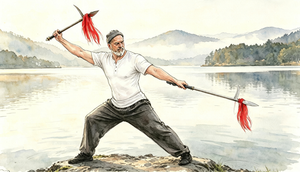 Hook Sickle Spear (钩镰枪, Goulian Qiang) is a type of cold weapon from ancient China.It was used in infantry combat and was one of the weapons in ancient chariot warfare tactics. Its form consists of a long spear with a barbed hook on the sharp blade of the spearhead, specifically designed to counter enemy cavalry.
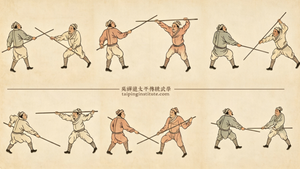 The Jian Jing manual is not a collection of techniques, rather it is a method of controlling distance, line, rhythm, and force so that the staff becomes an extension of the whole body, and the body becomes a formation. One of the main problems with those that have not studied the staff, is that often wiggle around the staff without attention of the body, and in chinese martial arts, and in the Jian Jing, significant focus is on distance, stepping, as well as the lines of forces.
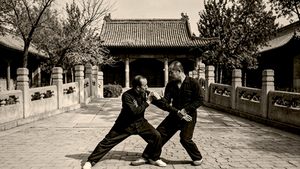 通背者何也?通即通达之意、贯通之法;背乃人之脊背,动作之则。本由背,背通肩,肩通肘,肘通腕,腕通手掌,手通指;肩背向下通腰,腰通胯,胯通膝,膝通 足,足通步,步通身,身通手,身通于眼,眼通心,心通神,神通意,意通胆,胆通气,气通血,血通筋,筋通力。力由背发,根在于足,始由足,贯于背,由背贯 于指掌全体,内外贯通一气,法则放长击远,此之谓通背。
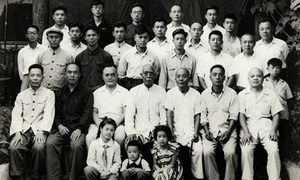 陈氏太极拳老架一路 陈氏太极拳老架一路74式,一路拳以柔为主,柔中有刚,架势舒展大方,步法轻灵稳健,身法中正自然,内劲统领全身,以缠丝劲为核心,运动以腰为轴,节节贯串,运动如行云流水,绵绵不断,发劲时松活弹抖,完整一气。 练习时要求,虚领顶劲,立身中正,松肩沉肘,含胸塌腰,松胯圆裆,呼吸自然,快慢相间,外形走弧线,内劲走螺旋,逐渐产生一种似柔非柔,似刚非刚,极为沉重而又极为灵活善变的内劲。整套拳没有平面,没有直线,没有断续处,没有凹凸处,没有抽扯之形,没有提拔之意,浑然一圆,方为合格。 老架一路 74势 太极起势, 金刚捣碓, 懒扎衣, 六封四闭, 单鞭, 金刚捣碓, 白鹅亮翅, 斜形, 搂膝, 拗步, 斜形, 搂膝, 拗步, 掩手肱拳, 金刚捣碓, 撇身捶, 青龙出水, 双推手, 肘底看拳, 倒卷肱,… Read more: 陈氏大架太极拳 拳谱
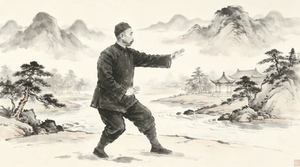 郭云深文武双全,不仅拳法独步一时,又熟练兵书,对形意拳理论,进行过系统的研究和总结,遗著有《能说形意拳经》一书。对形意拳理论的论述,其要点如下:“形意拳有三层道理,有三步功夫,三种练法。三层道理是:一练精化气,二练气化神,三练神还虚。三步功夫是:一易骨,二易筋,三易髓。三种练法是:明劲,暗劲,化劲。”郭云深在论述形意拳理论时,特别强调桩功,指出三体式(形意拳基本桩法)为万形之基础。这些理论对于后人学习形意拳有着重要的帮助。
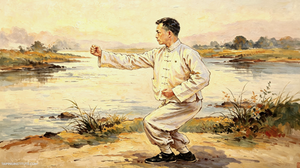 Many practitioners of Xingyi Quan (形意拳) encounter a very real predicament: during daily practice, the Five Elemental Fists (五行拳) are performed with formidable power, the routines are memorized to perfection, and movements flow like water. Yet once they put on boxing gloves and engage in sparring, their minds instantly go blank. They frantically search their memory
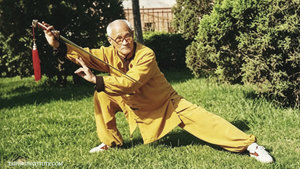 Wang Ensheng was master of the brush and the sword. He created the most works for Tianjin publishers. Before the Cultural Revolution, Wang Ensheng painted approximately thirty comic books for various publishing houses in total. He also created some short comic book pieces for various comic book periodicals and art journals. It can be said that he was one of the representative outstanding comic book artists of the first generation in Tianjin. As well as being an inheritor of the Wudang Sword.