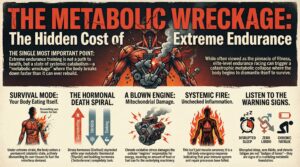
The Cost of the Exhaustive Endurance: What the Tour Does to a Cyclist’s Body
They are some of the fittest men on earth, able to summon superhuman power on a mountain pass one day and sprint for glory the…
They are some of the fittest men on earth, able to summon superhuman power on a mountain pass one day and sprint for glory the…
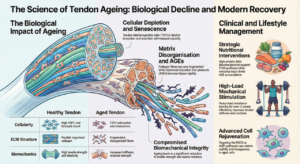
Tendon aging is a multifactorial process that compromises both the biological and mechanical properties of this essential connective tissue.
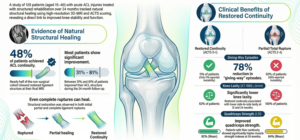
Natural ACL repair is becoming a real option, especially if the tear is new and the knee is otherwise stable. For martial artists, this can…
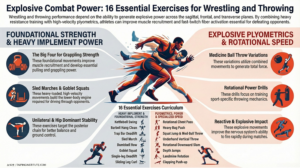
Success in wrestling and throwing disciplines demands more than technical skill,it requires explosive power that can be deployed instantly against a resisting opponent. Research demonstrates…
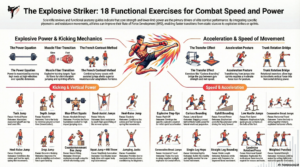
Lower-limb strength and power are critical for martial arts athletes to perform complex maneuvers such as aerial outward swings. These physiological attributes govern execution speed, movement amplitude, and postural control during the high-stress environment of competitive combat.
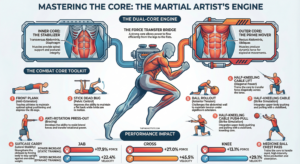
The core is defined as an interconnected system of muscles including the abdominals in the front, the paraspinal and gluteus muscles in the back, the diaphragm above, the obliques on the sides, and the pelvic floor and pelvic muscles below. Training this region is essential because it acts as the primary hub for power transfer between the upper and lower extremities.
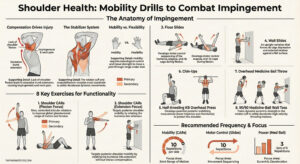
The shoulder is one of the most mobile yet vulnerable complexes in the human body, serving as a critical hub for dynamic actions ranging from tennis serves to martial arts strikes. Enhancing its function requires far more than simple muscle hypertrophy; it involves a sophisticated neuromuscular coactivation of the rotator cuff and scapulothoracic stabilizers.
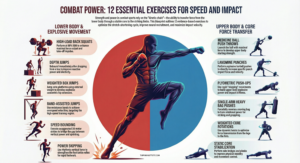
Explosive power, defined as the product of force and velocity, is a critical determinant of success in martial arts combat, governing strike amplitude, execution speed,…