The concept of Taiping Qi (太平气, Great Peace Energy) is deeply rooted in traditional Chinese Daoist philosophy and internal alchemy, particularly as described in the 《Taiping Jing》 (Classic of Great Peace), an early Daoist text from the Eastern Han Dynasty. This article explores the ancient teachings of Taiping Qi, its significance in health and longevity, and how modern science, particularly neuroscience and sports physiology, can help us understand its benefits.
The Foundation: Jing, Qi, Shen
The phrase “Refine Essence into Qi, refine Qi into Spirit, refine Spirit into Emptiness” is a cornerstone of internal alchemy, taught by Chen Tuan (Chen Xiyi), a Daoist master from the Five Dynasties period. This process involves cultivating the three treasures of the human body:
- Jing (精, Essence): The physical foundation, representing the body and its organs.
- Qi (气, Energy): The life force that animates the body.
- Shen (神, Spirit): The mental and spiritual aspect, including consciousness and wisdom.
The 《Taiping Jing》 emphasizes “cherishing Qi, honoring Spirit, and valuing Essence,” teaching that Qi can be transformed and elevated through practice. This cultivation leads to a state of harmony and tranquility, known as Taiping Qi, which promotes health, longevity, and wisdom.
What is Taiping Qi?
Taiping Qi is a state of harmonious energy, embodying the essence of He Qi (和气, Harmonious Energy). It is the foundation of natural evolution and transformation, both in the external world and within the body. When Taiping Qi is present, there is peace and health; when it is lost, chaos and disease follow.
The 《Taiping Jing》 explains that the energy of heaven and earth is not always in a state of Taiping Qi, and thus, calamities are inevitable. This cyclical alternation of fortune and misfortune reflects the dynamic balance of energies in the universe.
The Concept of “Cheng Fu” (承负, Inherited Responsibility)
The 《Taiping Jing》 introduces the idea of Cheng Fu, which suggests that individuals inherit the consequences of past actions, both their own and those of their ancestors. This concept is similar to the Buddhist idea of “collective karma.”
In the context of health, the body’s internal Qi mirrors the energy of the universe. When Taiping Qi is nurtured, there is health and longevity; when Qi becomes disordered, illness arises. To restore Taiping Qi, one must change habits, practice Qigong, consume herbal remedies, or engage in Daoyin (导引, guided exercises). This holistic approach cultivates both physical and spiritual well-being.\
How to Cultivate Taiping Qi
The practice of cultivating Taiping Qi centers on “Shou Yi Ming Fa” (守一明法, the Method of Guarding the One and Attaining Clarity). This involves focusing the mind and energy inward, achieving a state of deep meditation where the distinctions between subject and object dissolve.
- Jing (Essence): Represented by the physical body and its organs.
- Qi (Energy): The life force that flows through the body.
- Shen (Spirit): The mental and spiritual aspect.
By unifying these three elements, practitioners achieve a state of harmony and joy, which is the essence of Taiping Qi. This state is characterized by a profound sense of peace and well-being.
Modern Science and Taiping Qi
Modern neuroscience offers insights into the benefits of cultivating Taiping Qi. During deep meditation or focused exercise, the brain releases endorphins, natural hormones that reduce pain and induce feelings of euphoria. This explains the “harmonious and joyful” state described in the 《Taiping Jing》.
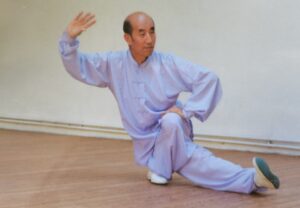
Endorphins are also released during prolonged physical activities, such as Tai Chi, swimming, or jogging. These activities, often referred to as “moving meditation,” help build internal energy (Qi) and promote a state of mental and physical harmony.
Additionally, endorphins counteract negative emotions stored in the amygdala, the brain’s emotional center. This aligns with the Daoist idea that cultivating Taiping Qi can alleviate emotional distress and promote mental clarity.
Practical Steps to Cultivate Taiping Qi
- Meditation (静功): Practice daily meditation, focusing on “Shou Yi Ming Fa” to unify Jing, Qi, and Shen.
- Exercise (动功): Engage in activities like Tai Chi, jogging, or swimming to build internal energy and release endorphins.
- Consistency: Practice at least three times a week, ideally daily, to achieve lasting benefits.
- Holistic Approach: Combine physical exercise with mental focus and spiritual cultivation for a balanced practice.
The Ultimate Goal: Enlightenment and Longevity
With consistent practice, practitioners can achieve higher states of consciousness, described as “refining Spirit to produce Clarity” (炼神生明). This state is characterized by inner light and wisdom, aligning with the Daoist concept of “Yang Shen” (阳神, the Radiant Spirit).
Conclusion
The ancient practice of cultivating Taiping Qi offers profound insights into health, longevity, and spiritual growth. By integrating these teachings with modern scientific understanding, we can appreciate the timeless wisdom of Daoist philosophy and its relevance to contemporary life. Whether through meditation, exercise, or holistic practices, the pursuit of Taiping Qi can lead to a harmonious and fulfilling life.