Legendary origins
Cha Quan is in Folklore said to have commenced during the reign of the Ming Di in the Han dynasty, when a warrior from today’s Xinjiang province called Zhamir (查密尔) sometimes romanized as Xianyi (尚义) helped the imperial armies defeat barbarian invaders across the northern plains. He was also joined by his colleague Hua Zhongzhi. The two methods which were Jiazi and Shenfashi later became known by the post-humous respect of the original transcenders as Cha Quan and Hua Quan, at times these were considered as one style called Chahua Men. Over time, Chahua absorbed the methods of Cha(查), Hua(滑), Hong(洪), Pao(炮) and Tantui(弹腿) schools of martial arts.
The An Lushan Rebellion
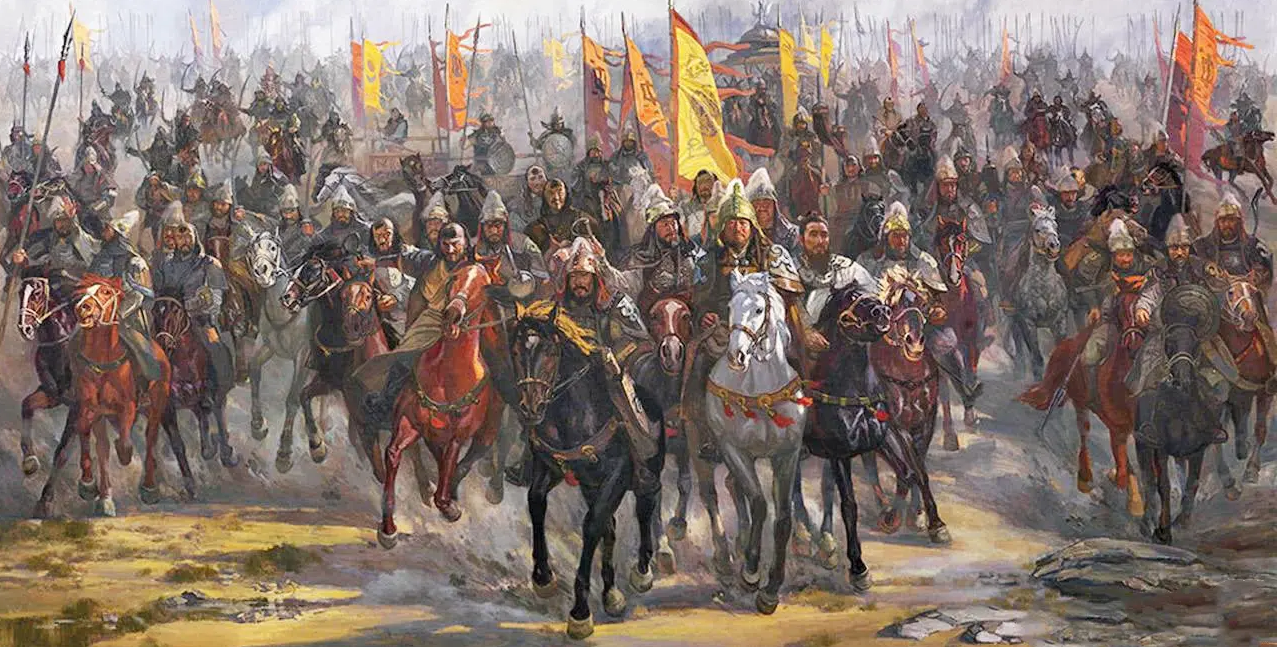
The An Lushan Rebellion (755-763), also known as the An-shi period of chaos/disturbances (安史之乱), was caused by General An Lushan whose parents were unkown, was raised by a Songdian (Ancient Iranian civilization within the province of Achaemenid empire in today’s Central Asia) father and a Tijue (from the Northern ancient Turk tribes) mother. General An Lushan became a favored officer by the Emperor Xuanzong who had given An Lushan control of the garrisons in the Northern areas of Pinglu, Fanyang (near today’s Beijing) and Hedong areas. At the end of 755, General An Lushan revolted against the Tang and captured Luoyang (the Eastern capital at the time). Further expansions followed as they proceeded to take over Changán overcoming the impregnable Tang troops in the Tongguan mountain passes. When An Lushan entered Changán, the Emperor Xuanzong, his court and household fled to Sichuan. Changán was captured by An Lushan in 756.
In 756, Li Heng (son of Tang Emperor Xuanzong) declared himself as the Emperor whist residing in Lingzhou. He organized generals Guo Ziyi and Li Guanbi to deal with the An Lushan rebels. The generals given the loss of troops and manpower after the battles with the rebels throughout the land, decided after much debate to seek help from the Turkish Tujue tribes (the Huihe, also known as Uyghur Khaganate that resided in Mongolia during the time and the ancestors of modern Uyghurs. Over 22,000 Arab mercenaries were sent by the Abbasid Caliph Al-Mansur to join the Tang troops. Military training for the troops combined the methods of the Arab mercenaries with the elite fighters of the Tang that remained. Together the Tang and Tujue troops were successful in re-capturing Changán and Luoyang in 757 most of these mercenaries at least those that survived stayed in China after the war.
History and Development of Cha Hua Men
The Warriors
It is said that a batallion had headed Eastward from the capital in Chang’an and many had died in conflicts and insurgencies throughout Hebei province. There were three men known as Cha Xiangyi (查尚义), Hua Zhongfeng (滑宗岐) and Wu Dianzhang (武殿璋) that successfully escaped and sought hiding in Guan County. As they were badly injured locals took care of the warriors and aided their wounds. Hua Zhongfeng had incurred the greatest injuries and remained in the village whilst Cha Xiangyi returned to battle. After recovery Hua Zhongfeng taught the locals military techniques and this was the beginning of Cha Quan.
Cha Xiangyi and Hua Zhongfeng both taught the locals from Guan County and each had their specialties. Hua Zhongfeng’s movements were large and open, which were called Jiazi Quan (Framework Boxing), also known as Dajia Quan (Large Frame Boxing)). Cha Xiangyi taught more compact and faster methods thus referred to as the Xiaojia Quan (Small Frame Boxing), also known as Shen Fa Shi (Body Methods Techniques. They both passed on skills to locals and in their honour later the boxing became Cha Quan (after Zhamir) and Hua Quan (after Hua Zhongfeng), sometimes when together also called Chahua Men (The School of Cha and Hua).
Guan county lies at the border of Henan, Hebei and Shandong provinces, it is the origin of Cha Hua Men which later spread into different areas so that today there are Shandong Cha Quan, Kaifeng Cha Quan and Cangzhou Chahua Men. They also interchanged between them and also absorbed many methods from other martial arts systems.
From the time after the Anlu Shan rebellion, the essence of skills from the time of Cha Xiangyi and Hua Zhongfeng There have been many practitioners such as Wu Dianzhang, Bai Zuoyi, Jin Guangju, He Chengwu, He Mingwu, Zhao Hongxiu, Wu Panchi, Zhan Lianyu, Yan Zisheng, Guo Dengyun that evolved and contributed to enhancing the methods.
Sha Liang (沙亮 1701-1747)
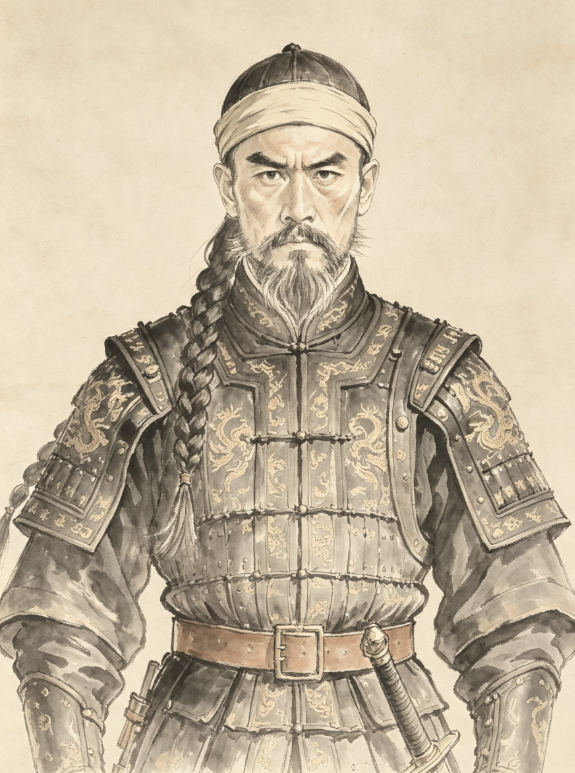
According to the Guan county records, Sha Liang (沙亮 1701-1747, 字智公 (Zhigong)) was a Hui (Chinese Muslim) born in Zhangqiu town, Yanggu County, Shandong although his ancestral home is in Sha Village, Gu’an county. He also went by the Persian-derived title “Shamir” (沙密尔 meaning “commander” or “chief”), reflecting his Islamic heritage.Sha was the third generation of the family in Zhangqiu, his grandfather Sha Guifu, was a renowned Imperial General and his father Sha Wenbin was also an Imperial General. In this way, Sha Liang received martial arts training from a young age from his grandfather and father, they were a well established family and also provided good education. Sha Liang received training from many others and also given the importance of his town to trade, he also obtained recognition from the Imperial government. With his intellect was able to systematic develop his martial arts including its theories and methods.
During the Kangxi period of the Qing dynasty Sha resided in the Zhangyi Village within Gu’an County. Sha Liang passed the five year test and recommended to become an official security officer for Chang’an (todays Xi’an city). It is said that Sha Liang had extraordinary abilities to learn from other martial arts and during his time in Chang’an had added more skills into his system. He was nicknamed the “Flying kicks Sha Liang”(飞腿沙亮) and became well known. During the Kangxi period of the Qing dynasty he resided in the Zhangyi Village within Guan County, Shandong. Sha Liang passed the five year test and recommended to become an official security officer for Chang’an (todays Xi’an city).
In 1726 (the 4th year of Yongzheng), he passed the provincial military examination to become a Military Juren. In 1727 (the 5th year of Yongzheng), he passed the highest imperial military examination to become a Military Jinshi (Metropolitan Graduate). He began his career as a Third-Rank Imperial Bodyguard (三等侍卫). He later served as a Battalion Commander (守备) in the Imperial Patrol Battalion, and then as a Brigade Commander (游击) in the Yan’an-Suiyuan Garrison of Shaanxi Province. In 1747, he was appointed as the acting Staff Officer/Colonel (参将) of the Xi’an City Garrison.
After many years of his employment he returned to Guan county, he imparted his skills at the Qingzhen Si (Mosque) within Zhangyi village. Since Sha Liang had such extraordinary abilities to learn from other martial arts, during his time in Chang’an had added more skills into his system (Alisha Quan). He taught a number of disciples including Zhan Lianyu, Yan Zisheng, Yan Wensheng, Qiu Mingshan and Yang Haiquan.
In 1747 (the 12th year of Qianlong), Sha Liang was ordered to lead troops from the Yan-Sui garrison to suppress the rebellion in Great Jinchuan (present-day Jinchuan County, Sichuan). He fought fiercely, successfully attacking the Rongge Ridge five times and seizing enemy strongholds.In 1748, during a subsequent battle in this campaign, he was killed in action while fighting on the front lines – battle of Jinchuan (金川之战 1747-1749)..The imperial court granted him posthumous pensions and reparations according to military regulations. In recognition of his sacrifice, his son, Sha Hongjie, was given an official position through imperial patronage.
Sha Liang holds a monumental status in Chinese martial arts history as a pivotal figure in the development of Cha Quan (查拳).He is universally recognized as the earliest verifiable master of Cha Quan with solid historical documentation. He was a key figure who bridged the early and later development of this style. He deeply studied classical military texts like Qi Jiguang’s Jixiao Xinshu (New Treatise on Military Efficiency). Integrating this knowledge with various other fighting techniques, he systematically organized, refined, and standardized the Cha Quan system.
Sha Liang was not only a meritorious Qing dynasty general who rose through the military examination system but, more importantly, a foundational grandmaster whose legacy has deeply influenced the history and practice of Chinese Cha Quan martial arts.
Rencheng Cha Quan (任城查拳)
Li Qirui (李琪瑞 1761-1846) learnt from Yan Zisheng and had further enhanced its practice, developing some of the essential foundations of Cha Quan. This legacy was continued by his son, Li Baotai (李保泰 1798-1873) and grandson Li Zhenji (李振基 1834-1909). Li Baotai taught a number of disciples, including those outside the family such as Zhang Qian, Zhang Jintang, Ma Laowei and Ma Wentong. Li Zhenji taught Li family members including Li Enju (1857-1932) who became the representative of Li Family Cha Quan 李氏查拳, as well as Li Ruibao (1895-1946, had moved to Singapore taught at Chinwoo association) and Li Longbiao (1903-1989 moved to Shanghai).
Li Baotai (李保泰 1798-1873) was the second-generation inheritor of Li-style Cha Quan and a crucial bridge in the family’s martial legacy. He succeeded his father, Li Qirui, and served as a military official under Governor Li Hongbin. In 1826, when Li Hongbin was transferred to become the Governor-General of Guangdong and Guangxi, Li Baotai accompanied him. However, during his time in Guangdong, he was horrified to witness the governor not only failing to prohibit the opium trade but actively allowing his subordinates to act as opium merchants. Outraged by this corruption, Li Baotai resigned his post in fury and returned to his hometown. Back in Shandong, he devoted himself wholeheartedly to martial arts. Alongside his father, he taught Cha Quan and famously broke ethnic barriers by accepting both Han and Hui students, with the guiding principle of “strengthening the body and defending the nation through martial practice.” His open-door policy greatly expanded the reach of Li-style Cha Quan. He passed his complete martial legacy to his son, Li Zhenji, and his broad-minded teaching philosophy laid a solid foundation for the school’s future growth.
Li Style Cha Quan
Li Zhenji (李振基 1834-1909) was the son of Li Baotai and the third-generation heir of Li-style Cha Quan. He was a scholar-warrior who inherited his family’s martial traditions and followed the famous Qing general Senggelinqin to fight against the Anglo-French forces at Dagu and Tianjin, earning the official title of “Vanguard of Provisions.” However, during the campaign to suppress the Nian Rebellion in 1863, he was deeply disillusioned by the suffering inflicted on ordinary civilians. In 1865, he learned of Senggelinqin’s plans to attack the Nian rebels and secretly tipped them off, which contributed to the general’s defeat and death in battle. Disillusioned with the Qing government, he abandoned his military career and returned to his homeland.
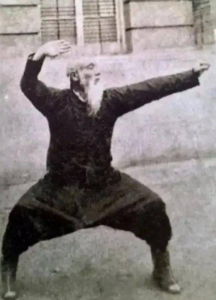
After returning, Li Zhenji channeled all his energy into teaching. He intensively trained his son (or nephew), Li Enju, and established a large martial arts school, reportedly teaching over a thousand disciples from both Han and Hui communities. Beyond martial arts, he passed his skills in internal martial massage therapy (内功推拿) to his fellow villager Ma Wanqi, which later evolved into the famous “Shanghai Internal Massage” school, demonstrating the integration of martial arts and medicine. While some historical accounts claim he had no sons and passed his legacy to his nephew Li Enju (the majority of records confirm Li Enju as his biological son).
Li Enju (李恩聚, 1857-1932), also known as Li Huiting (李会亭), was born in Jining and was a Hui nationality. He was born during the reign of Emperor Xianfeng of the Qing Dynasty. He was the fourth-generation inheritor of Li’s Chaquan. Influenced by his family tradition since childhood, he learned the ancestral Chaquan and knives, guns, sticks and clubs from his grandfather Li Baotai and his father Li Zhenji. Because his family had been military officials in the court for generations, he followed his father into the court in 1875 when he was 18 years old and had mastered martial arts. In the third year of the reign of Emperor Guangxu of the Qing Dynasty (1877), the 20-year-old Li Enju was recruited as a battalion officer by the Hebiao Camp for his superb martial arts and managed important military affairs.
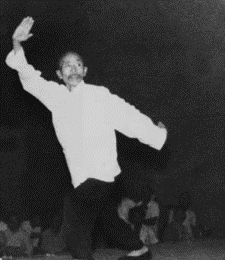
Li Enju mastered Cha Quan, Hua Quan, Pao Quan, Hong Quan, and leg boxing, and was equally skilled in spear, saber, staff, and other weapons, with exceptional fighting ability. At just 20 years old, his martial prowess earned him a position as a garrison officer in the Hebiaoying (Riverine Garrison). A famous anecdote recounts that he once defeated an arrogant imperial grain-boat escort using the family’s signature “Three Disregards” (迎面三不顾) technique, earning immediate respect among the troops. Disgusted with official corruption, he eventually resigned and traveled extensively, visiting masters and honing his skills further.
Therafter, Li Enju established the Jinyuan Biaoju (Jinyuan Security Logistics Bureau) and one of the officers (镖师) was Cai Guiqin (蔡桂勤,1877-1956) whom had studied over three years with Ding Yushan and later exchanged with Li family Cha Quan whilst working for the Bureau to establish Cai family Hua Quan (蔡氏华拳). Due to changes in the economy, he closed the bureau. When he was 52, Huo Yuanjia personally hired Li Enju as a martial arts instructor for the Jingwu Athletic Association. Li Enju also devoted more than 20 years of hard work to the Jingwu Association. His son Li Longbiao, nephew Li Ruibiao, and daughter Li Fengbiao, were all teachers of the Jingwu Association. In 1928, Li Enju represented Jingwu Association in the national exam competition in Nanjing and At the remarkable age of 71, in the National Martial Arts Tournament, he won the championship and title of “Warrior” (勇士). His primary successors included his children Li Longbiao and Li Fengbiao, his nephew Li Ruibiao, and notable disciples such as Yao Dianxia and Sha Rongmin, ensuring the continued transmission of Li-style Cha Quan. In the summer of 1931, when the 74-year-old Li Enju returned to his hometown Jining from the Shanghai Jingwu Athletic Association to visit relatives. On the third day of the fourth lunar month in 1932, he passed away in Baijia Hutong, Jining, at the age of 75. Because he was strict in teaching, he had taught very few apprentices.
Zhang Style Cha Quan
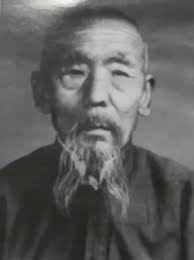
Li Baotai‘s disciple, Zhang Qian taught Zhang Qiwei (张其维 1849-1933) from Zhangyin village, Guan county, known as the founder of the Zhang Style Cha Quan 张氏查拳. Zhang Qiwei began his formal training at the age of 7 under the famous master Zhang Qian (张乾). By the time he was 20, he had achieved mastery in multiple styles, including Cha Quan, Hua Quan (滑拳), Pao Quan (跑拳), Hong Quan (洪拳), and Tui Quan (腿拳). He was especially famous for his Iron Palm (铁砂掌) skill and his mastery of various weapons, most notably the “Tiger-Head Phoenix-Tail Fork” (虎头凤尾镗). He was once offered a position as a martial arts instructor by Shandong’s military governor, Ma Liang, but he declined to pursue an official career, preferring to teach in his hometown. Upon his death at the age of 84, his students erected a monument and a plaque for him. The plaque was inscribed with the title “Chief of Martial Skills and Strategy” (技勇总师).
Zhang Qiwei (张其维) trained many students who became masters of Cha Quan. His most prominent disciples include: Zhang Yingzhen (张英振, 1896–1977) who was a professor at the Central Martial Arts Academy (中央国术馆) and was honored as a “Martial Arts Grandmaster of his Generation” (一代武宗). Zhang Yingjian (张英健): Another of Zhang Qiwei’s sons and a skilled student, who later became the director of a martial arts academy in Taiwan, Chang Zhenfang (常振芳, 1898–1979): A highly regarded student who taught Cha Quan in Henan province (His disciples there included Zhang Wenguang (张文广), Sun Changli (孙长立), Yang Maolin (杨茂林) etc) , Zhang Xitai (张锡太, 1896–1982): A grandson of Zhang Qian. In Zhang Qiwei’s later years, Xitai taught on his behalf and became a leading master after Zhang Qiwei’s death, Zhang Yinggui (张英贵), Zhang Guangzhi (张广治), and He Zhenquan (何振全).
Yang Style Cha Quan
Li Baotai‘s disciple, Ma Laowei taught Yang Hongxiu (杨鸿修( 1864-1944) from Nanjie area of Guan County central but later moved to Jinan, Shandong, is the founder of Yang Style Cha Quan 杨氏查拳. Yang Hongxiu studied under two renowned masters from Guan County: Zhang Jintang (张进堂) and Ma Laowei (马老维). Ma Laowei was a leading figure in the Cha-Hua Men martial arts system, particularly famous for his spear techniques, including the legendary “somersault returning spear” (腾空回马枪).
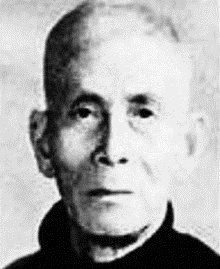
In 1915, he was hired as an instructor at the Shandong Martial Arts Training Institute (山东武术传习所), where he taught Cha Quan and Tan Tui. He participated in the compilation of the important martial arts textbook Zhonghua Xin Wushu (中华新武术 – “New Chinese Martial Arts”). He was later recruited by General Ma Liang, the military governor of Jinan, to serve as a senior instructor for his elite “Technical Team” (技术队). Yang Hongxiu was also known for a famous duel. He once defeated the renowned Xingyi Quan master Li Cunyi (李存义), who was nicknamed “Single Saber Li” (单刀李), in a sparring match. This victory greatly boosted his fame throughout the martial arts world.
Yang Hongxiu taught for many decades and trained a generation of martial artists who spread Cha Quan across China. His most prominent disciples include: Wang Ziping (王子平), Yu Zhensheng (于振声),Ma Jinbiao (马金骠), Ma Yongkui (马永魁), Ma Yufu (马裕甫), and Wang Zhaolin (王兆林). Yang Hongxiu was a pivotal, transitional figure in the history of Cha Quan. Through his rigorous training, distinctive stylistic innovations, and the exceptional accomplishments of his students (especially Wang Ziping), his Yang Style Cha Quan became one of the two major branches of the art and continues to be widely practiced today.
As a result, In Shandong there are three key styles commonly known today, Zhang Style is relatively compact, fast and agile. Yang Style has long extensions, smooth transitions and is more aesthetically pleasing. Li Style is continuous, rough and powerful it is the more forceful of all the styles but also the least known.
Cangzhou Cha Hua Men (沧州查滑门)
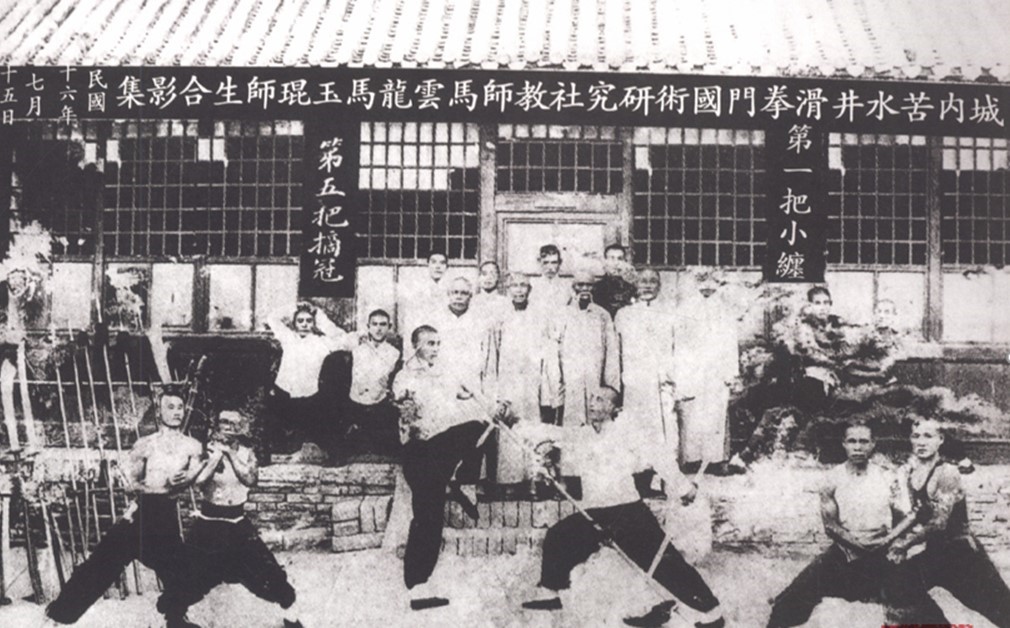
Sha Maolin (沙茂林), is said to have traveled to Cangzhou to sell salt during the Guangxu reign of the Qing Dynasty (清光绪年间). One night, he took shelter from the rain in Nancheng Cave (南城洞) and fell ill due to the cold.The next morning, Liu Chengzhang (刘成章), a wealthy Hui resident from Panjialou (潘家楼) in the city, was outside the south gate when he discovered Sha in distress. Moved by compassion, Liu took Sha into his home and provided medical care for several days. One day, while Liu was practicing, Sha suddenly exclaimed, “What excellent skill!” Intrigued, Liu stopped his practice and engaged Sha in conversation, discovering that Sha possessed extraordinary martial abilities. Recognizing his talent, Liu formally took Sha as his master in a Juma (主麻, Friday prayer) ceremony at the local mosque. From that day forward, Hua Quan took root in Cangzhou. Liu later passed the art to Wang Zhenpeng (王振鹏) and Yin Fengyuan (尹凤元), who in turn taught Wang Junting (王俊亭) and Zhang Bao’an (张宝安). Sha also taught Hua Quan to Liu Hualong (刘化龙). Li Baotai’s disciple Ma Wentong (马文通) taught Cha Quan to Liu Hualong (刘化龙). Liu Hualong (刘化龙) also studied Liuhe Quan (Six-Harmony boxing) under Li Guanming, helped his master manage the Logistics Security Bureau matters, and often led his junior brothers on security escort journeys.
Liu Hualong integrated the styles becoming the progenitor of Cangzhou Cha Quan 沧州查滑拳. Liu Hualong (刘化龙), then taught Ma Yunlong (马云龙), Sha Baoxing (沙宝兴), Yin Fengyuan (尹凤元), Feng Changsheng (冯长生), Feng Zhenqing (冯振清), and Zhang Chang’an (张长安). These masters later transmitted the art to the next generation, including Hu Wantong (胡万通), Wang Ziping (王子平), Lü Guirong (吕桂荣), Liu Zhenjiang (刘振江), Liu Yunshan (刘云山), and Zhang Bao’an (张宝安). Wang Junting (王元祥, 1953 – ), who is Wang Ziping’s nephew, practised with his father, Wang Junting and then continued under Zhang Bao’an. Zhang Shaojie (张少杰) was Hu Wantong’s key disciple and revered as highly skilled during his generation.
Cangzhou is known is the home of martial arts in China, since many heroes and warriors heralded from the Cangzhou area. Whilst there are many styles in Cangzhou, there is a Hui-zu (Chinese Muslim) district especially near the Northern Great Mosque, where the two main styles are Liuhe Men and Cha Hua Men, whom commonly interchanged or cross trained as well, the were considered a part of the same integrated family, especially after Liu Hualong.
Kaifeng Cha Quan is also known as Huang Pai Cha Quan (开封黄派查拳).
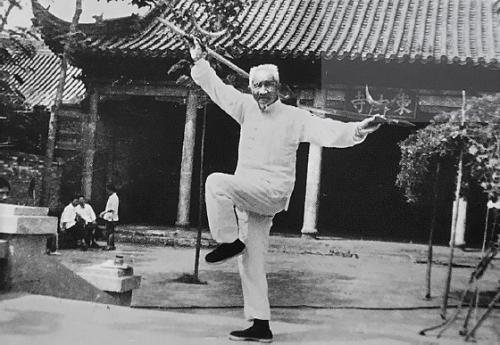
In the 1830’s, the Kaifeng Eastern Great Mosque invited a martial arts expert from Cangzhou, M Huang Mingxin, to teach. It said that Huang heralded from the Cangzhou area but was having difficulties with his father being strict in both academics and martial arts like so many Hui-zu of the area. Huang felt good enough and refused, so he ran away, reaching Kaifeng. In those days, the local Hui-zu community practiced the Seven Postures boxing (七势门 Qi Shi Men). When Huang was hanging around the Mosque in Kaifeng, a local Seven Postures teacher, Wang Zhaoxiang asked to come over (actually, he was telling him not to not watch because in those days martial arts were not practiced in front of strangers). Huang having a peculiar temper at the time, refused and, after an altercation, lost to the local Master. Ashamed Huang returned to Cangzhou apologised to his father, and trained more disciplinedly than ever before.
A few years later Huang returned to Kaifeng seeking out his M Wang. Unfortunately he was no longer there, so Huang asked any local experts for a challenge (in a polite way this time), after that there was a Master Bai Sanxi who noticed the Gong Fu in M Huang. They invited Huang to become their teacher and since then Kaifeng Cha Quan (sometimes referred to as ‘Huang Pai Cha Quan’, was practiced alongside Seven Postures. Huang taught many including Li Zhanfa, Ding Zhankui, Li Gang, Li Zhenxing, Li Shiying, Bai Qingshan, Ding Quanfu, Ni Shilin, Zheng Deshun, Li Changsong, Chen Hongbao, Din Cunfang and so on.
In Kaifeng another important expert was M Zhao Ruqing, he was born with a tall and powerful stature, studying different systems such as Cha Quan with M Huang, Seven Postures with Yan Yunqing, Cha Quan with Li Zhanfa and some Yanqing Quan with Xian Zhengang. He became very well known and was nicknamed ‘Great Knight Zhao’, also becoming brothers with Shandong Zhang Style Cha Quan experts Zhang Xiyan and Chang Zhenfang. Thus Kaifeng Cha Quan was formulated integrated the styles of Cangzhou Cha Hua Men, Qi Shi (Seven Postures) and Shandong Cha Quan to develop unique features until the generations today.
Taiping Chahua Men
Taiping Chahua Men is from Jining, Shandong and Cangzhou, Hebei. After initial introductory studies of Cha Quan with Zhang Wenguang and Sun Changli in Beijing, Yang Zihua and Yang Likai (Yan Encheng line) in Liaocheng and Jining, Shandong. It was not until recently after we have over the last five years further studied the Chahua Men style as practiced in Cangzhou.
The practitioners (Chahua, Yanqing, Taizu, Gongli & Da Liuhe Men) are friends and brothers since generations, which has enabled the study of Cangzhou Chahua Men. Historically, many of the boxing methods and weapons are shared amongst the styles. Our Cangzhou Chahua Men is mostly based on the teachings of Ma Zhendong, but also on those of many older generations in Cangzhou. M Ma Zhendong studied Liuhe Men with Hu Jinghua, Li Zhenqing, Hui Fengrong and then Chahua Men with renowned expert Zhang Shaojie, M Ma also after retirement studied with Ma Honglin. Uncle Ma Honglin was a disciple of Da Liuhe Men Li Baode and Li Zhiyun, as well as Chahua Men’s Ding Junling and Ding An. Ma Zhendong is a renowned Traditional TCM Doctor in Cangzhou and is respected by the local community for his services which he offers freely. Together the two lines of Liaocheng Chahua Men and Cangzhou Chahua Men have resulted in the gradual further development of our skills in Chahua Men. Chahua Men is a very huge system which has added methods from many styles, so the curriculum below is current and will be added as we continue to further deepen our studies of Chahua Men.
In Cha Quan the principles of combat are based on: Pi (Chop), Za (smash), Huo (Crack open), fight like Cha Quan; Jin (Compact), Gen (Pursue), Kuai (Quickly), fight like Hua Quan; Ai (Endure), Bang (Shoulder), Ji (press), Kao (Lean), Kua(Hip) ; Shuai (Throw), Da(Strike), Tui(Push), Na(Lock), Hua (Transform); Cha Quan emphasizes striking and kicking techniques whilst Huaquan emphasizes Qin-na (locks and grappling) and Shuaijiao (Throwing). Chaquan is fast and abrupt, Huaquan is fast and continuous.
Cha Quan also includes two paths of Leg-Fist (腿拳), focusing on kicking, sweeping, and striking techniques such as Tantui (弹腿), Ti (蹬), Bai (摆), Duo (跺), Chuo (戳), Jie (截), and Jian Tan (箭弹). The goal is to achieve leg techniques as swift as arrows and as fast as lightning, with seamless coordination between the upper and lower body. Hua Quan is renowned for its speed and grappling techniques, particularly “Na Shua” (拿摔, grappling and throwing). It emphasizes coordinated movements of the hands, eyes, body, and steps, with a principle of “If you don’t move, I don’t move; if you move, I move first.” The style prioritizes quick attacks and retreats, using speed to overcome opponents. Its grappling techniques, known as “Two and a Half Handles” (两把半), are highly effective in combat, with even a “Half Handle” (半把, such as small entangling techniques) sufficient to subdue an opponent.
In essence, the elements of effective combat in Chahua Men are direct and simple:
Techniques (招): Striking, kicking, throwing, and grappling must be fast, powerful, and precise, with short, direct paths to the target.
Speed (速): Both offensive and defensive movements must be swift, with the practitioner maintaining control.
Power (劲): Force must be explosive and crisp, ensuring victory over opponents.
Foundation
| 十路弹腿 10 roads of Spring Kick 六路转锤 Six Roads Turning | 十路滑抄 10 roads Huachao 十路捣锤 10 roads Daochui |
Empty hand methods
| 小红拳 Smaller Red Boxing 大红拳 Greater Red Boxing 太子拳 Royal Prince Boxing (前后) 张飞拳 Zhang Fei Boxing 小砸架 Small Smashing Frame 烈神拳 Lieshen Boxing 八势 Soft 8 postures 硬八势 Hard 8 postures 飞虎拳 Flying Tiger Boxing 鹅掌式 Goose Palms | 母子拳 Mother son Boxing 摇橹拳 Turning Rolling Boxing 风魔拳 Wind Demon Boxing 八方拳 All Directions Boxing 关东拳 Eastern Pass Boxing 埋伏拳 Ambushing Boxing 梅花拳 Plum Blossom Boxing 连环拳 Continuous Boxing 飞龙拳 Flying Dragon Boxing 猛虎拳 Fierce Tiger | 滑拳架子 1 Hua Boxing 滑拳一路 2 Hua Boxing 滑拳二路 3 Hua Boxing 滑拳三路 4 Hua Boxing 炮锤 Cannon Boxing 花腿 Flowery Kicks 八極拳 Baji Boxing 六角势 Six Angles Postures 截手拳 Intercepting Hands 醉八仙 8 Immortals Boxing |
Weapons
| Staff 太子棍 Taizi Staff 九龙太祖棍 Nine Dragons Taizu Staf 盘龙棍 Coiling Dragon Staff 五虎群羊棍 Five Tigers catch a lamb Staff | Saber 四门刀 Four Gates Saber 四叶梅花刀 Plum Blossom Saber 五虎群羊刀 Five Tigers catch a lamb Staff Saber 迎风刀 Towards the wind Saber 金霞刀 Jin Xia Saber 五虎断门刀 Five Tigers break the gate saber | Double Sabers 四门双刀 Four Entries Double Sabers 缠丝双刀 Silk Reeling Double Sabers 梅花双刀 Plum Blossom Double Sabers 地躺双刀 Ground Double Sabers 六合双刀 Six Harmony Double Sabers 雙手帶刀 Double Handed Saber |
| Spear 大小锁喉枪 、Throat Locking Spear 六趟枪 Six sequences of Spear 大花枪 Great Flower Spear 梅花枪 Plum Blossom Spear 青龙枪 Green Dragon Spear 九龙枪 9 Dragon Spear 子胥枪 Zixu Spear 大奇枪 Great Mystery Spear 五虎断门枪 Five Tigers break the gate Spear 张飞枪 Zhang Fei Spear 大行枪 Big moving Spear 钩连枪 Hook Spear 风火枪Wind & Fire Spear 双枪 Double Spears 双头蛇 Dual headed Spear | Sword 昆吾剑 Kwun Wu Sword 八仙剑 Eight Immortals Sword 梅花剑 Plum Blossom Sword 三才剑 Three Treasures sword 七星剑 Seven Star Sword 绨袍剑 Silk Robe Sword 青龙剑 Green Dragon Sword 穿林剑 Through the Forest Sword 龙凤剑 Dragon Phoenix sword 龙行剑 Moving Dragon Sword 十三剑 Thirteen Sword 纯阳剑 Chunyang Sword Double Swords 龙凤双剑 Dragon Pheonix double swords 青龙双剑 Green Dragon double swords 龙形双剑 Dragon Shape double swords 昆吾双剑 Kwun Wu double swords 穿林双剑 Penetrate the Forest double swords | Long Handled Sabers 四门大刀 Four Gates Long Handled Blade 关公十八刀 Guan Gong Long Handled Blade 四门朴刀 Four Gates Pu Dao 梅花大刀 Plum Blossom Long Handled Blade 春秋大刀 Spring Autumn Long Handled Blade Hook Swords 龙凤阳钩 Dragon Pheonix double swords 行钩 Moving Hook 护手双钩 Protect the hand hook swords 提篮双钩 Lifting hook swords 梅花双钩 Plum Blossom hook swords Other Weapons 沉香拐 Fragrant Crutch 四门双锏 Double Hard Whips/Rods 八楞紫金锤 Hammers 十三节鞭 Chain Whip 月牙铲 Moon Spade 燕翅镋 Swallow Wing Halberd |