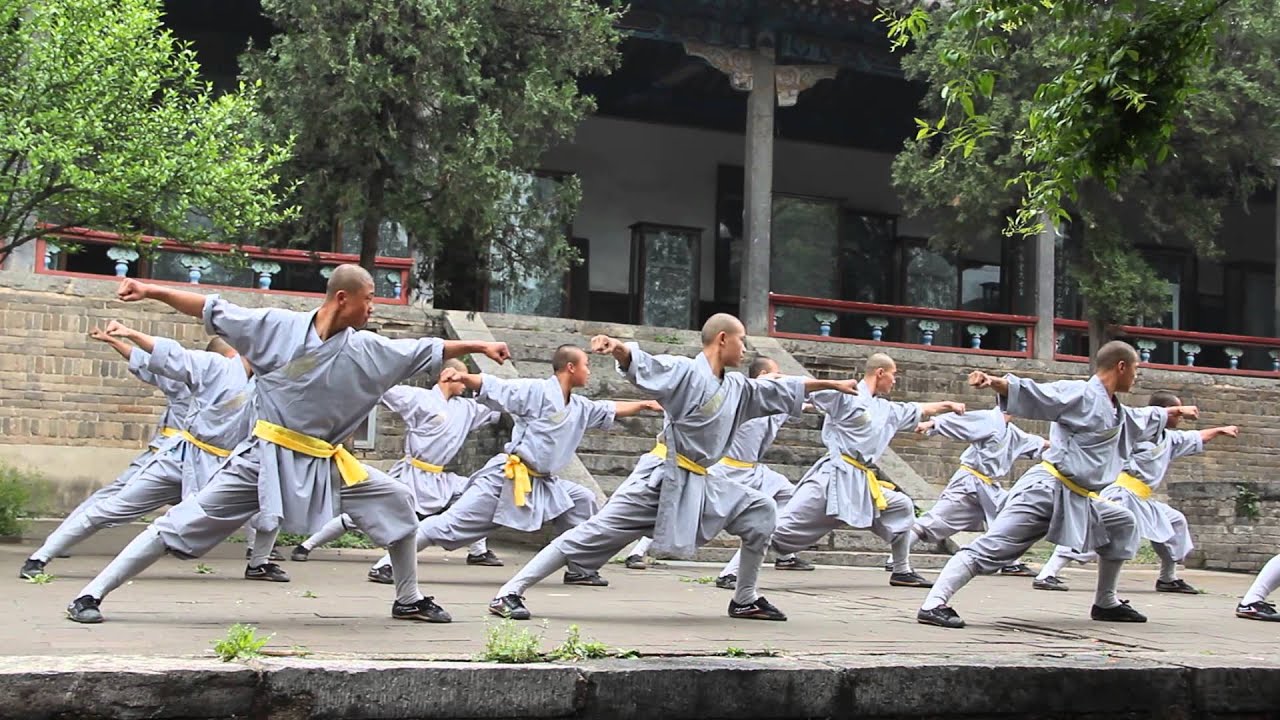
The Shaolin Temple has been known for martial arts during different parts of history. Whilst the temple has been destroyed many times and in many cases their martial arts irradicated or dispersed among the community. There are a number of styles that were developed in its name or posthumously.
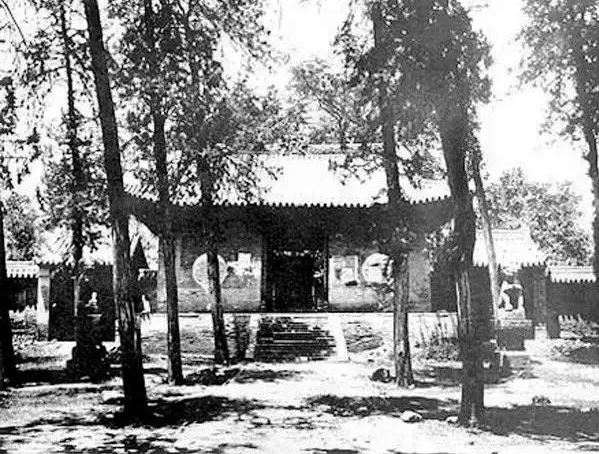
The Shaolin Temple was established in 495 AD on Mount Song during the Northern Wei Dynasty, commissioned by Emperor Xiaowen for the Indian monk Batuo. Early martial development began with Batuo’s disciples, such as Sengchou, who practiced various forms of striking and wrestling to maintain physical health and provide self-defence. The temple’s reputation as a military powerhouse was solidified in 621 AD when thirteen staff-wielding monks, including Tanzong and Zhicao, assisted the future Emperor Li Shimin in defeating the warlord Wang Shichong. This heroic service earned the monastery imperial patronage and the unique right to maintain a permanent force of monk-soldiers. During the Yuan Dynasty, Abbot Xueting Fuyu played a critical role in the temple’s institutional history, transforming the temple into a “melting pot” of martial styles, inviting masters from across China to share their knowledge. Masters like Jueyuan and the lay master Bai Yufeng are also credited during this broader medieval period with expanding foundational techniques into a comprehensive system.
The Ming Dynasty marked the “Golden Age” of Shaolin martial arts, where monks specialized in staff fighting and were repeatedly drafted to defend the nation against coastal piracy. Advanced military techniques from masters like Pucong and General Yu Dayou were integrated into the curriculum, and the deity Vajrapâÿi was elevated as the progenitor of Shaolin staff arts. However, the subsequent Qing Dynasty viewed the temple with profound suspicion, fearing the monks’ collusion with sectarian rebels.
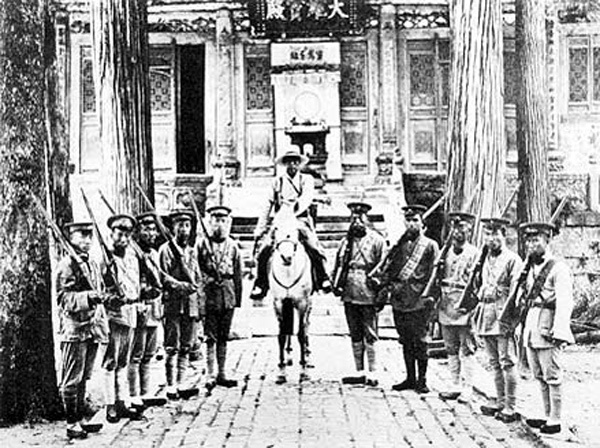
China experienced significant instability in the late 1920s, characterized by internal struggle and warlord warfare. China was divided into rival groups after the Qing Dynasty collapsed in 1912, with local warlords fighting for dominance.
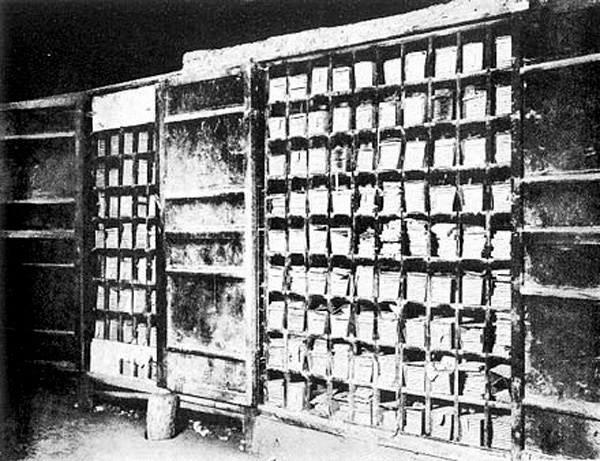
Known as the Warlord Era (1916–1928), this period was marked by a great deal of conflict, shifting allegiances, and widespread destruction. Chiang Kai-shek’s National Revolutionary Army (NRA) undertook the Northern Expedition in 1926 with the goal of uniting China by eradicating warlord authority. The Shaolin Temple was situated in Henan Province, which saw fierce military activity as a result of the campaign. The conflict between warlords and nationalist forces caused extensive damage. The situation worsened in 1928 when the NRA-aligned warlord Shi Yousan (石友三) burned the Shaolin Temple during a fight, destroying many of its martial arts texts, historical archives, and treasures. Many monks left the temple as anarchy spread throughout the area, taking what knowledge they could. Aware of the impending danger, Monk Yong Xiang was hand-copying Shaolin Quan Pu in its entirety with the help of Abbot Zhen Xu (贞绪) and Master De Chan (德禅) since 1926, finished transcribing Shaolin Quan Pu in early 1928 and, with his master’s guidance, departed for Changchun, Jilin, where he would keep the manuscript secret for many years. Even after the temple was destroyed, his activities made sure that the Shaolin martial tradition persisted. Near the end of his life, Shi Yong Xiang (释永祥, Wang Wenbin 王文斌) entrusted the manuscript to Master De Qian (释德虔, Wang Chanqing, 王长青) for safekeeping.
The temple’s modern revival was significantly accelerated by the 1982 film Shaolin Temple, which brought international fame to the monastery and its “Zen-Martial” tradition. During this transition into the modern era, Shi Suxi (the 30th-generation senior monk) became a pivotal figure, serving as a “living treasure” who protected and passed down traditional routines through decades of hardship. The Shaolin legacy also remains vibrant through lay grandmasters like Liang Yiquan, who established one of the largest martial arts schools in Dengfeng to preserve the “National Arts” for future generations. Today, the monastery serves as both a flourishing Buddhist sanctuary and a global centre for the study of Chinese martial arts. Shi De Qian (释德虔) played a pivotal role in preserving and expanding upon Shaolin Quan Pu. He dedicated over two decades to an extensive research journey across 17 Chinese provinces and various Southeast Asian countries, aiming to preserve and document the rich heritage of Shaolin martial arts. His meticulous efforts involved collecting rare manuscripts, conducting interviews with martial arts masters, and compiling detailed records of various styles and techniques. His collaboration with Shi Sufa (释素法) was also significant, together they researched and wrote vast amounts of books in an attempt to restore the Shaolin martial tradition.
Northern Shaolin
Yang Xiushan (杨修山 1869-1947)
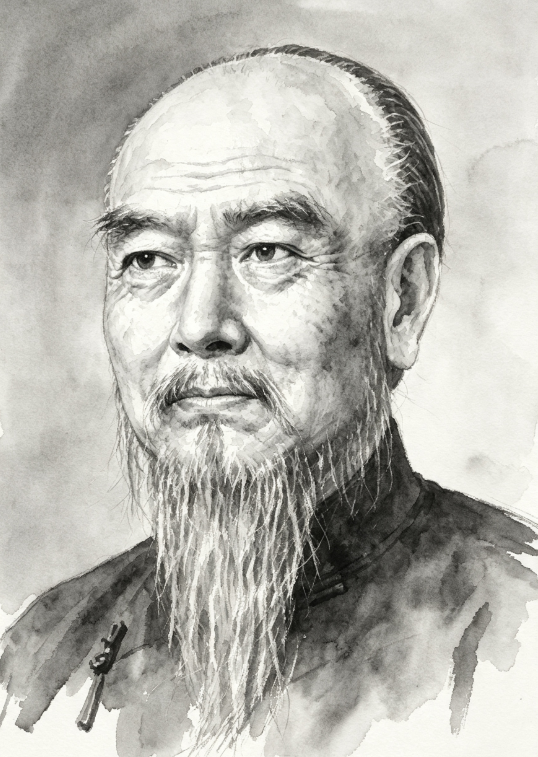
Born into poverty in Yixian, now known as Jiafang Village, Nigou Town, Zaozhuang City (枣庄市台儿庄区泥沟镇夹坊村) (originally part of Yizhou Prefecture, now Linyi’s Eighth District (原归沂州府峄县,后归临沂八区)).), Yang Xiushan began working as a child laborer at age eight. At the age of nine, while working as a laborer for a wealthy landlord, he secretly observed the boxing master Luo Gengxin (罗庚欣) a master from Laiwu (莱芜), teaching “Polian Quan” (破连拳, Breaking Chain Fist) and memorized the techniques, practicing them diligently at home in secret. Recognizing Yang’s dedication after witnessing him effortlessly defeat the three sons in sparring, Luo Gengxin formally took him as a disciple and imparted the complete art, including three routines of paired practice, Qin Na drills, Lu Shi Jia, and six routines of Po Lian Quan. Later, he studied Shaolin Fist (十路少林拳) under Wang Zhenbang (王振邦 1852-1936), a renowned Shaolin master from Jinan (济南). Wang was the sixth generation of the Shaolin Wang family (少林拳王氏第六世) and the 27th generation of secular disciples (俗家弟子第二十七世).
Throughout his life, Yang Xiushan became a legendary martial artist known for both his skill and integrity. In 1920, he exchanged techniques with the renowned Bajiquan M. Han Huachen (韩化臣, courtesy name Huiqing), learning Baji Quan Xiao Jia, single and double dismantling techniques, and Tieshen Kao, in exchange for his second and third routines of Shaolin boxing. This exchange elevated his combat skills to new heights. In 1922, he established a martial arts school in Donghai County, Jiangsu (江苏东海县). He earned the title “Iron Palms Shock the East Sea” (铁掌震东海) in 1922 after defeating a challenger with a single powerful strike in Donghai County, and was celebrated for using his “Iron Leg” to kill two local bullies harassing a young girl in 1924.
In his later years, he served as a martial arts instructor and taught extensively in the Yizhou region from 1933 onward, spreading the comprehensive arts he received. His Shaolin boxing is also known as Yang’s Family Shaolin Quan (杨氏少林拳). Among his disciples who received true transmissions were his son Yang Peiwu (杨沛武 1903-1981), disciples Zhao Tingmao (1910-1969), Meng Zhaoming , Li Xiezi, Feng Shidao, Zhang Rusong, He Xiukui, Song Deju, Cao Jizhi , Li Chunrong, Li Chunting, Li Chunhua Song Tongqian, Guo Qingfang (1890-1983), Guo Mingtang (1911-1982), and Lü Xiangding.
Songshan Shaolin
Shi Zhenxu (释贞绪 1893-1955)
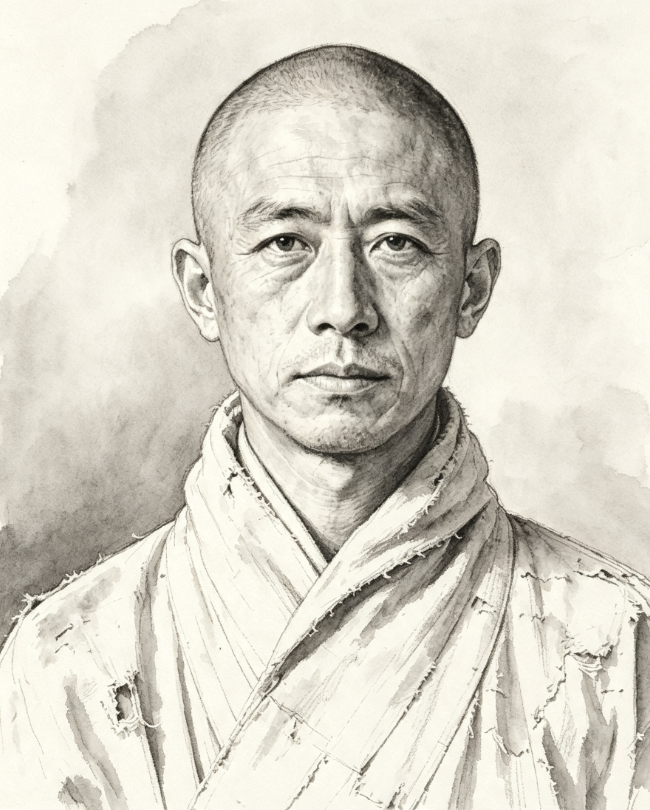
Li Zhengyin (李正印),was born in Gong County, Henan. His family gave him away to a monastery at a young age due to their economic difficulties; he was sent to Longxing Temple (龙兴寺) as a child, which was a branch of Shaolin Temple, becoming ordained as Shi Zhenxu (释贞绪). He had to endure significant hardships early in life that forged his resilient, unyielding spirit.
In 1912, he helped form the Shaolin Temple Protection Corps (少林寺保卫团) alongside Abbot Shi Henglin (释恒林) to protect the temple and its surrounding villages from rampant bandit raids, and he was appointed as the corps’ chief martial arts instructor (武术总教头). In 1920, following the death of his first master, Shi Chunzhi (释淳智), he moved to the main Shaolin Temple to continue his training under Abbot Shi Henglin (释恒林) himself, deepening both his spiritual cultivation and martial mastery. After Henglin’s passing in 1923 and the brief successive tenures of Shi Miaoxing (释妙兴) and Shi Chunpu (释淳朴), Shi Zhenxu rose to serve as the temple’s chief manager (当家和尚) from 1929 onward, and was officially regarded as the temple’s de facto leader during the war years (especially from 1938 to 1944). His tenure was defined by immense struggle against the ravages of warlord conflicts, devastating bandit raids, and the brutal Second Sino-Japanese War (抗日战争). Despite these relentless pressures, he led the temple through its darkest modern period, balancing the roles of spiritual guide, martial guardian, and wartime protector, ensuring that Shaolin’s physical structures, monastic community, and martial heritage did not collapse entirely under the weight of chaos.
Amid this chaos, he not only fought to preserve the temple’s physical existence, leading the reconstruction of over 200 dilapidated halls, including the Patriarch’s Hall (初祖庵) and the Abbot’s Residence (方丈室), while planting hundreds of cypress trees to restore the grounds, but also honed his legendary martial prowess. A master of Six-Harmony Fist (六合拳), Cannon Fist (炮拳), Through-the-Arm Fist (通臂拳), and both Large and Small Hong Fists (大小洪拳), he was equally proficient in weaponry, skillfully wielding the Spring-Autumn Blade (春秋刀), Dragon Well Sword (龙泉剑), Shovel Hook (铲钩), and Double Crutches (双拐). He was most renowned for his devastating hard-qigong techniques, including the “Iron Body Lean” (铁身靠), which he famously practiced by slamming his hip against the massive stone pillars of the Thousand-Buddha Hall late at night, and was famously feared for his devastating “Thousand-Jin Leg” (千斤脚) and “Cinnabar Palm” (朱砂掌), once kicking a 200-pound iron bell handle several meters away, and he codified his fighting wisdom in the seminal manual “Thirty Secrets of Combat” (交手三十诀).
Shi Zhenxu’s (释贞绪) most profound impact on Shaolin (少林寺) lay in his dual role as a spiritual leader and a martial guardian who bridged ancient tradition with modern survival. During the war, he courageously established schools within the temple, offering free education and covertly supporting monks and students who joined the Eighth Route Army (八路军), ensuring Shaolin remained a bastion of national resistance rather than just an isolated monastery. His rigorous teaching produced a generation of martial giants who carried his legacy forward; his disciples included Shi Su Xiang (释素祥), Shi Suxi (释素喜), Shi Yongxiang (释永祥), Shi De Gen (释德根), Xing Zhang (行章) Xing Xiang (行香), Liang Yiquan (梁以全) and Wu Shanlin (吴山林, who also taught at Shaolin at Zhenxu’s request, his father’s Wu Gulun (吴古轮 or 释寂勤) arts for 3 years). emarkably, his influence even reached the military sphere, as founding generals Xu Shiyou (许世友) and Qian Jun (钱钧) were among those who trained under him.
By preserving authentic Shaolin techniques through his students and physically rebuilding the temple from near ruin, Shi Zhenxu (释贞绪) ensured that Shaolin did not vanish into history, cementing his status as the most pivotal figure in the temple’s modern renaissance before his passing in 1955.
Shi Degen (释德根 1914-1970)
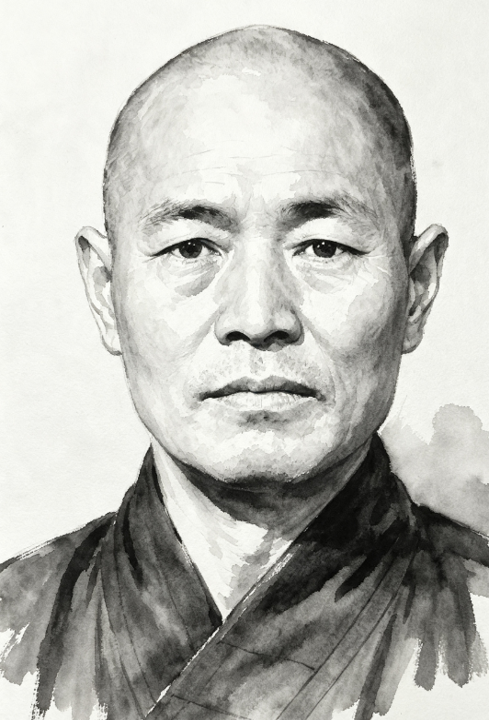
Shi Degen was born in Guandimiao Village, Luzhuang, Gongxian County, Henan Province (河南省巩县鲁庄关帝庙村), with the common surname Han (韩). His family was poor, his father died when he was 3 years old, and his mother took their three brothers to survive. When Shi Degen was 6 years old, there was a severe drought in Henan. In desperation, his mother send him to Chaomi Temple (炒米寺), under the guidance of Chan Master Suguang (素端和尚). Suguang saw that Shi Degen was talented and intelligent, so he first sent him to the school run by the temple to study martial arts for 3 years, and then sent him to the county normal primary school to study for 6 years.
At the age of 15, Shi Degen came to Songshan Shaolin Temple alone. He was ordained to become a monk under Master Zhenxu (释贞绪大师), and practiced martial arts with him. Later, he practiced martial arts for many years with Master Wu Shanlin (吴山林, 1875-1970), who was the sone of a reclusive monk Ji Qin (释寂勤), who returned to the secular world. Although Shaolin martial arts are extensive and profound, and there are many routines, Shi Degen, with his diligent study and hard training and his understanding, he mastered both internal and external martial arts. Degen’s martial prowess was extraordinarily deep, and he mastered over a hundred boxing and weapons routines, including Xiao Hong Quan (小洪拳), Da Hong Quan (大洪拳), Luohan Quan (罗汉拳), Meihua Quan (梅花拳), and Pao Quan (炮拳), as well as the closely guarded internal Shaolin skill Xinyiba (心意把). His training methods were famously rigorous: from the age of seven, he practised qinggong (lightness skill) by tying copper coins to his legs and gradually increasing their weight each year, eventually progressing to copper pieces, iron vests, steel rings, and lead tiles, which granted him extraordinary leaping and agility abilities.
In 1946, Shi Degen was appointed as the martial arts instructor for the Shaolin monks, and after the founding of the People’s Republic of China, he left monastic life (还俗) and went on to teach Shaolin martial arts at the Henan Song and Dance Troupe (河南省歌舞团) and at various primary and secondary schools in Dengfeng County (登封县), training a new generation of practitioners. In 1962, at the request of the Dengfeng County Bureau of Culture and Education (登封县文教局), he dictated and Wang Xinmiao (王欣淼) recorded the Outline of Shaolin Martial Arts (《少林武术概要》), which became the first systematic work on Shaolin kung fu published after the founding of New China. This book is also the first detailed book after the founding of New China. Introducing the works of Shaolin martial arts has very important historical and cultural significance. In 1970, Shi Degen passed away. There are many monks and lay disciples, and the famous ones include Yang Guiwu (杨桂吾, 1931-2010), Chen Qiuju (陈秋菊), Liu Zhenhai (刘振海), Li Yinchang (李寅长), Liu Cunliang (刘存良), Han Shubin (韩树斌), Zhu Tianxi (朱天喜, 1949-2021), Shi Yongwen (石永文 1945-2011, o:石喜文), Shi Yonghan (释永汉, o:毛文化) and Wang Xigan (王西乾) etc.
Xu Zhifa (徐祗法, 释素法, 1925-2012, Shi Sufa)
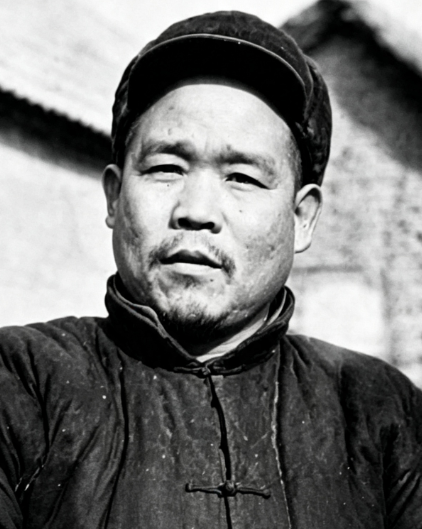
Xu Zhifa was born on January 2, 1925, in Tancheng County (郯城县), Shandong Province (山东省), he was a man of profound intellect and diverse talents. Sufa’s journey into martial arts began in childhood when, at the age of seven, he started training under the renowned Shaolin martial artist Ma Xigong (马希贡). His dedication and skill led to his formal induction by his teacher into the Shaolin Temple (少林寺) in 1936, at the age of twelve. There, he was ordained as a monk and given the dharma name Shi Sufa (释素法), becoming a disciple of the prestigious 29th-generation martial monk, Great Monk Zhenqiu (贞秋 1853-1936). At the temple, he learned authentic Shaolin martial arts; he also studied Shaolin Qigong, hard skills, the eighteen kinds of martial arts, and martial arts injury treatment under the eminent monks Zhenxu (贞绪) and Zhenjun (贞俊 1865-1939, o:李秀山 t: 寂然). He also received manuals from Zhenfang (贞方).
Subsequently, due to the upheaval of war, he left the monastic life and returned to lay society. Yet even after returning to secular life, he never forgot his master’s teachings; he trained with unwavering diligence, travelled widely to seek expert-masters, and devoted himself to the intensive study of martial techniques. Over the years, in addition to his Shaolin teacher Zhenfang (贞方), he humbly sought instruction from numerous martial arts elders, including those from the Cha Quan system such as Ma Jinbiao (马金标 1881-1973) and Wang Ziping (王子平, 1881-1973), from the Northern Shaolin, or Yang’s Family Shaolin Quan, such as Guo Qingfang (郭庆方 1890-1983), Song Deju (宋德聚 1897-1989), Xu Minwu (徐敏武), Guo Mingtang (郭明堂, 1911-1982), and the son of Yang Xiushan, Yang Peiwu (杨沛武). Bajiquan from Wu Xiufeng (吴秀峰, 1908-1976), Liuhequan from Tong Zhongyi (佟忠义, 1879-1963), as well as others such as Cai Guiqin (蔡桂勤, 1877-1956), Sha Baoyu (沙宝玉), Lu Songgao (芦淞高, Liu Yufang (刘玉芳), He Xiukui (何秀奎). For decades, Master Sufa trained with extraordinary perseverance and never slackened his efforts. These influenced the development of Shaolin Wuhequan (少林五合拳), Shaolin Jingangquan (少林金刚拳), Shaolin Bajiquan (少林八极拳) and Shaolin Kanjia Quan (少林看家拳).
In 1983, with the aim of promoting Shaolin martial arts, he returned to the Shaolin Temple (少林寺) and, together with Abbot Dechan (德禅方丈), Monk Xingzheng (行政), Master Suxi (素喜), and his disciples Deqian (德虔), Deyan (德炎), and Dejiao (德皎), jointly excavated, organized, and compiled a vast body of Shaolin literature. Master Sufa held a wide array of distinguished positions throughout his career. He served as the Chief Instructor and Dean of Academic Affairs at both the Songshan Shaolin Youth Martial Arts School (嵩山少林青少年武术学校) and the Shaolin Temple Professional Martial Arts School (少林寺武术专业学校). He also served as Vice President of the Shaolin Temple Martial Arts Association (少林寺武术协会), and Vice President of the Shaolin Temple Martial Arts Sports Medicine Association (少林寺武术运动医学学会).
Throughout his later years, Master Sufa traveled extensively across China to promote Shaolin martial arts, successively being appointed as a consultant and technical advisor to over forty martial arts schools, training classes, centers, and halls nationwide. He took on more than ten thousand disciples over his lifetime, painstakingly passing on his skills and making outstanding contributions to the inheritance and development of Shaolin martial arts. With a global vision to introduce Shaolin martial arts to the wider world, he devoted himself wholeheartedly to teaching international friends and overseas disciples who came to study under him.
Liang Yiquan (梁以全, 释素一 1931- 2026, Shi Suyi )
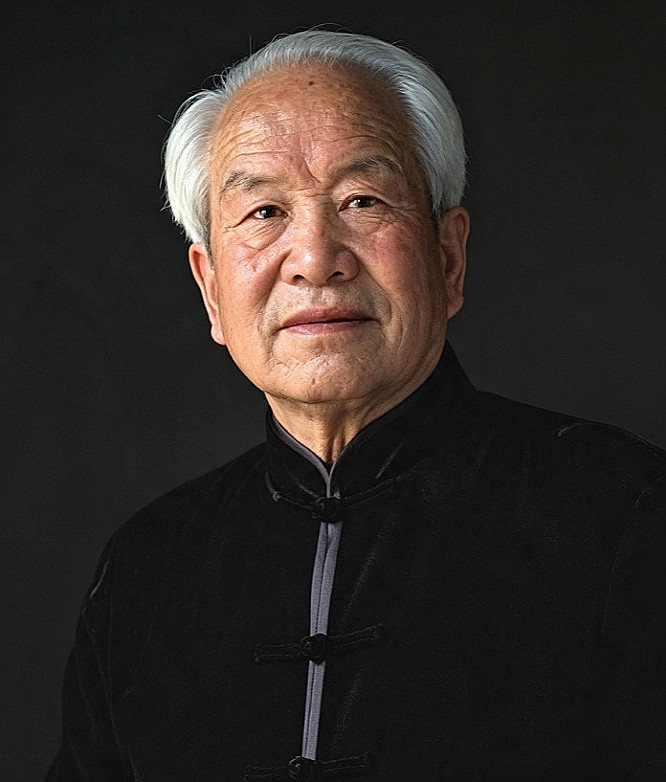
Liang Yiquan (梁以全, also known by his dharma name Shi Suyi 释素一) was born into a martial arts family in Luotuoya Village, Dengfeng City, Henan Province, Liang Yiquan began training under his father Liang Xingshao, a former martial arts instructor in Feng Yuxiang’s army, at the age of seven. He later became a formal disciple of Shaolin Temple’s Zhenxu (贞绪) and also studied under Zhenhe (释贞). Working as a primary school principal in the 1950s, Liang’s dedication to Shaolin Kung Fu never waned. His career as an educator began early; after working as a teacher and principal in various schools, he continued to teach martial arts on the side. Even during the Cultural Revolution, when he faced personal hardship and was wrongly labeled, he persevered in his practice and secretly trained students in his home village.
In 1977, when the Japanese Shaolin Kempo Federation expressed a desire to visit Shaolin Temple, Liang Yiquan (梁以全) was chosen to represent Shaolin martial arts for the reception. In 1979, was representing Henan Province at the first National Martial Arts Observation and Exchange Conference in Nanning. That same year, he became the key figure in hosting the Japan Shaolin Boxing Federation’s historic pilgrimage to Shaolin Temple, beginning his role as a cultural ambassador. In 1980, he made history as the first Shaolin Boxing representative to travel abroad since the founding of New China, visiting Japan with a Chinese sports delegation.
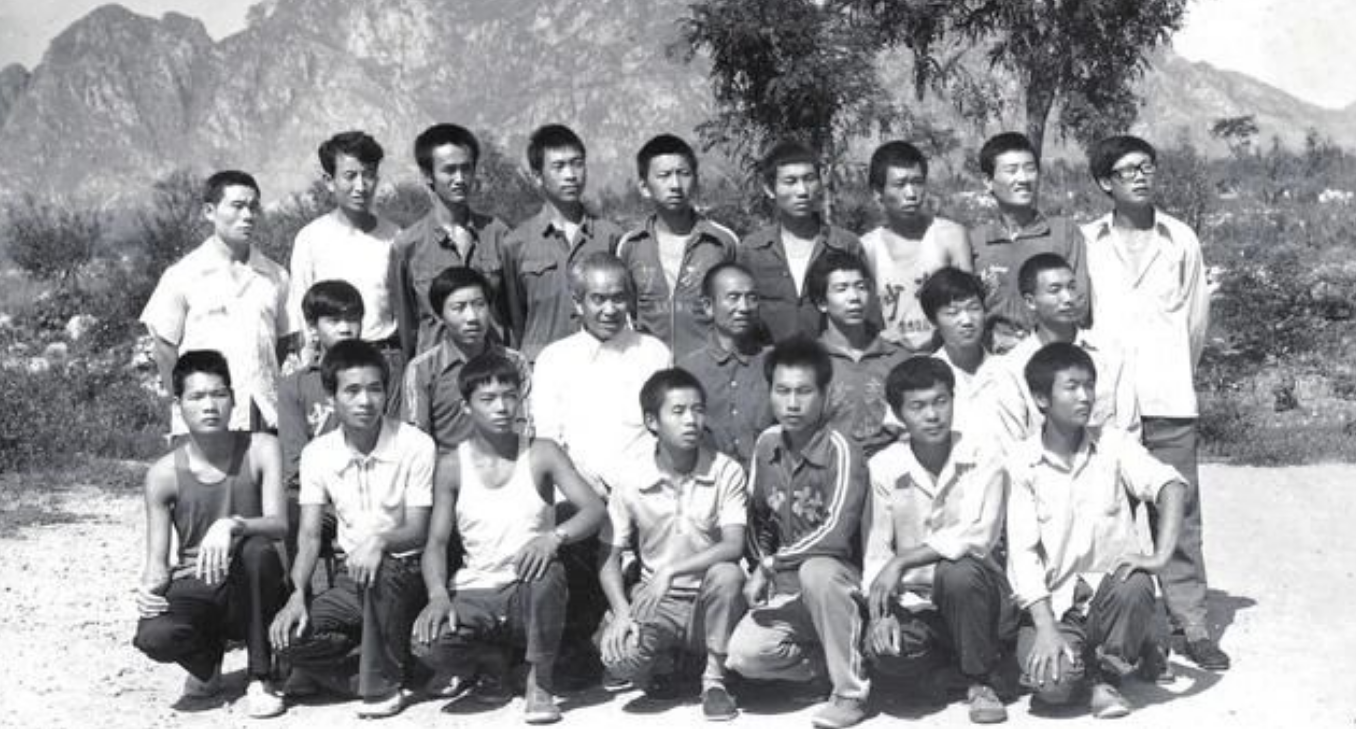
He served as the head of the Dengfeng County Martial Arts Materials Excavation and Sorting Group, contributing 11 of the 12 martial arts manuals collected by the county. On 15 July 1981, he founded the country’s first professional martial arts school, the Dengfeng County Sports Committee Shaolin Martial Arts School (登封县体委少林武术体校), which later evolved into the renowned Shaolin Epo Wushu Academy (少林鹅坡武术专修院), serving as its principal and chief coach. His pioneering work attracted significant media attention, including documentary features by the Central Documentary Film Studio and CCTV. Throughout the 1980s and beyond, Liang held numerous prestigious positions, including vice chairman of the Dengfeng County Wushu Association, deputy director of the Henan Provincial Martial Arts Hall, and deputy to the Henan Provincial People’s Congress. In 2007, he was promoted to the ninth Duan level of Chinese martial arts, and in 2009 was appointed as one of the first experts on the Wushu Research Institute’s Expert Committee at the State Sports General Administration. In 2017, at age 86, he invested nearly 20 million yuan to build Liang’s Boxing Studio in his hometown, ensuring the continuation of his family’s six-generation martial arts legacy.
A scholar as much as a practitioner, Liang Yiquan (梁以全) authored seminal works that systemized Shaolin knowledge, including the post-1949 foundational text A Brief Introduction to Shaolin Martial Arts (Shaolin Wushu Jianjie 少林武术简介), followed by Shaolin Martial Arts of Mount Song (Songshan Shaolin Quanfa 嵩山少林拳法) and other influential books. His lifetime of achievement has earned him the highest honors in Chinese martial arts. He holds the rank of China Wushu Duanwei Level 9 (中国武术九段), is a National Senior Martial Arts Coach (国家高级武术教练), and has been named one of the “Top Ten Martial Arts Masters of Contemporary China” (中国当代十大武术名师).
Shaolin System
Combat methods within Shaolin Boxing are fundamentally rooted in the integration of internal (Nei Gong) and external (Wai Gong) cultivation, where internal energy is used to power physical strikes and harden the body against impact. This methodology emphasizes a reciprocal balance between hard and soft power, ensuring that while movements are physically vigorous and dense, they remain supple and agile enough to absorb an opponent’s force. Whether performing foundational hand routines like Xiao Hong Quan or mastering specialized weapons like the staff, the techniques are strictly “simple and unadorned”, eschewing flashy performance in favour of practical combat efficiency. Training focuses on the mastery of specific mechanics, such as hitting, sweeping, chopping, and thrusting, until the practitioner achieves unity between the mind, spirit, and physical movement.
The primary strategy of Shaolin combat is the tactical logic that “attack contains defense, and defense contains attack,” meaning every movement serves a dual purpose to ensure no opening is left for the enemy. Combatants strive to be “fast as a gust of wind” and “steady as a rock,” moving with the agility of a flying swallow while maintaining a rooted, powerful base. A key strategic signature is advancing and retreating on a single line, utilizing rapid changes and unpredictable transitions to overwhelm an opponent. By adhering to the principle of “overcoming hardness with softness,” the Shaolin strategist uses minimal effort to redirect massive force, aiming to end a conflict decisively by striking vital points with precision and lethal speed.
Key curriculum
| 小洪拳 Small Hong Fist 大洪拳 Large Hong Fist 通臂拳 Through the Arm Fist 朝阳拳 Rising Sun Fist 太祖长拳 Taizu Long Fist 七星拳 Seven Star Fist 心意长拳 Xinyi Long Fist 长护心意门拳 Heart & Mind Gate Fist 罗汉拳 Arhat Fist 梅花拳 Plum Blossom Fist 炮锤 Cannon Fist 六合拳对练 Six Harmonies dual set) 罗汉拉手对练 (Arhat Hand-Pulling dual set) | 金刚拳 Jingang Fist (大力金刚)) 领路拳 Strength (十八功力) 开门拳 Covering the Gate (大迎门掌) 坐马拳 Riding a horse (趟连手法) 穿心拳 Piercing the heart (三请诸葛) 武艺拳 Five Skills (跳跃五艺) 短打拳 Short Combat (地盘短打) 梅花拳 Plum Blossom (七星架子) 八打拳 Eight Strikes (拔步三掌) 连环腿 Continuous Kicks (四门奔打) 埋伏拳 Ambusing Fists (拳中势法) 子午捶对练 (Ziwu Chui dual set) 看家拳对练 (Kanjia dual set) |
Weapons
| 烧火棍 (Fire-Stoking Staff) 阴手棍 (Yin Hand Staff) 夜叉棍 (Yaksha Staff) 齐眉棍 (Eyebrow-Height Staff) 风魔棍 (Crazy Demon Staff) 六合棍 (Six-Union Staff) 五虎群羊棍 (Five Tigers Among the Sheep Staff) 行者棍 (Practitioner Staff) 达摩杖 (Shaolin Damo Cane) 梅花刀 (Plum Blossom Broadsword) 雪片刀 (Snowflake Broadsword) 滚膛刀 (Rolling Chamber Broadsword) 梅花双刀 (Plum Blossom Double Broadswords) 六合双刀 (Six-Union Double Broadswords) 梅花枪 (Plum Blossom Spear) 杨家枪 (Yang Family Spear) 五虎断门枪 (Five-Tiger Gate-Breaking Spear) 六合枪 (Six-Union Spear) 四门枪 (Four-Gate Spear) 罗家枪 (Luo Family Spear) | 达摩剑 (Damo Sword) 龙形剑 (Dragon-Shape Sword) 火龙剑 (Fire Dragon Sword) 青龙剑 (Azure Dragon Sword) 七星剑 (Seven-Star Sword), 提袍剑 (Robe-Lifting Sword) 拦门撅 (Gate-Blocking Stake) 双匕首 (Shaolin Double Daggers) 手稍子棍 (Hand Flail) 大稍子棍 (Large Flail) 大二节棍 (Large Two-Section Staff) 三节棍 (Three-Section Staff) 四门鞭 (Four-Gate Whip) 梅花鞭 (Plum Blossom Whip) 月牙铲 (Crescent Moon Spade) 马叉 (Horse Fork) 朴刀 (long-handled Broadsword) 宣花斧 (Flowery Axe), 春秋大刀 (Spring and Autumn Great Broadsword) 方天戟 (Fangtian Halberd) |
72 Skills of Shaolin
Iron Arm Skill (铁臂功), Row Hitting Skill (排打功), Iron Broom Skill (铁扫帚功), Foot Shooting Skill (足射功), Leg Kicking Skill (腿踢功), Copper Sand Palm / Bamboo Leaf Hand (铜砂掌/竹叶手), Snake Form Technique / Centipede Jump (蛇形术/蜈蚣跳), Lifting a Thousand Jin (提千斤), Arhat Skill (罗汉功), Iron Head Skill (铁头功), Four Section Skill (四段功), Iron Shirt Skill (铁布衫功), Double Lock Skill (双锁功), Pot Lifting Skill (上罐功), Stone Lock Skill (石锁功), Iron Bead Bag (铁珠袋), Thousand Jin Gate (千斤闸), Whip Strength Skill (鞭劲功), Water Splitting Skill (分水功), Jade Belt Skill (玉带功), Eagle Wing Skill (鹰翼功), Jumping Method / High Jump and Far Leap Method (跳跃法/登高超远法), Overlord Elbow (霸王肘), One Finger Diamond Method (一指金刚法), Nail Pulling Skill (拔钉功), One Finger Zen Skill (一指禅功), Stone Pile Skill (石椿功), Golden Bell Cover (金钟罩), Iron Ox Skill (铁牛功), Whirlwind Palm (旋风掌), Crouching Tiger Skill (卧虎功), Mountain Pulling Skill (拔山功), Golden Dragon Hand (金龙手), Mountain Pushing Palm (推山掌), Pile Kicking Skill (踢椿功), Eagle Claw Skill (鹰爪功), Demon Slaying Sword (斩魔剑), Mysterious Empty Fist (玄空拳), Golden Sand Palm (金砂掌), Iron Sand Palm (铁砂掌), Flying Skill (飞行功), Spear and Sword Invulnerability Method (枪刀不入法), Five Poison Chasing Sand Palm / Five Poison Hand (五毒追砂掌/五毒手), Wall Walking and Roof Leaping Method (飞檐走壁法), One Thread Through (一线穿), Leaping and Jumping Technique (蹿纵术), Golden Shovel Finger (金铲指), Jiedi Skill (揭谛功), Plum Blossom Pile (梅花椿), Flower Pinching Skill (拈花功), Mantis Claw (螳螂爪), Board Running Skill (跑板功), Flash Fighting Method (闪战法), Golden Knife Exchanging Palm Skill (金刀换掌功), Light Body Technique (轻身术), Iron Knee Skill (铁膝功), Land Flying Technique (陆地飞行术), Curtain Penetrating Skill (穿廉功), Wave Wrapping Skill / Swimming Technique (浪裹功/泅水术), Stone Pointing Skill (点石功), Pipa Skill (琵琶功), Soft Bone Skill (柔骨功), Gecko Wall Climbing Technique (壁虎游墙术), Crotch Skill (门裆功), Somersault Technique (翻腾术), Cloth Bag Skill (布袋功), Toad Skill (蛤蟆功), Thousand Layer Paper Skill (千层纸功), Pellet Skill (弹子功), Finger Locking Skill (锁指功), Wind Chasing Palm Skill (追风掌功), and Soft Mysterious Skill (软玄功).
GALLERY