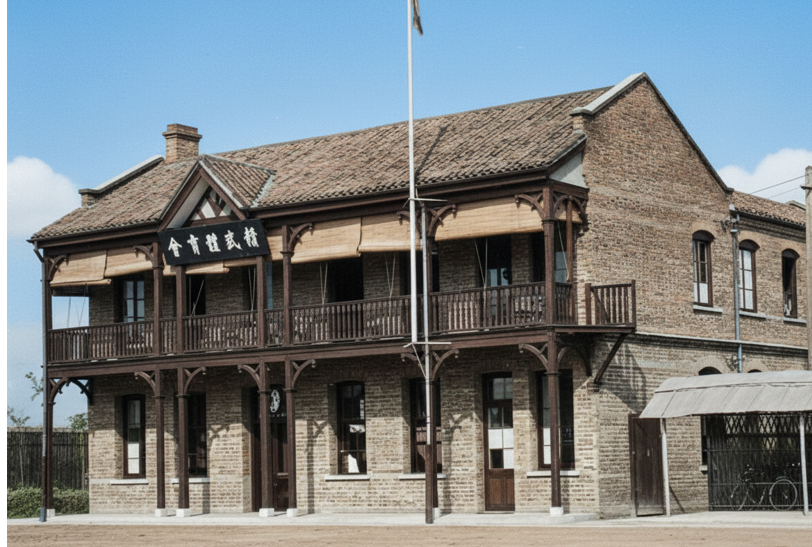
The early twentieth century marked a turning point in the modernization of Chinese physical culture. Among the most influential reform movements was the establishment of the Jingwu Athletic Association in Shanghai in 1910. At a time when martial arts were largely transmitted through closed family lineages or informal master-disciple relationships, Jingwu introduced something unprecedented: a standardized, institutional curriculum supported by formalized graduation levels. The result was not merely a reorganization of techniques, but the construction of a pedagogical architecture, one that distinguished clearly between technical curriculum and certification.
Understanding the Jingwu system requires separating two commonly conflated structures: the Three Sets of Ten Forms (三组十路拳) and the Three Graduation Levels (三等毕业制). The former organizes technical content; the latter certifies developmental maturity. When properly examined, these two systems intersect without overlapping, forming a coherent model of structured martial education.Early Jingwu refer to a three-level graduation system for students of the martial arts curriculum, each tied to years of training and certification with stars worn on the uniform:
- First Level (Beginner / 初级 / Yellow Star) — typically awarded after about 2 years of study with a diploma and a single yellow star on the uniform.
- Second Level (Intermediate / 中级 / Yellow-Blue Star) — earned after about 4 years, symbolized by a two-star insignia (historically yellow + blue).
- Third Level (Advanced / 高级 / Three Stars Red-Blue-Yellow) — awarded after roughly 6 years, marked with three stars representing the highest rank within the student graduation system.
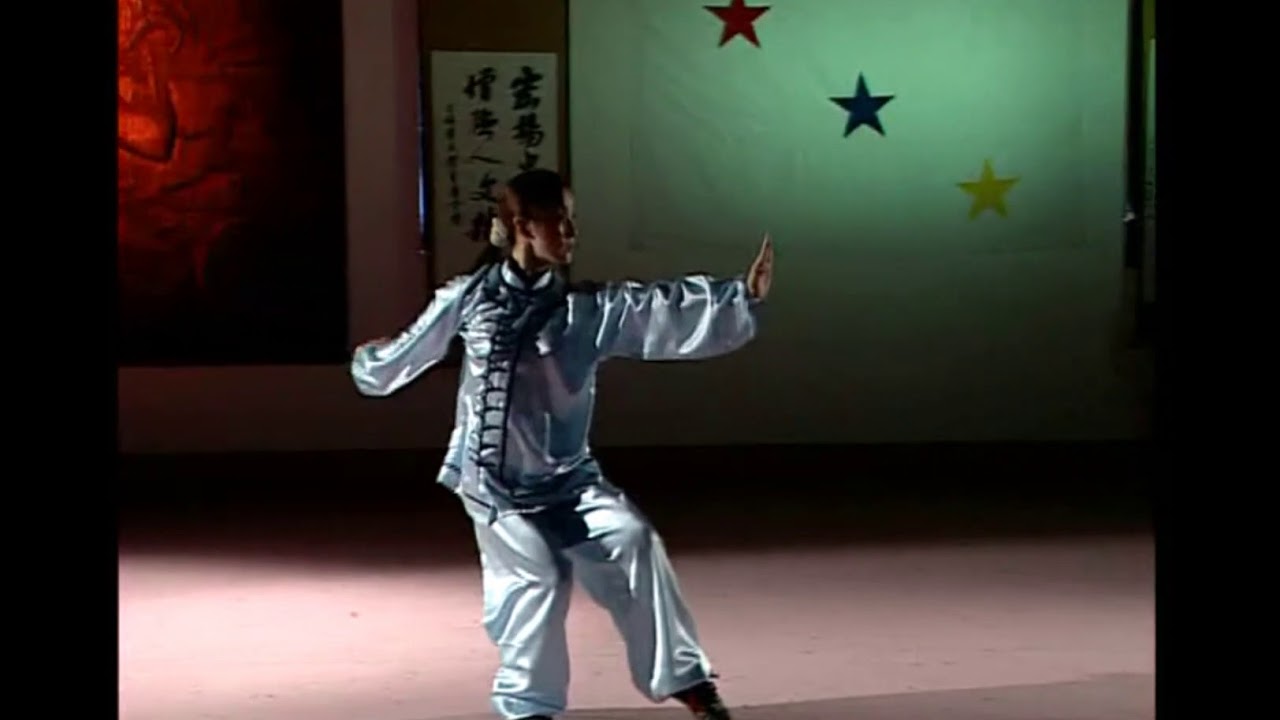
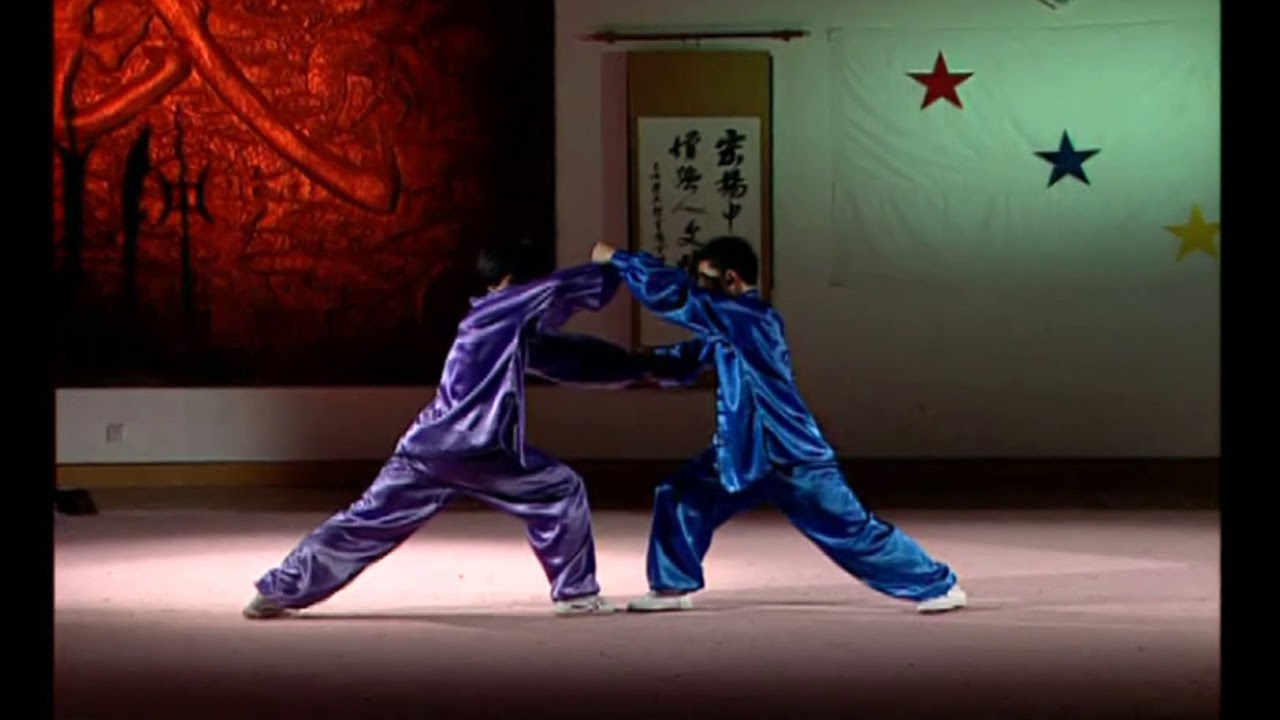
This early record of the Jingwu graduation scheme explains the star insignia reflected in the three-star motif of the Jingwu flag and emblem (体, 智, 德 — body, mind, morality) which itself symbolizes three aspects of development.
Foundations Before Forms: The Preparatory Phase
Before a student entered the formal Sets of Ten, Jingwu training began with foundational conditioning. Chief among these was Tan Tui (弹腿), a systematic sequence of linear stepping and kicking drills. Tan Tui functioned as a biomechanical primer. Through repetitive practice, it established stance integrity, coordinated extension, rhythmic stepping, and breath control. It cultivated what might be termed structural literacy, the ability to maintain alignment while moving dynamically.
Alongside Tan Tui, students engaged in stance training (horse stance, bow stance, drop stance), flexibility drills, and basic strength conditioning. Sometimes, the Lian Bu Quan (连步拳) set would also be taught here. This preparatory phase was not ornamental; it was structural. Without it, later routines would lack internal cohesion. Jingwu’s emphasis on foundations reflects its reformist mindset: progression must rest upon disciplined mechanics.
The First Set of Ten: Compositional Literacy
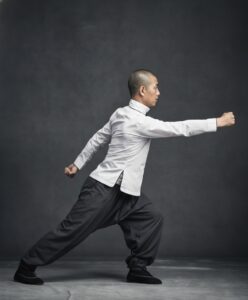
The First Set of Ten Forms (基本十路拳) represents the student’s entry into formal compositional training. These routines, such as Gong Li Quan (功力拳), Jie Quan (接拳) and Da Zhan Quan (大战拳), are structured but relatively concise. Their purpose is not performance complexity but technical organization.
Here, individual techniques are arranged into coherent sequences. The student learns how strikes, blocks, steps, and directional changes relate to one another within a pre-composed framework. Precision is paramount. Transitions must be clean; stances must remain stable; rhythm must be controlled. In modern educational terms, this stage builds grammatical fluency in the language of movement.
Importantly, completion of the First Set does not equate to graduation. Mastery is evaluated not by memorization but by structural integrity and consistency under scrutiny.
The Second Set of Ten: Integration and Flow
The Second Set of Ten (第二组十路拳) expands both length and directional complexity. Movements become more continuous. Turning angles increase. Sequences require greater stamina and breath regulation. If the First Set teaches syntax, the Second Set teaches phrasing.
At this level, students must demonstrate flow rather than segmented execution. Waist coordination becomes more pronounced. The practitioner begins to experience what traditional martial pedagogy often describes as “linking without interruption.” Tactical awareness begins to emerge—not necessarily in free sparring, but in the embodied understanding of transitions between attack and defense.
The curriculum thus moves from structural correctness toward dynamic integration. The student is no longer merely assembling techniques; he or she is managing continuity.
The Third Set of Ten: Synthesis and Expansion
The Third Set of Ten (第三组十路拳) represents the highest level of empty-hand curriculum within the core Jingwu structure. These routines are longer, more spatially expansive, and more demanding in endurance. Directional changes are sharper; coordination requirements increase. The body must function as an integrated unit across extended sequences.
This stage represents synthesis. Techniques from earlier sets reappear in evolved combinations. Structural integrity must remain intact even under fatigue. The practitioner’s movement quality reflects accumulated training rather than isolated skill.
At this point, the curriculum also integrates weapon systems—broadsword, staff, spear, and other traditional implements. Weapons are not decorative additions; they magnify structural errors. The spear reinforces linear alignment. The broadsword emphasizes waist-driven rotation. The staff demands whole-body connectivity. By extending movement beyond the body, weapons refine rather than replace foundational mechanics.
The Three Graduation Levels: Certification of Maturity
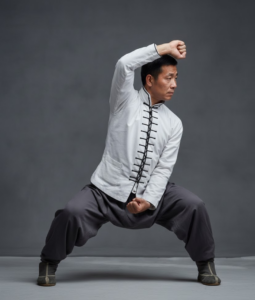
Layered above this horizontal curriculum is the vertical structure of graduation. Jingwu instituted three formal levels: Elementary Graduate (初等毕业), Intermediate Graduate (中等毕业), and Advanced Graduate (高等毕业). These levels were not tied mechanically to completion of Sets One, Two, or Three. Instead, they assessed holistic development.
An Elementary Graduate was expected to demonstrate mastery of foundational mechanics and core routines with structural precision. An Intermediate Graduate had to show integration, stamina, and emerging instructional capacity. An Advanced Graduate was required to exhibit comprehensive curriculum command, weapon proficiency, and the ability to assist in teaching. Moral character and institutional responsibility were considered integral components.
This distinction is crucial. The Sets of Ten define what is taught. The Graduation Levels define when a practitioner is considered mature within the institution. One is curricular sequencing; the other is evaluative certification.
As an example the first set of 10, were sufficient for technical maturity:
The “Three-Tiered Graduation System” of the Jingwu Athletic Association was one of the most structured and modernized martial arts curricula of the early 20th century. Established in 1910 in Shanghai under the inspiration of Huo Yuanjia, Jingwu sought to standardize martial arts education at a time when most systems were transmitted privately and often informally. The three-tiered system was designed not merely to produce fighters, but to cultivate disciplined, healthy, and morally grounded citizens. Its graduation structure reflected this mission: clear stages of progression, standardized forms (套路), and measurable technical benchmarks.
At the foundation of the Jingwu curriculum was the First Tier, which centered on basic conditioning and essential forms. The most prominent of these was Tan Tui (彈腿), often translated as “Springing Legs.” Tan Tui was not just a kicking drill but a complete foundational system emphasizing stance stability, coordinated stepping, straight-line power, and rhythmic repetition. It trained alignment, distance control, and endurance. Alongside Tan Tui, students practiced elementary strength-building and flexibility exercises. Mastery of this tier required precise execution rather than improvisation. Graduation from this level signified structural correctness: solid stances, coordinated limbs, and disciplined posture.
The Second Tier expanded into intermediate classical routines that introduced broader technical vocabulary and tactical awareness. Core forms at this stage commonly included Gong Li Quan (功力拳), Jie Quan (接拳), and Da Zhan Quan (大戰拳). Gong Li Quan focused on developing strength and integrated power through longer sequences and more demanding transitions. Jie Quan introduced combination work and transitional striking methods, encouraging fluidity between offensive and defensive techniques. Da Zhan Quan, meaning “Great Battle Fist,” cultivated dynamic footwork and expanded striking angles. At this level, students moved beyond isolated mechanics toward integrated combat expression. They were expected to demonstrate flow, balance, timing, and spatial awareness.
The Third Tier represented advanced and specialized study. Here, students encountered more sophisticated routines such as Ba Gua Dao (八卦刀), Wu Hu Qiang (五虎槍) (Five Tiger Spear), and advanced empty-hand forms derived from Northern Shaolin traditions. Weapon forms were essential in this tier, reflecting Jingwu’s commitment to preserving traditional martial culture while systematizing it. The inclusion of spear, broadsword, and staff work demanded higher coordination and extended-body awareness. By this stage, practitioners were no longer merely performing sequences; they were expected to understand martial intent, application, and teaching methodology.
An important feature of Jingwu’s three-tier structure was its pedagogical clarity. Unlike secretive lineage-based transmission, Jingwu published standardized manuals and organized public demonstrations. Forms were not proprietary; they were institutionalized. This openness was revolutionary for its time. Each tier was associated with clear performance criteria, and advancement required demonstration before instructors rather than informal acknowledgment. The graduation system functioned almost like a modern academic framework: foundational literacy, applied competence, and advanced mastery.
Equally significant was the moral dimension embedded within the tiers. Jingwu emphasized physical education as a means of national strengthening during a period of political instability in China. Progression through the forms was tied to discipline, humility, and communal contribution. By the Third Tier, a practitioner was expected to assist in teaching lower-level students. Thus, graduation was not only technical certification but also ethical endorsement. The system cultivated responsibility alongside skill.
Institutional Innovation and Modern Educational Logic
The brilliance of Jingwu lies in its separation of curriculum and rank. Many martial traditions conflate technique accumulation with status. Jingwu instead constructed a layered model resembling modern academic systems: coursework organized by level of complexity, and degrees awarded upon demonstrated competence. In modern martial arts education, where belt systems or ranking structures sometimes prioritize symbolic progression, Jingwu’s model remains instructive. Its emphasis on foundational rigor before complexity, integration before specialization, and stewardship before recognition reflects a sophisticated understanding of developmental sequencing. The inclusion of specific forms:Tan Tui at the base, Gong Li Quan and Jie Quan at the intermediate level, and advanced weapon systems at the top, illustrates a deliberate escalation in technical demand and conceptual depth.
This approach enabled scalability. Branch schools could replicate curriculum content consistently. Graduation standards preserved quality control. In an era of national reform and physical culture movements, such standardization allowed Jingwu to expand rapidly while maintaining identity. From a structural standpoint, the Jingwu Three-Tiered Graduation System achieved several outcomes. First, it ensured consistency across branches, enabling replication of standards beyond Shanghai. Second, it balanced breadth and depth: students acquired a shared foundational core (Tan Tui and basic forms) while still engaging in advanced specialization. Third, it created a pipeline of instructors capable of preserving the curriculum without fragmentation. In effect, the tiers functioned as both educational scaffolding and institutional governance.
The model also reflects early twentieth-century Chinese modernization efforts, which sought to reconcile tradition with institutional structure. Jingwu did not abandon classical forms; it reorganized them into a pedagogically coherent system.
Conclusion: Structure as Preservation
The Jingwu Three-Tiered System is often misunderstood as either a ranking scheme or merely a grouping of forms. In truth, it is both more subtle and more sophisticated. The Three Sets of Ten provide progressive technical scaffolding. The Three Graduation Levels provide institutional validation of maturity. Between them lies a carefully constructed architecture of development: foundation, integration, synthesis, certified through discipline and evaluation.
More than a century after its founding, the Jingwu model remains instructive. It demonstrates that martial arts can be systematized without being diluted, standardized without being homogenized. By separating curriculum from certification, Jingwu created a framework capable of preserving tradition while embracing institutional modernity.
In doing so, it offered not merely a method of training, but a blueprint for structured cultural transmission.
APPENDIX :
Three Graduation Levels (三等毕业制)
These similarly align with the first 3 of the 8 Taiping Levels of Attainment (Novice, Student, Member) as well.
| Graduation Level | Technical Expectation (Using First Set Forms) | Demonstrated Abilities |
|---|---|---|
| Elementary Graduate (~ 2years) | Tantui (弹腿), then the following form the primary technical vocabulary: Gong Li Quan (功力拳) Jie Quan (接拳) Da Zhan Quan (大战拳) Qun Yang Gun (群羊棍) Lian Bu Quan (连步拳) Other short transitional training routines from Group 1 | Tier One Competency Standard: Clean stances Coordinated stepping Straight-line power generation Ability to perform complete routines with consistency Structural correctness Accurate memorization Clean posture Basic rhythm Consistent execution |
| Intermediate Graduate (~ 4 years) | Perform the same First Set forms with fluid transitions and clear power expression Expanded Lian Bu variations Advanced Gong Li Quan variations Crossing-step and circular transitional forms Early weapon introductions | Combination flow rather than isolated techniques – Controlled directional changes – Understanding of basic application (用法) – Timing and rhythm variation – At this stage, the practitioner moves from “form execution” to “form understanding. – Continuous flow – Coordinated waist engagement – Balanced turning – Controlled speed variation |
| Advanced Graduate (> 6 years ) | Demonstrate mastery of First Set forms with refined mechanics and teaching clarity Weapon Systems: Ba Gua Dao (八卦刀) Wu Hu Qiang (五虎枪) Staff forms Broadsword forms Paired weapon routines Advanced Empty-Hand Systems: Northern Shaolin long forms Extended battlefield routines Traditional preservation sets | – Technical precision under fatigue – Strategic understanding – Ability to instruct lower tiers – Preservation of stylistic integrity – Effortless integration – Structural stability under fatigue – Combat abilities – Precision at varied tempo – Tactical understanding – Instructional capability – Moral maturity |
Note, the forms need not change between levels — the practitioner changes.
A beginner and an advanced graduate may perform Gong Li Quan, but the difference lies in:
• Structural depth
• Power continuity
• Spatial awareness
• Internal coordination
• Understanding of application
This reflects the institutional logic of Jingwu: curriculum defines content; graduation defines maturity.
The Taiping-Jingwu Curriculum: Three Sets of Ten Forms (三组十路拳)
These are just a catalogue and are separate to the levels of mastery. Students can learn any sets of forms at different intervals of progress, but their grade depends on technical abilities as per the graduation levels, not by the number of memorized or acquired forms.
| Set | Purpose | Representative Forms | Training Emphasis |
|---|---|---|---|
| First Set of Ten (Basic 10) This group acts as the “alphabet”, focusing on posture, power generation, and basic weapon handling. | Establish structural literacy and technical composition | Tantui, Gongli, Jie Quan, Dazhan Quan, Bagua Saber,Wuhu Spear, Qunyang Staff, Jie (dual) Tantui, Tao Quan, Saber vs Spear. *Lianbu Quan | Stance integrity Clean transitions Linear power Rhythm control Mechanical precision |
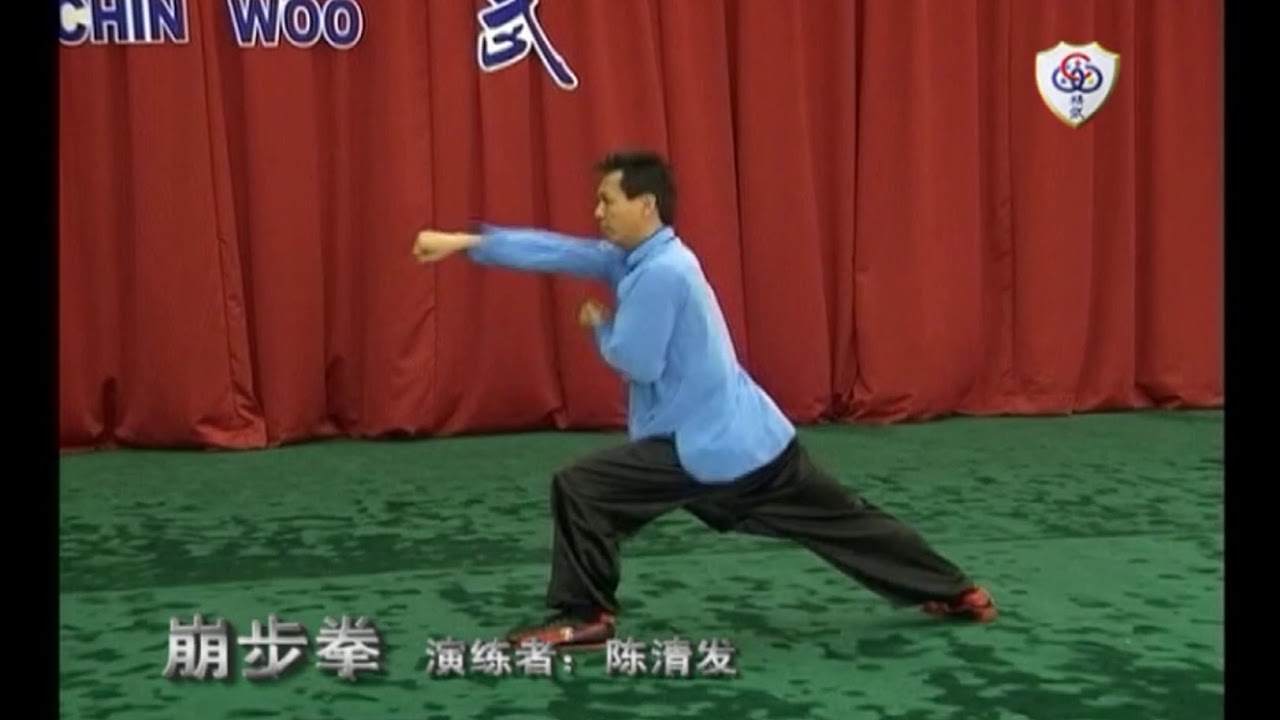
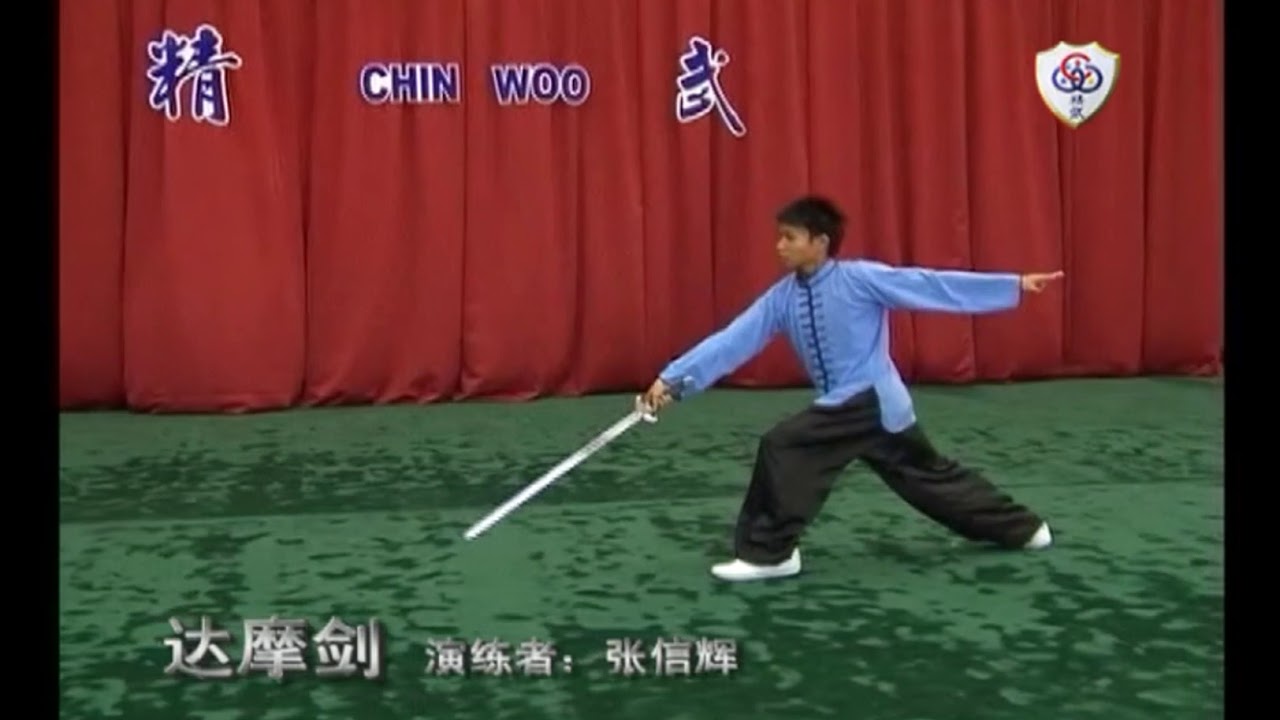
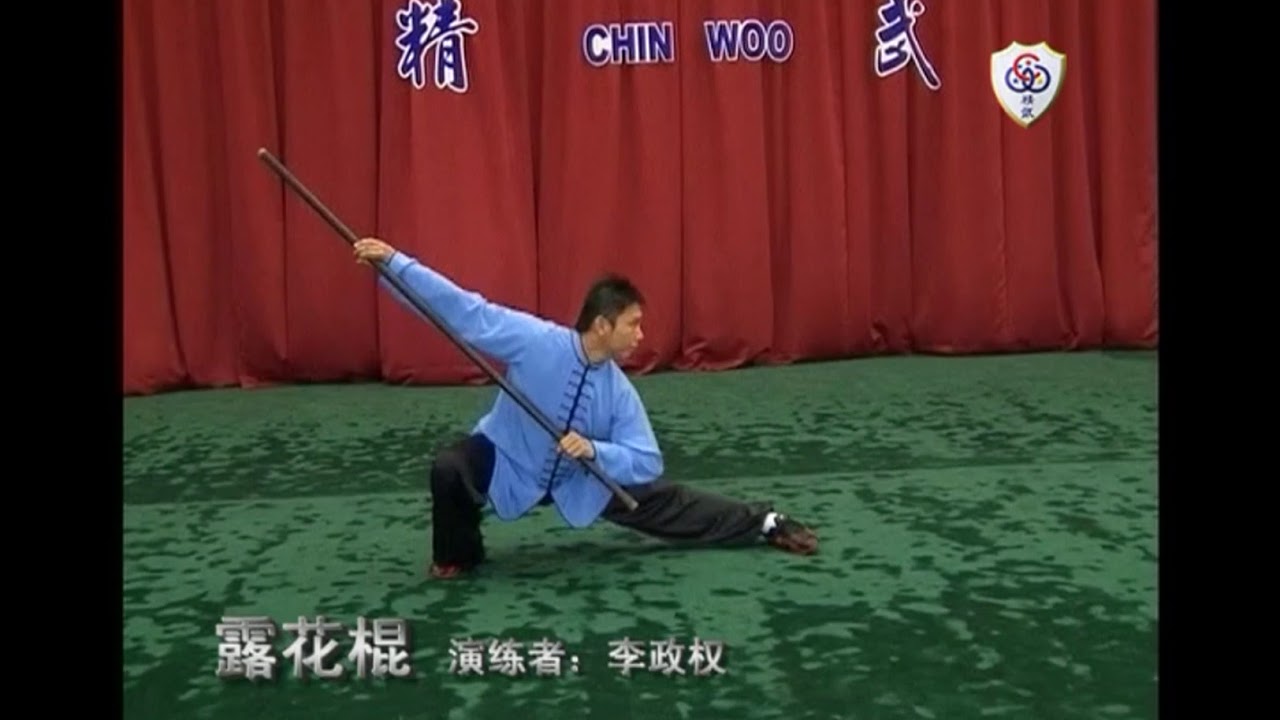
| Second Set of Ten These forms introduce specific foundation “flavors” of various schools that were integrated into the Jing Wu system | Develop integration and directional complexity | Shizi Zhan, Dang Quan, San Quan, Bengbu, Xuepian Saber, Damo Sword, Liuhe Spear, Luhua Staff, 108 Hands (dual), Double Saber vs Spear. | Continuous flow Multi-directional stepping Waist coordination Breath control Endurance |
| Third Set of Ten This group contains some of the more prestigious and historically significant forms of the association, influenced by different styles | Synthesis and full-body coordination | Mizong First Road, Mantis Toutao, Yang Family hands, Da Mian Zhang, Bao Yue Saber, San Guang Sword, Zhangjia Spear, Qimen Staff, Dipan Chui, HorseCutter Long handle Saber vs Spear. | Structural endurance Spatial expansion Power continuity Integrated movement Expressive control |
GALLERY: