Wang Ziping being born in Cangzhou, Hebei, residing in the YiheJie street area behind the great mosque, within the moslem quarter. He was allowed to learn martial arts and studied under the tutelage of M. Li Shuting (李树亭) in Cangzhou (Cangzhou Daliuhe Men) and also said to have some guidance from Sha Baoxing (Cangzhou Chahua Men).
During this time, Ma Liang invited many renowned martial arts masters from across the country to conduct large-scale military training activities in Jinan. Due to a lack of high-level martial arts instructors, Ma Liang asked Wang Ziping to recommend martial arts masters from Cangzhou. After careful consideration, Wang Ziping decided to return to his hometown of Cangzhou, to find suitable martial arts teachers. After returning to Cangzhou, he inquired everywhere for martial arts masters, but none met his requirements. While searching diligently, he suddenly remembered his mentor, Li Shuting, and decided to personally visit him, inviting him to his home. The banquet featured high-quality pastries, fine tea, and a main dish of stewed beef. During the meal, Wang Ziping introduced his mentor to his situation in Jinan, the varying levels of martial arts instructors, and Ma Liang’s respect and emphasis on renowned martial arts masters. Initially, Li Shuting declined the offer, citing his advanced age and inability to perform the duties. However, after Wang Ziping repeatedly expressed his sincerity, Li Shuting finally agreed to go to Jinan with him.
To make a long story short, Li Shuting followed Wang Ziping to Ma Liang’s place in Jinan. Ma Liang warmly hosted a banquet. During this hospitality, one person felt uneasy. This person was Ma Liang’s personal martial arts instructor and bodyguard. This man was in his early thirties, tall, long-armed, and strong – in the prime of his life. He proposed a condition to Ma Liang: he wanted to fight Li Shuting to determine who was superior. If he won, Li Shuting would not be allowed to remain in his position; if he lost, he would resign. Ma Liang agreed to his conditions.
After the banquet, the group went to the courtyard, where the two men tested their skills. Ma Liang’s martial arts instructor first adopted an attacking stance, and Li Shuting responded by adopting the “Single Whip Stance 单鞭势” of the Six Harmonies Fist. This young man, full of youthful vigor, launched a direct attack on Li Shuting. Li Shuting responded with variations of the “Group Blocking and Sliding “群拦滑” and “Intercepting Blocking and Sliding 截拦滑” techniques from the Liuhemen school. The two exchanged blows. The young man, growing impatient, relied on his superior physical condition and launched a more aggressive straight punch attack. Li Shuting, not daring to be careless, deflected the attack with the Eight-Step Plum Blossom evading steps method from Liuhexingquan (六合行拳). During the exchange, he spotted an opening in the attack. He first used the “Step Sliding 施步滑” technique to parry the opponent’s straight punch, then used the “Cut Body and Change Shadow 裁身换影” technique, shifting his left foot to the left. Following this, he crouched down using the “Withered Tree Roots 枯树盘根” technique, grabbing the opponent’s right leg with both hands, and used the “Upside-Down Stone Man” stance to throw the man out of the circle and to the ground. Seeing this, Ma Liang shouted “Stop!”, ending the match. From then on, Li Shuting became Ma Liang’s martial arts instructor, teaching there for three years. However, Li Shuting disagreed with Ma on many matters, and decided to leave, returning back to Canghzou.
Wang Ziping remained with Ma Liang’s garrison and it was there, along with many invited experts he was able to futher develop his skills, having teaching duties and also formally became a disciple under Yang Hongxiu (杨鸿修), who became the founder of his own type of Cha Quan (Yang Family Cha Quan), Yang had studied with Li Baotai’s disciple, Ma Laowei. Cha Quan, or Chahua Men as we call it, itself includes elements of Hong, Hua, Pao, Tantui & Cha within. It is not a series of different styles per se.
Ma Liang was trying to modernize martial arts at the time. With the invited masters he commissioned the creation of the “New Chinese Martial Arts” 《中华新武术》 Textbook Between 1911 and 1914, it also adopted training methods from Western and Japanese “military gymnastics,” breaking down the originally continuous martial arts routines into segmented and sectioned movements, accompanied by verbal commands. The New Martial Arts of China, was once designated as a required skill for the military and police nationwide and promoted in secondary schools.
Ma Liang (马良, Ma Zizhen 马子真, 1875-1947) was born in Kongcheng Village, Qingyuan County. He had two brothers; his elder brother, Ma Zhong, came from the Beiyang New Army and graduated from the Beiyang Military Academy. He served as the commander of the Left Garrison Supply Battalion of the Beiyang Army’s Regular Army, a staff officer of the 6th Division, the commander of the 21st Regiment of the 11th Brigade of the 6th Infantry, and the commander of the 6th Artillery Regiment of the 6th Division. He studied under the renowned wrestling master Ping Jingyi, and his troops, mostly Hui Muslims, practiced wrestling extensively.
In 1912, the first year of the Republic of China, he served as the brigade commander of the 9th Brigade under Jin Yunpeng, the commander of the 5th Division of the Central Army. Later, he was transferred to Shandong as the brigade commander of the 47th Mixed Brigade. In 1916, he was promoted to garrison commander of Jinan. Ma Liang also served as the commander of the 2nd Division of the participating army. In 1919, he was reorganized into the 2nd Division of the Northwest Border Defense Army, still stationed in Shandong.
The “Shandong Martial Arts Training Institute” “山东武术传习所” was founded in 1917 by Ma Liang at the former site of the Wanshou Palace in Jinan’s West Gate to train instructors. Ma Liang utilized military and political resources to hire masters from various schools to teach there.
The training institute recruited educated youth from various counties (requiring graduation from teacher training colleges or higher primary schools), implementing a two-year formal education system with a strict graded assessment model. The institute trained over 700 graduates, who were then assigned to various levels of schools or the military as instructors, spreading the seeds of martial arts throughout the country.
Leveraging his military and political influence within the Beiyang government (especially the Anhui clique under Duan Qirui), Ma Liang vigorously lobbied and promoted it nationwide: Mandatory for Military and Police: In 1917, “New Chinese Martial Arts” was officially designated as a mandatory course for military and police personnel nationwide by the Beiyang government.
Ma Liang’s course was compiled into books and were initially intended to be compiled in eight volumes of two different levels: basic and advanced. The basic volumes teach introductory information on calisthenics, boxing, wrestling, sword and spear, while the advanced volumes include unique themes and applications. The latter, however, never came to fruition. Solo exercises and two-person practice are included in the published volumes covering basic level,
Ma’s contributions were blemished by his own ruthlessness against even his own ethnic group (Hui/Muslim); he would order the brutal repression of student rallies in Jinan as well as killings of Muslims in 1919, including Ma Yunting, which sparked public outrage.
In 1920, Duan Qirui launched the Northwest Border Defense Army to participate in the Zhili-Anhui War, appointing himself Commander-in-Chief of the Dingguo Army, with Ma Liang as the commander of the southern route, capturing Dezhou. The war resulted in a major defeat for the Anhui clique, Duan Qirui’s resignation, and Ma Liang’s dismissal, retiring to Jinan.
National Martial Arts Conference: Ma Liang also initiated the “National Chinese Martial Arts Games” “中华全国武术运动大会” in Jinan, one of the earliest nationwide martial arts competitions in modern China, further expanding the influence of the new martial arts.
Wang Ziping became one of the premier “faces” of Ma Liang’s movement. Wang traveled with Ma Liang to major national exhibitions, such as a famous 1922-23 showcase in Shanghai, such as feats of strength heavily promoted Ma’s martial programs to the public and the foreign press. Ma Liang’s attempt broke the old custom of “passing down knowledge only within the family,” establishing the modern term “martial arts.” His educational experience and teaching methods directly inspired the later Jingwu Athletic Association, Nanjing Central Martial Arts Academy, and Shandong Martial Arts Academy. Simultaneously, his extreme advocacy and promotion of wrestling directly established Jinan’s historical status as the “Wrestling City” “跤城” of the country.
Coupled with the intellectuals’ criticism of “national essence” during the New Culture Movement, “Chinese New Martial Arts” gradually faded from the historical stage in the mid-to-late 1920s, replaced by the “National Martial Arts Movement” led by the Nanjing Nationalist Government.
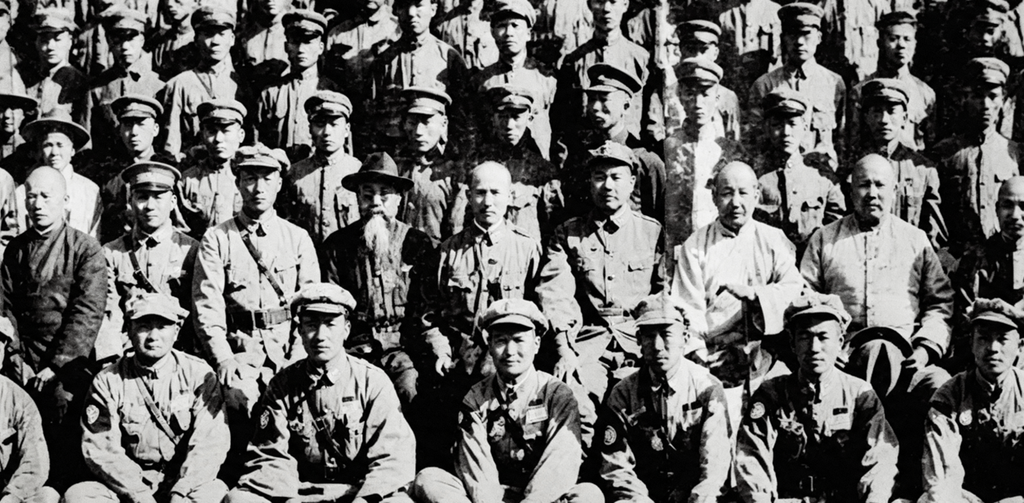
In 1927, at the invitation of Zhang Zhijiang, Ma Liang served as the director of the teaching affairs department of the Nanjing Central Martial Arts Academy, and was responsible for teaching wrestling. Wang Ziping was appointed to head the Shaolin Division (Shaolin Men) under the institute’s umbrella. Both shared a deep commitment to transforming traditional martial arts from secret family lineages into a unified, transparent curriculum aimed at building national strength.
Ma’s plans to revive the “old ways,” such as carrying swords for those in positions of authority like officers, legislators, and even school principals, contributed to the programme’s lack of success despite efforts to promote it. Furthermore, this programme was less appealing outside of military circles due to Ma’s lack of political acumen and the infantry-style curriculum. Despite being designated as one of the Academy’s Education Department Directors and invited to the first National Examination in 1928, Ma’s previous efforts received little consideration when the Central Martial Arts Academy opened.
In 1930, Han Fuqu became the chairman of Shandong Province and appointed Ma Liang as the chairman of the Shandong Anti-Drug Committee. In February 1933, he served as a councillor of the Military Advisory Council of the Nationalist Government. In January 1936, he was awarded the rank of Lieutenant General.
In 1937, the Second Sino-Japanese War began. The Japanese army captured Nanjing and established the Provisional Government of the Republic of China in Beijing. Ma Liang joined as a member. After the fall of Jinan in December 1937, he defected to the Japanese forces. In January 1938, he served as the chairman of the Japanese Puppet Jinan Maintenance Committee. In April of the same year, he served as the governor of Japanese Puppet Shandong Province. In 1938, he was appointed as the governor of Shandong Province and concurrently the commander-in-chief of the security forces. He was dismissed from his post in January 1939. In 1940, Wang Jingwei established the central government in Nanjing, and Ma Liang served as the acting chairman of the Nationalist Government, the premier of the Executive Yuan, and the chairman of the Military Commission. Ma Liang joined the North China Political Affairs Committee and was issued an arrest warrant by the Chongqing Nationalist Government. In March 1940, he served as a committee member of the Puppet North China Political Affairs Committee, among other positions.
In 1945, the Japanese army announced its unconditional surrender. In the same year, Ma Liang was arrested in Jinan by Li Yannian’s troops and imprisoned on charges of treason. It should be noted that he was very supportive of the Japanese and encouraged people to do so as well even reported to have stated “The Japanese give us what we eat, offer us what we wear. Together, we ought to become one with them. We need to express our gratitude to the Japanese. I will make you purchase Japanese things if you refuse to.” during the time when he took up a role under the role of Governor in the Japanese puppet government.
Therefore, given his suppression of the May Fourth Movement and later becoming a traitor, who had previously been heavily criticised for his brutal suppression of student movements in 1919 and his treason in supporting the Japanese, as during the War of Resistance against Japan, after he joined the Wang Jingwei government. Thus, after Japan’s surrender in 1945, he was arrested by the Shandong High Court of the Nationalist Party. He died in 1947, while on medical parole in Jinan at the age of 72.
Of course, given the nature of Ma Liang’s ending, much of this part of Wang Ziping’s background is not emphasised afterwards, leaving only legends.