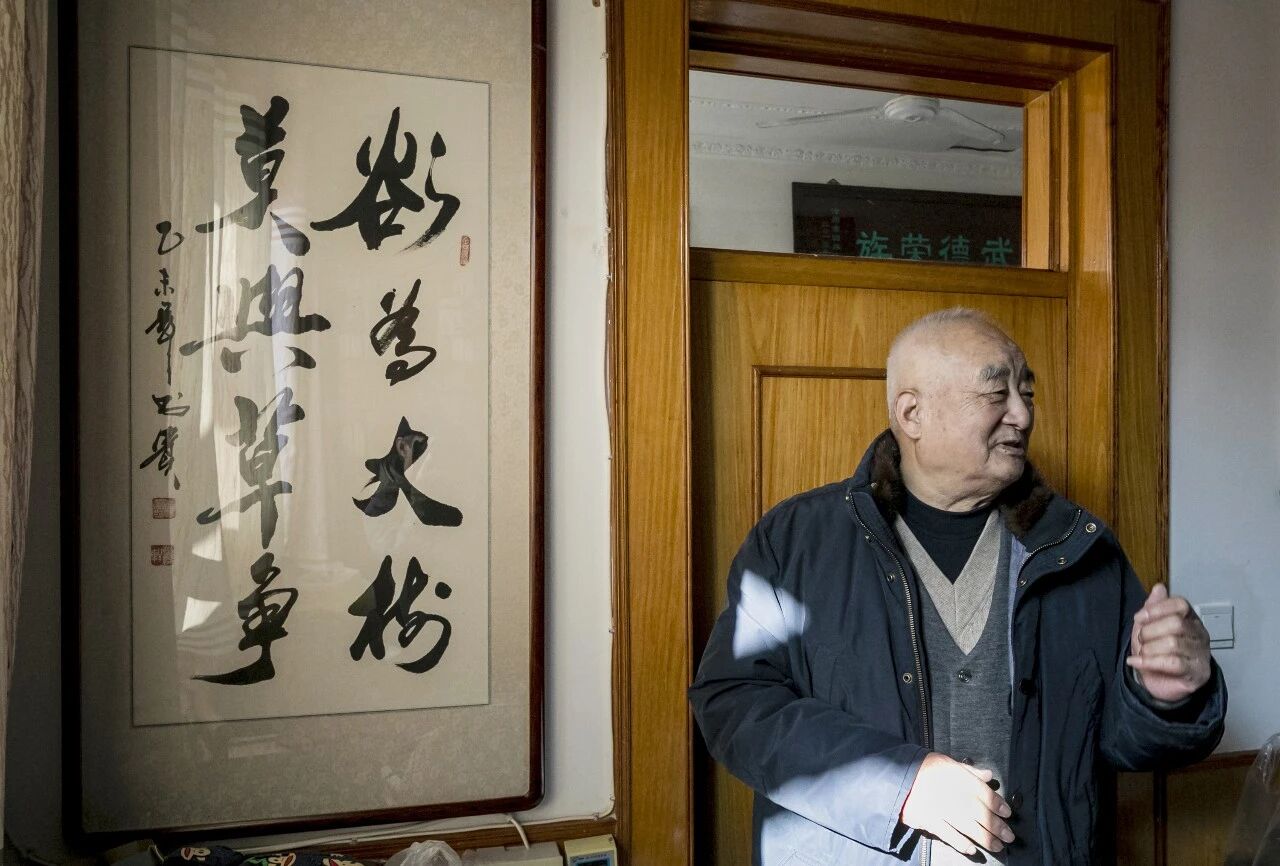
It is often said that when martial arts enthusiasts discuss the art, their fingers point to the city of Cangzhou (沧州), a place renowned for its martial traditions. As someone born in a land steeped in martial culture, I, too, have absorbed its essence over the years. My growing fascination with martial arts has led me to write articles, forge friendships in the wulin (武林, martial arts community), and deepen my appreciation for its philosophy. Today, will introduce Master Ma Zhencheng (马振成), Vice Chairman of the Cangzhou Hui Ethnic Culture Association, Vice President of the Cangzhou Martial Arts Association, and Director of the Cangzhou Muslim Martial Arts Academy.
Born in 1947, Ma developed a passion for martial arts from a young age. At 8, he became a disciple of Hu Yunxiang (胡云祥), a master of Chahua Quan (查滑拳). Later, he learned from renowned masters such as Zhang Shaojie (张少杰), Wu Ruiyuan (吴瑞元), Li Zhenqing (李振清), Li Baode (李宝德), and Hu Jinghua (胡景华), as well as Hui Fengrong (回风荣). Through their guidance, he mastered the authentic techniques of the Cha (查), Hua (滑), and Hong (红) schools, achieving proficiency in bare-handed combat, weapons, and traditional forms. His foundation was solid, and his skills were refined.
In 1961, Ma began his career at the Xinhua Transport Company (formerly known as the Yihe and Nandajie Transport Teams). Balancing labor and martial arts training, he honed his body and mind, forging an indomitable spirit. By 1979, he had risen to the position of business supervisor. Over the years, he served as manager of the Xinhua District Building Materials Sales Office and the Xinhua District Materials Supply and Marketing Center. Even amid his professional responsibilities, he remained deeply engaged in martial arts, expanding his network, exploring the secrets of various schools, and delving into theoretical research. His ultimate goal was to preserve the legacy of his predecessors and cultivate the next generation of martial artists.
In 1993, Ma actively supported retired Hui ethnic cadres such as Wu Yuchen (吴玉臣) and veteran martial artist Hu Yunxiang (胡云祥) in establishing the Cangzhou Muslim Martial Arts Academy. On August 26 of that year, the academy was officially founded, with Wu serving as its first director and Hu as chairman of the board. Ma was appointed as a council member, marking the beginning of his rising prominence. His martial skills and moral character earned widespread acclaim, both socially and within the martial arts community. In July 1995, he was elected Vice President of the Fifth Cangzhou Martial Arts Association, a position he retained through the sixth and seventh terms.
On May 2, 1997, following recommendations from Wu Yuchen (吴玉臣), Hu Yunxiang (胡云祥), and Imam Li Zhenqing (李振清), Ma was appointed Director and Executive Council Member of the Cangzhou Muslim Martial Arts Academy. He united a diverse group of martial artists, including his martial brothers Ma Honglin (马洪林), Ma Zhendong (马振东), Hui Defa (回德法), Zhang Zhonglai (张中来), Wang Shengjun (王胜军), Zhang Enheng (张恩恒), Li Shujian (李树江), and Gao Jianxin (高建新), as well as masters from the Liuhe Quan (六合拳) and Baji Quan (八极拳) schools, such as Wang Junxiang (王俊祥), Wang Tiezhong (王铁中), Li Junde (李俊德), Li Baosheng (李宝生), Yin Guangpu (尹广普), Li Haibin (李海滨), and Yang Shuhui (杨曙辉). Under his leadership, the academy rejected sectarianism, promoted mutual exchange, and fostered a spirit of brotherhood, effectively advancing the development of traditional martial arts across different styles.
In recognition of his dedication and organisational prowess, Ma was appointed Vice Chairman of the Cangzhou Wrestling Association on June 8, 2002, following the establishment of the association by the Cangzhou Sports Federation. His commitment to martial arts only grew stronger. On March 27, 2009, the Cangzhou Hui Ethnic Culture Association was officially established, and Ma was elected Vice Chairman and Director of the Martial Arts Committee. Embracing this new role, he devoted himself entirely to the cause of Hui ethnic martial arts. Inspired by the association’s mission, he came to understand that martial arts represent more than just physical strength, they embody a profound cultural heritage. Cangzhou’s Hui martial arts, in particular, symbolize not only the Hui people but the entire Chinese nation. This realization weighed heavily on him.
To preserve the treasures of ethnic martial arts and promote Hui martial culture, Ma humbly sought the wisdom of his elder martial brother, Ma Honglin (马洪林), who was over 80 years old at the time. Together, they worked to document and revive the Pao Quan (炮拳) and various weapon routines that Ma Honglin had mastered. After years of effort, they successfully compiled the forms of Cha Quan (查拳), Pao Quan (炮拳), and Hong Quan (红拳), as well as the names of 70-80% of the deceased masters from the first to fifth generations of the Cha and Hua schools. These records have become invaluable historical resources.
Ma also played a pivotal role in welcoming martial arts groups such as the Botou Liuhe Martial Arts Academy, the Cangxian Tantui Martial Arts Academy, and the Huanghua Wu Hu Gun Martial Arts Team into the association. He established the “Cangzhou Hui Ethnic Martial Arts Research Society” and the “Cangzhou Hui Ethnic Martial Arts Team”, and successively organized four sessions of the “Cangzhou Hui Ethnic Martial Arts Observation and Exchange Conference” and one “Beijing-Tianjin-Hebei-Henan Chinese Wrestling Exhibition”, which caused a sensation both locally and across the province. Beyond these formal events, he personally led a delegation to Tianjin four times to perform at the Tianjin Muslim Eid al-Fitr Martial Arts Exhibition, and once entrusted others to lead a team to the Ningxia Folk Festival Martial Arts Exhibition, expanding the reach of Cangzhou’s Hui martial arts.
In his spare time, Ma often visited various martial arts academies, offering guidance to friends and their students. He even took in the three daughters of Cao Shuwen (曹树文), a master of Tongbi Quan (通臂拳), teaching them Chahua Quan (查滑拳). Yet, he never accepted a single penny for his teachings. When I once asked him, “With your extraordinary skills, why not compete for a gold medal to bring honor to your ancestors?” He smiled calmly and replied, “Everyone has their own aspirations. I practice martial arts not for fame or fortune, but out of genuine love for the art. Some people, with little skill, spend vast sums to bribe judges, perform a mere roll on the mat, and return with a medal. How does that bring honor to one’s ancestors?” Indeed, there are those who, with mediocre abilities, purchase titles, flatter leaders for praise, and then boast endlessly, how pitiful they are. How can they compare to those who practice martial arts purely for the love of it?
At home, Ma is the eldest of six brothers. A devout Muslim, he is also well-versed in Confucian teachings. The principles of Islam and Confucianism serve as the twin pillars of his guidance to his siblings and their children. His creed includes: “Believe in Allah and honor the Prophet, show compassion to the needy, respect teachers and cherish friends, remain humble and prudent in speech and action, repay kindness, and do good without seeking reward.” He not only preaches these values but lives by them. His brothers, though many, all hold him in the highest regard, and his nephews, no matter how accomplished, dare not disrespect their elders. Under his guidance, each of his brothers has pursued a righteous livelihood, and his nephews have achieved success in their own right, with some even excelling in the martial arts world.
His fourth brother, Ma Zhenlian (马振练), and fifth brother, Ma Zhenwu (马振武), studied under Zhang Shaojie (张少杰), a renowned martial artist, and became proficient in boxing and Sanda (散手, free combat). Ma Zhenwu (马振武) now serves as the General Manager of the Hebei Logistics Cangzhou Branch and is known for his generous financial support of martial arts events. His sixth brother, Ma Zhenquan (马振全), a disciple of Li Junde (李俊德), a master of Da Liuhe Quan (大六合拳), later studied under Ma Yixing (马义兴), Liu Yuming (刘玉铭), and Gao Mingjie (高明杰). He is now a national-level judge for Chinese wrestling, Deputy Chief Referee of the Chinese Wrestling and Judo Association, and a Judo coach at the Cangzhou Sports School.
Ma’s eldest son, Ma Yongzhi (马勇志), initially studied under Zhang Mingqiang (张明强) and Liu Sulai (刘素来) before being admitted to the China University of Sport. After graduating, he taught at Tsinghua University and later pursued a master’s degree at the China University of Sport. He now serves as the Director of the Comprehensive Teaching and Research Office at Tsinghua University and holds the title of Associate Professor.
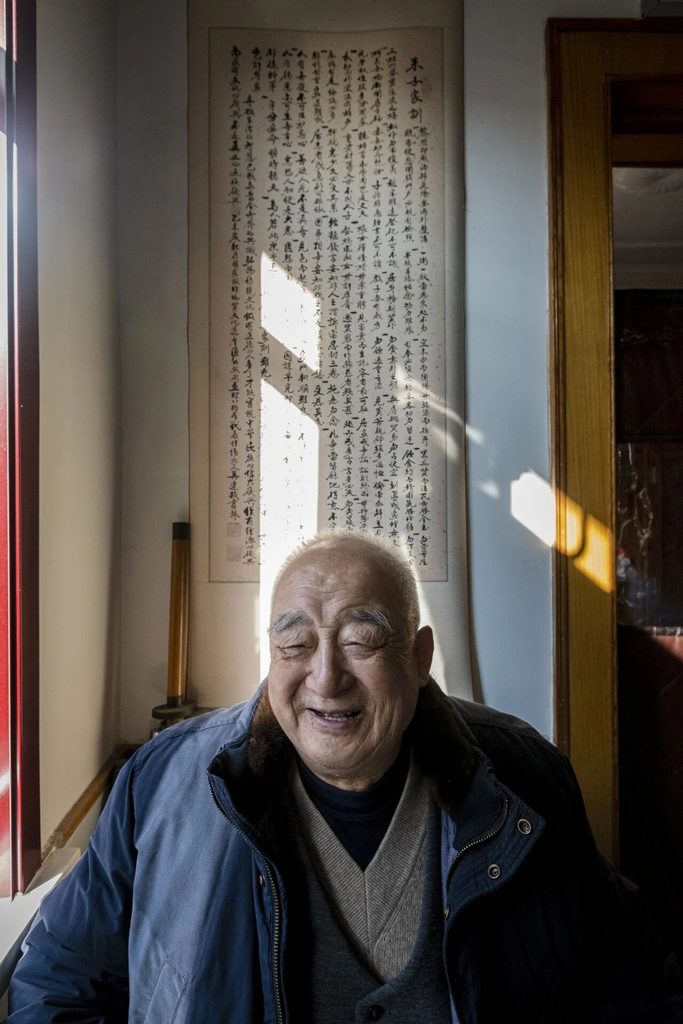
Now in his 80s’, Ma remains relatively vigorous, with a youthful spirit and sharp mind. May Master Ma Zhencheng (马振成) enjoy continued health, and may the younger generation of martial artists learn from his selfless dedication to preservation and his noble spirit of traditional wushu (传统武术) and Chahua Men (查滑门).

![Read more about the article Yanqing Quan – Yanqing Jiazi [燕青门 – 燕青架子]](https://taipinginstitute.com/wp-content/uploads/2021/08/fegvdfbdfvdfv-300x169.jpg)