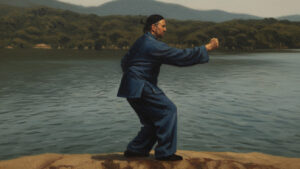
Introductory principles of Chuojiao

Chuojiao, one of China's traditional martial arts schools, unconsciously embodies and applies this philosophical thought. Every move in Chuojiao reflects the concept of unity of opposites, allowing two opposing elements to coexist and transform into each other. It skillfully combines contradictory elements such as attack and defense, advance and retreat, emptiness and solidity, upper and lower, hardness and softness, extension and contraction, movement and stillness, and applies them flexibly and masterfully, elevating one's combat skills to a new level.

Continue ReadingIntroductory principles of Chuojiao

Sample techniques in Chuojiao

As stated in the Chuojiao Boxing Theory: "The hands are the vanguard, and the feet are the commander. The fists strike in six directions, and the feet kick in eight." In practical combat, Chuojiao emphasizes the coordinated use of hand and foot techniques. The hands defend the upper body, while the feet attack the lower body. The hands guide the feet, and when the hands move, the feet follow. When the feet retract, the hands defend. This synchronization is crucial.

Continue ReadingSample techniques in Chuojiao

Importance of Leg techniques in Chuojiao

"In martial arts, practicing leg techniques is fundamental. If leg techniques are well-trained, the Five Elements will be in harmony, and the Six Harmonies will be aligned. If one does not train their legs, the Five Elements will not be in harmony, the Six Harmonies will not align, movements will not be swift, advancing and retreating will lack agility, and it will be difficult to utilize the tendons and bones effectively. Therefore, one must first focus on developing leg strength.

Continue ReadingImportance of Leg techniques in Chuojiao

The Six Harmonies of Da Liuhe Men

"The Internal Three Harmonies (内三合) and External Three Harmonies (外三合) are the guiding principles of Da Liuhe Men. The Internal Three Harmonies align the mind, intention, and energy, while the External Three Harmonies synchronize the root, trunk, and tips of the body. Through these harmonies, the art achieves unity and adaptability in techniques, making them fluid, dynamic, and harmonious.

Continue ReadingThe Six Harmonies of Da Liuhe Men