The Knife, the Horse and the Frontier: The Martial World of the Gaucho

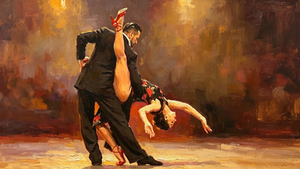
This frontier warfare also explains why the gaucho's martial reputation involved considerably more than personal duelling. He had to endure long rides, poor food, exposure, fatigue and uncertainty. He needed to know how to move through country where roads were rudimentary or nonexistent. He needed to recognize water, grazing and routes of travel. He needed to handle a horse after hours of riding and still be capable of fighting. In an irregular war, the ability to remain mobile and self-sufficient could be as important as the ability to strike an opponent.
Continue ReadingThe Knife, the Horse and the Frontier: The Martial World of the Gaucho

Cangzhou Traditional Medicine and Martial Arts – Ma Zhendong, 50 Years of Free Medical Service for Over 10,000 People

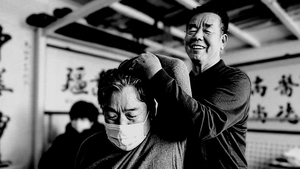
There is an old saying in the martial arts world: "One who practices martial arts is half a doctor" (武林有句俗话“一个武半个医”). Those who train in martial arts often suffer injuries, so skilled practitioners also tend to learn bone-setting and massage techniques. In the ancient city of Cangzhou (沧州), there is a renowned martial arts master named Ma Zhendong (马振东), who, while training in martial arts, also mastered the advanced skills of bone-setting and massage. He teaches people martial arts for fitness while also providing free medical treatment.

Continue ReadingCangzhou Traditional Medicine and Martial Arts – Ma Zhendong, 50 Years of Free Medical Service for Over 10,000 People

Yu Dayou, the underestimated martial arts master and his Staff Manual

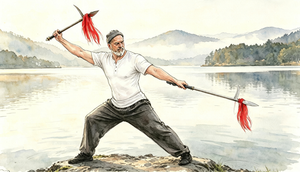
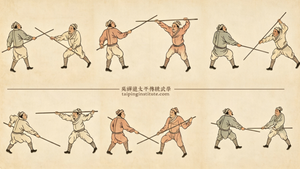
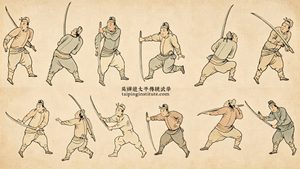
The Jian Jing manual is not a collection of techniques, rather it is a method of controlling distance, line, rhythm, and force so that the staff becomes an extension of the whole body, and the body becomes a formation. One of the main problems with those that have not studied the staff, is that often wiggle around the staff without attention of the body, and in chinese martial arts, and in the Jian Jing, significant focus is on distance, stepping, as well as the lines of forces.

Continue ReadingYu Dayou, the underestimated martial arts master and his Staff Manual

Expressions of the five elements of Xingyi Quan

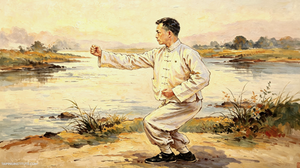
Many practitioners of Xingyi Quan (形意拳) encounter a very real predicament: during daily practice, the Five Elemental Fists (五行拳) are performed with formidable power, the routines are memorized to perfection, and movements flow like water. Yet once they put on boxing gloves and engage in sparring, their minds instantly go blank. They frantically search their memory

Continue ReadingExpressions of the five elements of Xingyi Quan

A century of the brush and the sword, M. Wang Ensheng (王恩盛)

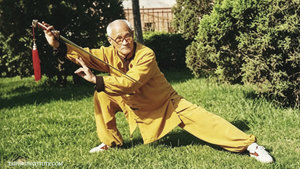
Wang Ensheng was master of the brush and the sword. He created the most works for Tianjin publishers. Before the Cultural Revolution, Wang Ensheng painted approximately thirty comic books for various publishing houses in total. He also created some short comic book pieces for various comic book periodicals and art journals. It can be said that he was one of the representative outstanding comic book artists of the first generation in Tianjin. As well as being an inheritor of the Wudang Sword.

Continue ReadingA century of the brush and the sword, M. Wang Ensheng (王恩盛)

Taiji Evolution 4  –  Fushan Quan, Ziwu Taijiquan

Fu Shan's Boxing Method places great emphasis on cultivating essence, energy, and spirit. Essence, energy, and spirit are the basis of human life, the manifestation of nature and life. They can be called the three treasures of a person, none of which can be missing. Mr Fu Shan, in creating this boxing method, arranged the martial arts movements of breathing and guidance, circulating breath to nourish essence, and moving to invigorate spirit in a reasonable manner,

Continue ReadingTaiji Evolution 4  –  Fushan Quan, Ziwu Taijiquan