The restoration of Shaolin boxing from the 1980s onward is best understood not as the revival of a single temple curriculum, but as a large-scale attempt to recover a fragmented martial culture from manuscripts, surviving monks, village masters, family lineages and regional practitioners. This coincided with the national martial arts “excavation and collation” campaign (武术挖掘整理) launched by the State Sports Commission (国家体委) in the early 1980s. The 1982 national meeting called for the recovery of traditional martial arts as an urgent cultural task, and the 1983 nationwide programme expanded this into a systematic survey. By 1984, investigators had visited more than 1,100 counties and cities, interviewed about 4,800 old masters and recorded thousands of routines.
The Shaolin effort had, however, begun locally before the national programme reached full scale. One of the central figures was Liang Yiquan (梁以全), a Dengfeng martial artist and teacher who became deeply involved in the recovery of Shaolin material during the late 1970s. In 1978 he helped prepare for the visit of the Japanese Shorinji Kempo delegation, working with figures including Yang Jucai (杨聚才) and Wang Chaofan (王超凡). In 1979, during the Japanese delegation’s visit to Shaolin Temple, Songshan (嵩山少林寺), Liang demonstrated Xinyiba (心意把) and Hupuba (虎扑把), directly countering the claim that authentic Shaolin boxing had disappeared in China. In 1980 he led the Dengfeng County martial arts materials excavation group, and in 1981 established the Dengfeng County Sports Commission Shaolin Martial Arts School, one of the first dedicated professional martial arts schools of the period.
What Liang actually did is particularly important because it illustrates the methodology of the entire restoration. He taught students in the morning and afternoon, spent his available time travelling to old masters, and worked at night transcribing and organizing material. When a master possessed a Shaolin boxing manual (拳谱), Liang copied it. When the owner would not lend it, he sat in the master’s home and copied it there. Where no written manual survived, he recorded oral transmission. Where masters possessed secret formulas but were reluctant to disclose them, he spent time establishing trust. His fieldwork reached places such as Nanzhaigou (南寨沟), Zhizhen, Gongyi (巩义芝田), Quanmen (券门) and Mogou (磨沟). He recorded material from Wang Dingyi (王定一), including Seven Star Boxing (七星拳) and Xinyi Boxing (心意拳), obtained Yang-family spear and Praying Mantis manuals from an old master in Zhizhen, collected Guandong Boxing (关东拳) and Yang Family Spear (杨家枪) material from Zhao Jiang (赵江), and obtained Old Hong Boxing (老洪拳) and Small Hong Boxing (小洪拳) manuals from Fan Jinxiang (范金祥) and Fan Haiyun (范海云). This is precisely why the surviving Shaolin corpus cannot be understood as coming exclusively from the temple itself.
By the late 1970s, a substantial network of traditional village masters was already maintaining Shaolin boxing around Dengfeng (登封). Among them were Chen Wujing (陈五经), Liu Baoshan (刘宝山), Wang Dingyi (王顶一), Wang Chaofan (王超凡), Yang Jucai (杨聚才), Liang Yiquan (梁以全) and Diao Junqing (刁俊卿). These practitioners represented the living transmission that had continued outside the temple during the decades when Shaolin itself was unable to function normally as a martial institution. They taught in villages, trained family members and disciples, participated in local competitions and demonstrations, and preserved boxing and weapons through direct practice rather than through a centralized curriculum. Their existence is important because it shows that the post-1980 revival was not the creation of Shaolin martial arts from nothing. A substantial part of the tradition had survived in the surrounding countryside.
A decisive moment came in 1979, when more than forty practitioners gathered to demonstrate traditional Shaolin martial arts. After repeated selection, more than twenty performed at Gong County (巩县) and at Shaolin Temple (少林寺) for Doshin So (宗道臣), founder of the Japanese Shorinji Kempo Federation (日本少林拳法联盟). Among those whose performances made a particular impression were Chen Wujing with Tongbei Boxing (通背拳), Yang Jucai with Shaolin staff, and Liang Yiquan with Hupuba (虎扑把). This event was significant beyond the visit itself. It provided a public demonstration that sophisticated Shaolin traditions still existed among local practitioners, at a time when the historical continuity of Shaolin martial arts was increasingly being questioned. It also helped generate the political and cultural attention that subsequently supported the restoration of Shaolin Temple and the systematic investigation of its martial heritage.
The village transmission continued alongside the emerging institutional revival. The experience of Chen Tongshan (陈同山) illustrates how this worked in practice. In 1981, when the village martial artist Han Laifa (韩来发) established a training class at Beiyinpo (背阴坡) and needed an instructor, Chen Wujing recommended his teenage nephew. Chen Tongshan demonstrated Black Tiger Boxing (黑虎拳), Tongbei Boxing (通背拳) and Small Hong Boxing (小洪拳) and was accepted as the instructor despite his age. He subsequently gained a reputation among practitioners in Dongjindian (东金店) and Dajindian (大金店). The episode demonstrates that martial transmission remained a functioning village economy of teachers, students and local schools. Teachers recommended teachers, senior masters mediated disputes between schools, and young practitioners entered the profession through existing personal networks. The later Shaolin revival therefore grew out of an already functioning grassroots system rather than replacing a completely extinct tradition.
This village network became an important source for the restoration work undertaken during the 1980s and 1990s. The researchers and writers did not rely solely on manuscripts or on the memories of surviving Shaolin monks. They could compare written material with the routines, terminology, training methods and applications preserved by practitioners who had learned them through older local lineages. This gave the restoration a second evidentiary base. The manuscript tradition provided historical and technical records, while the village masters provided living demonstrations of how particular forms had actually been transmitted and performed. Where the two agreed, the material gained considerable support; where they differed, the differences themselves became evidence of lineage variation, regional development or historical loss. The later recognition of the Ten Shaolin Masters (少林十大拳师) in 2000, including Liang Yiquan, Liu Baoshan, Shi Deqian, Chen Chengwen, Cui Xiqi, Chen Wujing, Fu Zhiqian, Liu Zhenhai, Geng Heying and Wang Zongren, can therefore be understood as recognition of this wider living transmission network rather than simply a ranking of ten practitioners.
The relationship between these village masters and the later restoration team was consequently reciprocal. Masters such as Liang Yiquan were simultaneously practitioners, collectors and researchers. Liu Baoshan preserved and expanded traditional teaching through his own school. Chen Wujing participated in demonstrations, local organization and the training of younger practitioners. Others maintained particular forms and technical branches within their own communities. Meanwhile, Shi Deqian and later De Yan worked increasingly to document, organize and publish the broader corpus. The modern Shaolin system emerged from the interaction of these different layers: surviving monks and manuscripts at the temple, village and family lineages around Dengfeng, regional traditions further afield, field investigation, comparison, editorial reconstruction and finally institutional teaching. The restoration was therefore neither simply a recovery from books nor a new invention by the post-1980 Shaolin establishment. It was the consolidation of a dispersed living tradition into a documented and teachable modern system.
The work of the formal restoration team depended heavily on a much older generation of village masters who had maintained Shaolin boxing outside the temple during the decades when institutional transmission had been disrupted. They represented a different kind of continuity from the monks. Their knowledge was maintained through family teaching, village practice and direct master-disciple transmission rather than through an institutional archive. Contemporary accounts emphasize that these masters had learned from the older generation before Shaolin boxing became standardized for public performance, and that they therefore preserved forms and methods that were still rooted in the pre-modern village martial environment.
Liu Baoshan (刘宝山) is perhaps the clearest example of how this village layer fed directly into the modern revival. Born into a martial family in Tagou Village (塔沟村) near Shaolin, he learned from his grandfather Liu Fatai (刘发泰) and father Liu Jingwen (刘景文) and had mastered forms including Liuhe Boxing (六合拳), Seven Star Boxing (七星拳), Spring and Autumn Broadsword (春秋大刀) and other Shaolin material by his youth. He was already regarded as one of Dengfeng’s old masters when the restoration began. In 1978 he founded the Shaolin Tagou Martial Arts School (少林塔沟武术学校), initially as a tiny village school, and his teaching became an enormous living repository of traditional material. He was also one of the masters who demonstrated Shaolin boxing to the Japanese delegation in 1979. Thus Liu’s contribution was not primarily archival. He preserved the material by continuing to teach it, transmitting it to a new generation on a scale that would eventually become one of the largest institutional channels for Shaolin martial arts.
Cui Xiqi (崔西岐) and Wang Zongren (王宗仁) represent another side of the same process. Unlike Liang Yiquan and Liu Baoshan, whose later institutions made them internationally visible, these masters remained much closer to the traditional Dengfeng martial community. Cui was recognized as one of the major senior masters of the local martial world, while Wang, although younger than most of the Ten Masters, was specifically valued because he had absorbed the teaching of the older generation and remained capable of demonstrating traditional Shaolin boxing in practice. The significance of the Ten Masters designation was therefore not simply honorary. It identified practitioners whose knowledge provided a living control against which written manuscripts, reconstructed routines and newly standardized teaching material could be compared. Liu Zhenhai (刘振海) occupied an unusual position between the village and institutional worlds. He was a disciple of Shi Deqian (释德虔) and worked within the Dengfeng sports administration, while also participating in the excavation and organization of local Shaolin boxing.
These village masters therefore should not be placed chronologically after the researchers as though they were simply later contributors. They were part of the evidence base upon which the restoration depended. Liang Yiquan and others went into the villages precisely because the temple could no longer provide the complete answer. They recorded what the old masters remembered, compared different versions, collected manuscripts where they survived, filmed or documented movements, and then compared the oral material against the textual corpus.
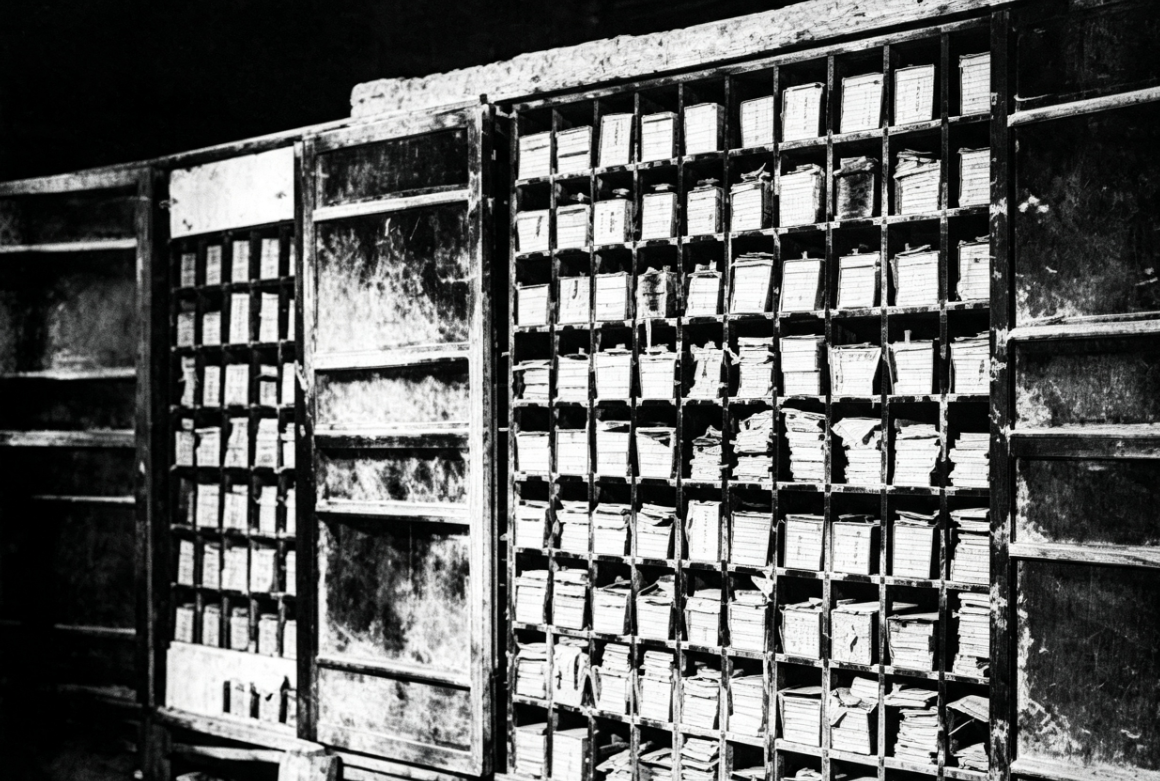
At the same time, a second and ultimately much larger restoration stream developed around Shi Deqian (释德虔), formerly Wang Changqing (王长青). Born in Dengfeng (登封) in 1943, he entered Shaolin and studied under Shi Suxi (释素喜) for six years. He also learned medicine, acupuncture and related skills from Shi Dechan (释德禅) and learned Yijinjing (易筋经), Baduanjin (八段锦), Seventy-Two Skills (七十二艺), pressure-point methods (点穴), seizing methods (擒拿) and hard training from Yongxiang (永祥). He returned to Shaolin in 1980 and became involved in martial arts research and organization. The decisive event came in 1982, when Yongxiang entrusted him with the surviving Shaolin Boxing Manual (《少林拳谱》), described as a 48-volume manuscript copied before the 1928 destruction of the temple. The catalogue of that manuscript identifies sections on Small Hong Boxing (小洪拳), Big Hong Boxing (大洪拳), Luohan Boxing (罗汉拳), Eighteen Luohan Hands (罗汉十八手), Tongbi Boxing (通臂拳), Plum Blossom Boxing (梅花拳), Seven Star Boxing (七星拳), Chaoyang Boxing (朝阳拳), Kanjia Quan (看家拳), Jingang Quan (金刚拳), Cannon Boxing (炮拳), Changhu Xinyi Men Boxing (长护心意门拳), Liuhe Boxing (六合拳), Menghu Boxing (猛虎拳), Plum Blossom Praying Mantis Boxing (梅花螳螂拳), Xinyi Changquan (心意长拳), Continuous Boxing (连环拳), Xinyi Boxing (心意拳), Zhaoyang Boxing (昭阳拳) and Monkey Boxing (猴拳), among others.
Deqian’s work with the 48-volume manuscript followed essentially the same principle at a larger scale: textual evidence and living evidence were placed alongside one another. Where they agreed, confidence increased. Where they differed, the researchers had to determine whether the difference represented lineage variation, regional adaptation, loss of material or later reconstruction. This is one of the most important features of the 1980s restoration and is why the resulting Shaolin corpus contains both remarkably old material and material that was clearly reorganized or standardized during the restoration period.
The importance of Yongxiang (永祥) should therefore not be underestimated. According to the surviving account, he had begun secretly copying the Shaolin manuals in 1926 under the support of Zhenxu (贞绪) and Dechan, completing the 48-volume copy in January 1928 and taking it back to his home in Changchun for safekeeping. It remained hidden for more than fifty years before returning to Shaolin in the 1980s. Whether every historical claim surrounding the manuscript can be independently verified is a separate question, but as a documentary object it became the central textual foundation of the modern restoration. Deqian then spent roughly a decade travelling, reportedly through 27 provinces and more than 40 areas, visiting former monks and old martial artists and comparing their living traditions with the written material. His early publications included Secret Transmission of Shaolin Boxing (《少林拳术秘传》) in 1989, followed by works on weapons, Seventy-Two Skills and other aspects of Shaolin practice.
The third major figure was Xu Zhifa, Sufa (徐祗法, 素法), whose importance becomes much clearer when the restoration is viewed through regional rather than purely institutional Shaolin history. Sufa was a Shandong martial artist who preserved a distinct body of Shaolin-associated material outside the modern temple curriculum. His most important contribution was Kanjia Quan (看家拳). The surviving publication states that Sufa learned Kanjia Quan from Zhenqiu (贞秋) in 1936 and practiced it for more than fifty years. His version comprised thirteen roads, including Kaishan Quan (开山拳), Yingmen Quan (迎门拳), Sanjian Zhuge (三荐诸葛), Chuanxin Chui (穿心捶), Wufu Zhang (五夫掌), Dipantui (地盘腿), Meihua Quan (梅花拳), Lianhuan Chui (连环捶), Lianhuan Tui (连环腿), Maifu Zhang (埋伏掌), Pudi Sha (仆地沙), Qindi Guishanmen (擒敌归山门) and Shouyuan Chui (守院捶). The 1986 edition was subsequently expanded with the original boxing formulas, applications, 36 grappling methods and paired fighting principles. This is unusually valuable evidence because it places a substantial Shaolin boxing system in a specific twentieth-century regional transmission rather than simply attributing it to an anonymous ancient Shaolin tradition.
Sufa also demonstrates how different martial traditions survived together within the same restoration network. His daughter Xu Qinyan, De Yan (徐勤燕, 德炎) was born in Tancheng (郯城), Shandong, learned Shaolin boxing from her father from childhood, and went to Shaolin in 1982 to become a disciple of Suxi. Her documented specialties were Shaolin Kanjia Quan (少林看家拳), Praying Mantis Boxing (螳螂拳) and the Eighteen Categories of Weapons (十八般武艺). Sufa also introduced another disciple, Geng Jun, Dejun (耿军, 德君), to the renowned Seven Star Praying Mantis Boxing (七星螳螂拳) master Li Zhanyuan (李占元). Thus the restoration network was not simply recovering a closed temple curriculum. It was documenting the interaction between Shaolin traditions and the wider northern Chinese martial environment, particularly Shandong and Henan.
From the mid-1980s into the 1990s, the work therefore proceeded on several levels simultaneously. Liang Yiquan concentrated heavily on field collection around Dengfeng and the wider Songshan region. Deqian used the old manuscript as a textual anchor while travelling extensively to compare living transmissions. Sufa supplied older regional material that he had personally preserved, particularly Kanjia Quan and associated skills. De Yan carried that regional material into the institutional Shaolin environment and became an increasingly important author. Dechan and Suxi provided institutional continuity and guidance, while Yongxiang supplied the extraordinary manuscript bridge back to the pre-1928 temple. Other village and regional masters were not merely peripheral informants. They were repositories of forms that had survived precisely because Shaolin boxing had dispersed into surrounding communities. The modern Shaolin corpus was consequently assembled from a network rather than recreated by one individual.
The Ten Masters were effectively the living archive around which the 1980s and 1990s restoration could be tested. Liang Yiquan was simultaneously collector and transmitter. Liu Baoshan was a major living transmitter and institution builder. Deqian was the major textual researcher and compiler. Sufa represented an important regional Shandong transmission. De Yan helped bring that regional material into the modern Shaolin publication system.
The next stage was comparison, selection, standardization and publication. The Shaolin Boxing Manual (《少林拳谱》) was not simply reproduced verbatim. The restoration authors compared manuscript material against living practitioners, reconciled different versions, organized terminology and photographed forms for teaching. An especially revealing later textbook, Traditional Shaolin Martial Arts Popularization Textbooks (《少林传统武术普及教材》), states that its later volumes selected 52 representative traditional routines from the 576 routines contained in the Shaolin Boxing Manual. The resulting curriculum included Eighteen Luohan Hands (罗汉十八手), Small Hong Boxing (小洪拳), Big Hong Boxing (大洪拳), Tongbi Boxing (通臂拳), Continuous Boxing (连环拳), Luohan Boxing (罗汉拳), Plum Blossom Boxing (梅花拳), Chaoyang Boxing (朝阳拳), Cannon Boxing (炮拳) and Seven Star Boxing (七星拳). This is important because it demonstrates that the later published curriculum was a selection and organization of a much larger claimed corpus, not a list of forms invented by the restoration authors.
The ultimate outcome was enormous. Deqian, De Yan and their collaborators produced a modern documentary corpus encompassing hundreds of boxing, weapon, qigong and training methods. Deqian’s publications eventually included Encyclopedia of Chinese Shaolin Martial Arts (《中国少林武术大全》), Dictionary of Shaolin Kung Fu (《少林功夫辞典》), Shaolin Seventy-Two Skills (《少林七十二艺》) and numerous technical manuals. The later Essence of Shaolin Martial Arts (《少林武术精粹》) expanded the material into a 34-volume project covering 19 volumes of boxing, three on spear, three on staff, two on sword, five on sabre and two on weapons practice. De Yan produced more than thirty works of her own, including Shaolin Luohan Boxing (《少林罗汉拳》), Secret Transmission of Shaolin Swordsmanship (《少林剑术秘传》) and Dictionary of Shaolin Kung Fu (《少林功夫辞典》). The restoration consequently moved from fragile oral and manuscript transmission into a reproducible technical archive and then into modern institutional teaching.
The historical significance of this process is therefore greater than simply saying that “Shaolin boxing was revived in the 1980s.” What was revived was a distributed Shaolin martial ecosystem. The temple provided surviving monks, institutional memory and some manuscripts. Masters such as Liu Baoshan and Liang Yiquan were not merely preservationists. They were among the people who made it possible for traditional Shaolin boxing to survive the transition into the post-1980 educational era. Dengfeng’s own history records that around 1981, family-style teaching by village masters such as Liu Baoshan and Liang Yiquan developed alongside the first formal martial-arts schools. Yongxiang preserved the crucial pre-1928 manuscript tradition. Deqian supplied the enormous archival and editorial effort. Sufa preserved a powerful Shandong transmission, particularly Kanjia Quan, while simultaneously connecting into northern Praying Mantis traditions. De Yan carried that regional material into the post-1980 Shaolin institution and became one of its major writers. The result was neither a simple recreation nor an untouched continuation. It was a large-scale restoration, comparison and systematization of surviving traditions, with some forms transmitted continuously, others recovered from regional lineages, and some inevitably standardized or reconstructed in the process. That distinction is essential when assessing any individual form today.
![Read more about the article Yanqing Quan – Yanqing Jiazi [燕青门 – 燕青架子]](https://taipinginstitute.com/wp-content/uploads/2021/08/fegvdfbdfvdfv-300x169.jpg)